THE ADVENTURE COLLECTIVE® · Independent discovery and booking for outdoor travel

Ride a cogwheel train into the high Alps and stand at Europe’s highest railway station: Jungfraujoch. This practical guide tells you what to expect—terrain, timing, and essential gear—for a full-day trip from Zurich.
Ride a cogwheel train into the high Alps and stand at Europe’s highest railway station: Jungfraujoch. This practical guide tells you what to expect—terrain, timing, and essential gear—for a full-day trip from Zurich.
You step off the cogwheel train into a thin, crystalline air and the mountain opens around you: wind-carved ridges, a high observatory, and the vast white shoulder of the Aletsch Glacier pressing the horizon. For roughly three hours at 3,454 meters (11,333 ft) you move through a high-Alpine microcosm—glacial ice underfoot, panoramic terraces, and a carved Ice Palace that frames bright blue crevasses.
Verified experiences and guided adventures in the surrounding area.
Operated by Hans Meier Tourist AG - Gray Line Zurich · Interlaken, Bern
You step off the cogwheel train into a thin, crystalline air and the mountain opens around you: wind-carved ridges, a high observatory, and the vast white shoulder of the Aletsch Glacier pressing the horizon. For roughly three hours at 3,454 meters (11,333 ft) you move through a high-Alpine microcosm—glacial ice underfoot, panoramic terraces, and a carved Ice Palace that frames bright blue crevasses.
The Jungfrau Railway—completed in 1912 after years of tunnel excavation—was an early engineering boldness that threaded trains through the Eiger and Mönch to reach Europe’s highest station. Geologically this is young, uplifted Alps: layers of crystalline rock split by glaciers that still sculpt the slopes. Culturally, the Bernese Oberland villages you pass—Interlaken, Lauterbrunnen, Grindelwald—maintain mountain-farm traditions and tourism infrastructure that dates back to the 19th century.
Plan for altitude and weather first. Expect temperatures well below valley highs year-round; sunny glare off ice is intense, and oxygen feels thinner when you climb stairs. Practical moves: reserve the full-day slot (about 11–12 hours from Zurich), bring layered insulation, high-SPF sun protection and a refillable water bottle, and allow time for the Sphinx Terrace, Ice Palace, and the short glacier walk. Mobility is mostly accessible but there are stone steps and icy surfaces.
Timing matters—go early to avoid crowds and afternoon cloud build-up. If you’re sensitive to altitude or have heart conditions, consult a physician. Otherwise, this day trip is a high-reward, low-technical excursion: the mountains will challenge your lungs and reward your view.
Expect about 11–12 hours round-trip including coach travel, train ascents, and roughly three hours at Jungfraujoch.
Yes, but infants must sit on laps and anyone with heart or severe respiratory conditions should avoid high altitude; consult a physician if unsure.
No special documents beyond your usual ID are required for this domestic Switzerland tour; bring your ticket confirmation.
Yes—the Sphinx Terrace and nearby viewpoints offer sweeping views of the Aletsch Glacier and surrounding peaks on clear days.
Hans Meier Tourist AG - Gray Line Zurich operates guided outdoor trips and adventures with an emphasis on safety, stewardship, and memorable experiences.
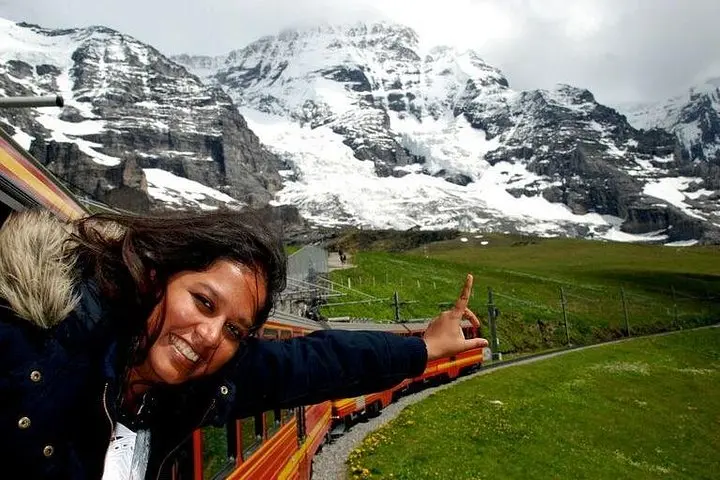
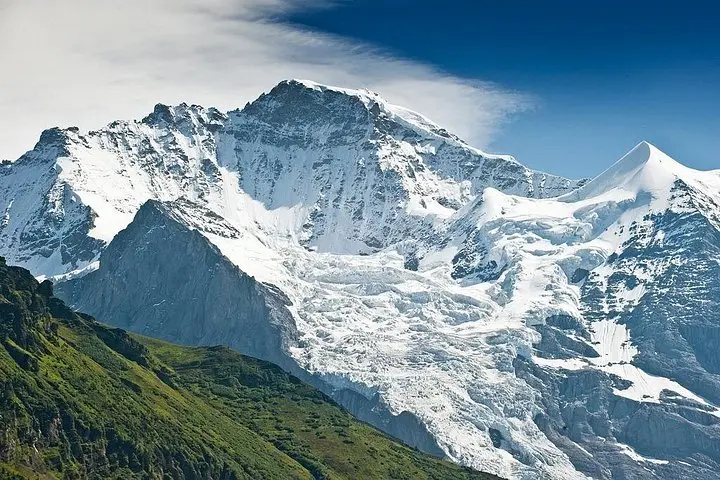
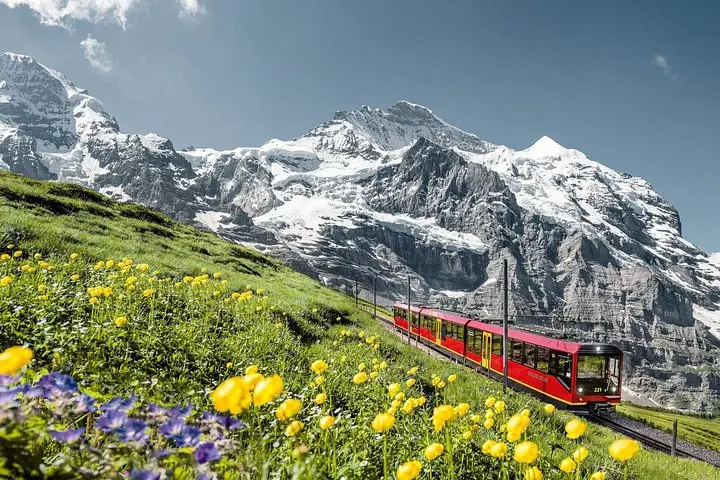

You step off the cogwheel train into a thin, crystalline air and the mountain opens around you: wind-carved ridges, a high observatory, and the vast white shoulder of the Aletsch Glacier pressing the horizon. For roughly three hours at 3,454 meters (11,333 ft) you move through a high-Alpine microcosm—glacial ice underfoot, panoramic terraces, and a carved Ice Palace that frames bright blue crevasses.
You step off the cogwheel train into a thin, crystalline air and the mountain opens around you: wind-carved ridges, a high observatory, and the vast white shoulder of the Aletsch Glacier pressing the horizon. For roughly three hours at 3,454 meters (11,333 ft) you move through a high-Alpine microcosm—glacial ice underfoot, panoramic terraces, and a carved Ice Palace that frames bright blue crevasses.
The Jungfrau Railway—completed in 1912 after years of tunnel excavation—was an early engineering boldness that threaded trains through the Eiger and Mönch to reach Europe’s highest station. Geologically this is young, uplifted Alps: layers of crystalline rock split by glaciers that still sculpt the slopes. Culturally, the Bernese Oberland villages you pass—Interlaken, Lauterbrunnen, Grindelwald—maintain mountain-farm traditions and tourism infrastructure that dates back to the 19th century.
Plan for altitude and weather first. Expect temperatures well below valley highs year-round; sunny glare off ice is intense, and oxygen feels thinner when you climb stairs. Practical moves: reserve the full-day slot (about 11–12 hours from Zurich), bring layered insulation, high-SPF sun protection and a refillable water bottle, and allow time for the Sphinx Terrace, Ice Palace, and the short glacier walk. Mobility is mostly accessible but there are stone steps and icy surfaces.
Timing matters—go early to avoid crowds and afternoon cloud build-up. If you’re sensitive to altitude or have heart conditions, consult a physician. Otherwise, this day trip is a high-reward, low-technical excursion: the mountains will challenge your lungs and reward your view.