THE ADVENTURE COLLECTIVE® · Independent discovery and booking for outdoor travel

Short ferry rides, a volcanic beach with floating rocks, a natural foot onsen and a 1,300‑year‑old shrine make this family‑friendly day tour a compact introduction to Sakurajima and Kagoshima. Expect gentle walks, seasonal swimming, and a city tram ride topped with Kagoshima wagyu.
Short ferry rides, a volcanic beach with floating rocks, a natural foot onsen and a 1,300‑year‑old shrine make this family‑friendly day tour a compact introduction to Sakurajima and Kagoshima. Expect gentle walks, seasonal swimming, and a city tram ride topped with Kagoshima wagyu.
Morning light slips across Kagoshima Bay and the silhouette of Sakurajima rises like a living map of fire and sea. You board a short ferry; gulls circle and the harbor air tastes faintly of minerals. The day unfolds as a gentle loop — a calm beach with charred, buoyant volcanic stones, a natural foot onsen where warm, mineral waters pull the ache from small legs, and a 1,300‑year‑old Shinto shrine perched with a clear view back toward the city.
Verified experiences and guided adventures in the surrounding area.
Operated by unbeaten japan · Kagoshima, Kagoshima Prefecture
Morning light slips across Kagoshima Bay and the silhouette of Sakurajima rises like a living map of fire and sea. You board a short ferry; gulls circle and the harbor air tastes faintly of minerals. The day unfolds as a gentle loop — a calm beach with charred, buoyant volcanic stones, a natural foot onsen where warm, mineral waters pull the ache from small legs, and a 1,300‑year‑old Shinto shrine perched with a clear view back toward the city.
Geology is visible at every turn: recent ash layers and black lava outcrops speak to the volcano’s restlessness, while the bay’s sheltered lagoon shows the interplay of tides and volcanic detritus. Culturally, Sakurajima is still woven into local life — shrines sell protective charms and fishermen read the sea with the same eyes their grandparents used.
Practicalities are straightforward. The itinerary is family paced with short walks (roughly three stops of about 200 meters each) and a 20‑minute ferry crossing. Expect warm, humid weather most of the year, limited food substitutions, and facilities for quick changes at the beach. Guides handle transport in an air‑conditioned vehicle and a city tram ride returns you to a well‑appointed wagyu lunch in downtown Kagoshima.
Pack sun protection, a change of clothes, and small cash for shrine charms. Timing matters: swimming is seasonal (April–October), and the island’s charms are best enjoyed mid‑morning before afternoon heat or sudden showers. This is a practical, hands‑on introduction to Kyushu’s volcanic coast — safe, sensory, and surprisingly powerful.
Yes — the operator notes stroller access and infants may sit on laps; bring a carrier for narrower paths.
Swimming is generally available April–October in the protected lagoon; lifeguards are not guaranteed so supervise children closely.
The included wagyu course is standard and the operator finds it difficult to accommodate vegetarian, vegan, or strict allergy substitutions — notify in advance but expect limited options.
Not recommended for pregnant travelers or guests with significant spinal injuries due to moving between sites and short walks on uneven ground.
unbeaten japan operates guided outdoor trips and adventures with an emphasis on safety, stewardship, and memorable experiences.

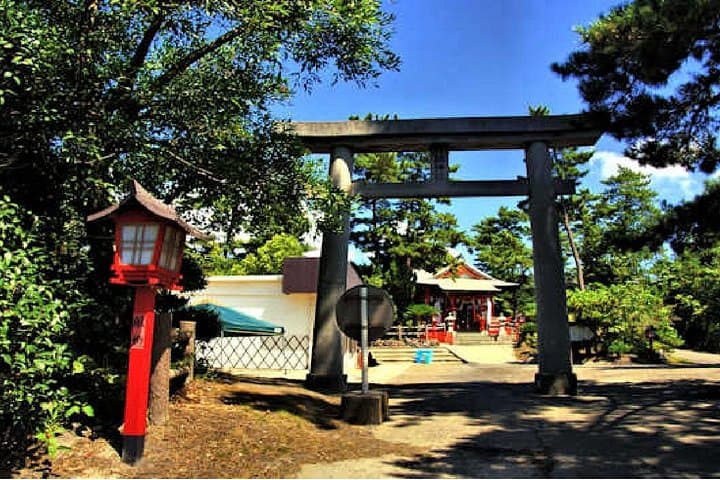
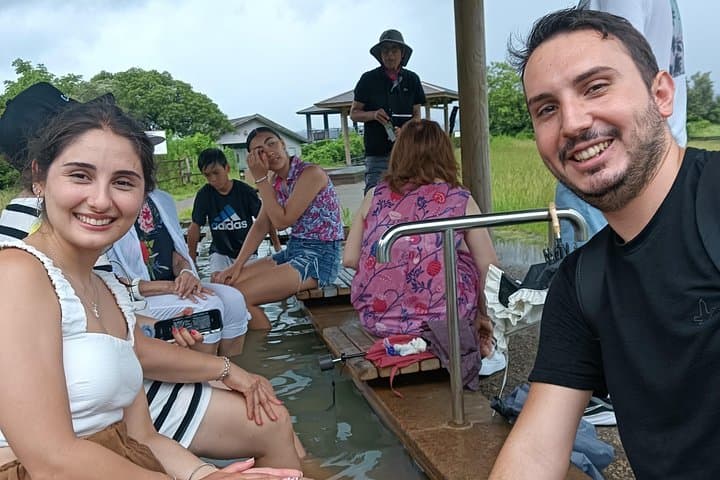
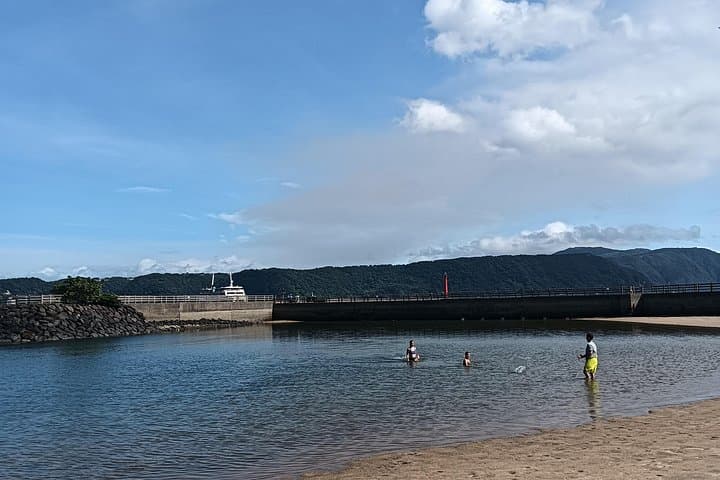
Morning light slips across Kagoshima Bay and the silhouette of Sakurajima rises like a living map of fire and sea. You board a short ferry; gulls circle and the harbor air tastes faintly of minerals. The day unfolds as a gentle loop — a calm beach with charred, buoyant volcanic stones, a natural foot onsen where warm, mineral waters pull the ache from small legs, and a 1,300‑year‑old Shinto shrine perched with a clear view back toward the city.
Morning light slips across Kagoshima Bay and the silhouette of Sakurajima rises like a living map of fire and sea. You board a short ferry; gulls circle and the harbor air tastes faintly of minerals. The day unfolds as a gentle loop — a calm beach with charred, buoyant volcanic stones, a natural foot onsen where warm, mineral waters pull the ache from small legs, and a 1,300‑year‑old Shinto shrine perched with a clear view back toward the city.
Geology is visible at every turn: recent ash layers and black lava outcrops speak to the volcano’s restlessness, while the bay’s sheltered lagoon shows the interplay of tides and volcanic detritus. Culturally, Sakurajima is still woven into local life — shrines sell protective charms and fishermen read the sea with the same eyes their grandparents used.
Practicalities are straightforward. The itinerary is family paced with short walks (roughly three stops of about 200 meters each) and a 20‑minute ferry crossing. Expect warm, humid weather most of the year, limited food substitutions, and facilities for quick changes at the beach. Guides handle transport in an air‑conditioned vehicle and a city tram ride returns you to a well‑appointed wagyu lunch in downtown Kagoshima.
Pack sun protection, a change of clothes, and small cash for shrine charms. Timing matters: swimming is seasonal (April–October), and the island’s charms are best enjoyed mid‑morning before afternoon heat or sudden showers. This is a practical, hands‑on introduction to Kyushu’s volcanic coast — safe, sensory, and surprisingly powerful.