THE ADVENTURE COLLECTIVE® · Independent discovery and booking for outdoor travel

Leave Kailua-Kona Pier for a luxury catamaran cruise to the Red Hill marine sanctuary — two hours of snorkeling, likely dolphin sightings, island-style meals and a waterslide for good measure. Practical, family-friendly and reef-conscious, this trip combines comfort and close-up marine life viewing.
Leave Kailua-Kona Pier for a luxury catamaran cruise to the Red Hill marine sanctuary — two hours of snorkeling, likely dolphin sightings, island-style meals and a waterslide for good measure. Practical, family-friendly and reef-conscious, this trip combines comfort and close-up marine life viewing.
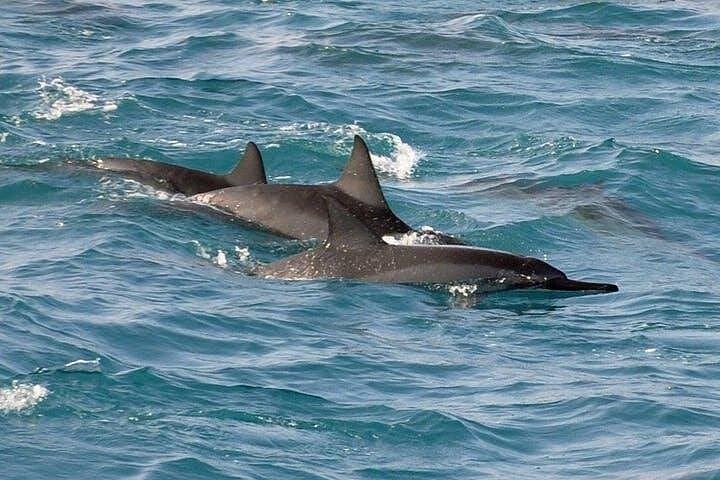
The catamaran slips away from Kailua-Kona Pier with a soft, confident push. Salt stings the air, island-style breakfast plates pass, and the upper deck opens like a stage for early light over Kona’s volcanic coastline. Within minutes the harbor blinks behind you and the Pacific stretches wide — a living highway where spinner dolphins often ride the bow wake and the horizon seems to hold its breath.
Verified experiences and guided adventures in the surrounding area.
Operated by Body Glove Cruises · Kailua-Kona, Hawaii
The catamaran slips away from Kailua-Kona Pier with a soft, confident push. Salt stings the air, island-style breakfast plates pass, and the upper deck opens like a stage for early light over Kona’s volcanic coastline. Within minutes the harbor blinks behind you and the Pacific stretches wide — a living highway where spinner dolphins often ride the bow wake and the horizon seems to hold its breath.
This four-and-a-half-hour excursion runs roughly 10 miles south of Kona to the coral gardens near Red Hill, a protected stretch where clear water and abundant reef life make for excellent snorkeling. The Kona coast itself is a young volcanic edge — black lava flows meet the sea and undercurrent channels shaped by lava tubes and reefs concentrate nutrients, which in turn gather fish, turtles (honu) and the occasional pod of dolphins.
Kailua-Kona was once the political and religious center of the Kona district; ali‘i (chiefs) built temples and coastal communities here, and the shoreline served as both a travel route and food source for centuries. Modern-day boat operators work within this layered history: permitting, reef protections, and reef-safe sunscreen are no longer courtesy but requirement to protect the living reef communities you’ll see.
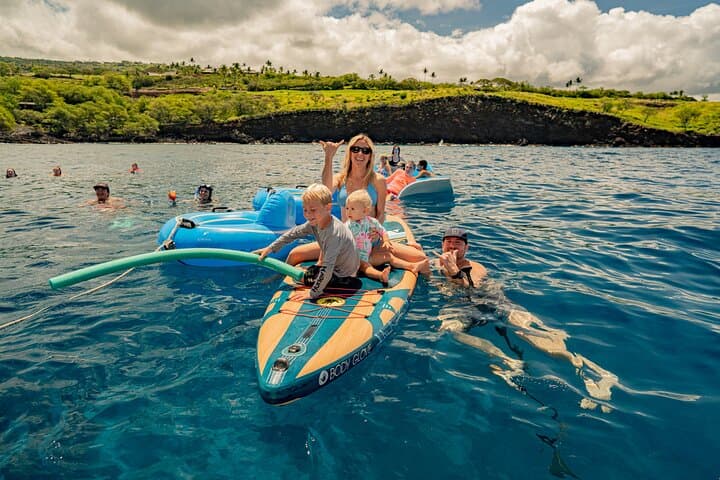
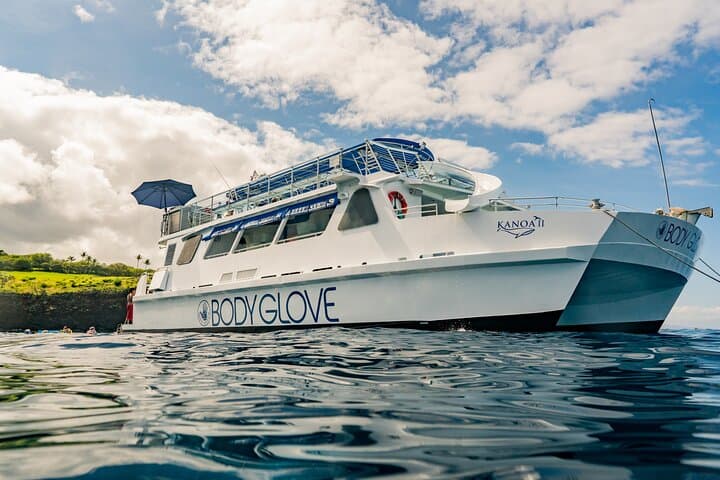
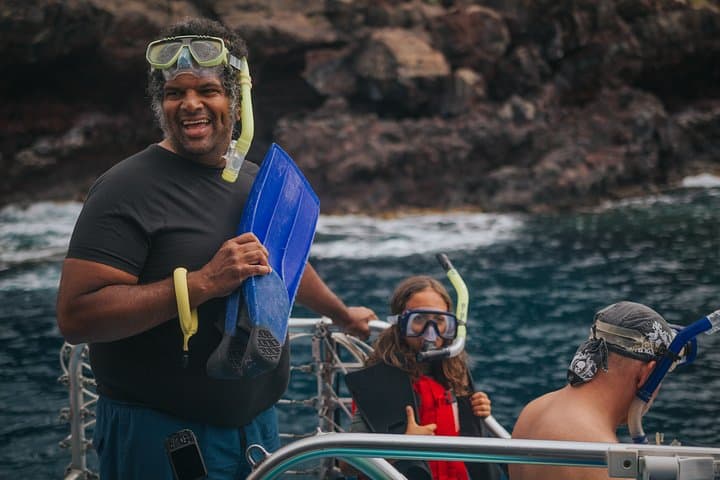
Onboard, the craft reads like a floating beach house — two decks, shaded seating, showers, three restrooms, a 20-foot waterslide and a 15-foot jump platform. The company provides sanitized masks, snorkels and fins, reef-safe sunscreen, breakfast and a crew-grilled lunch, and even wetsuit rentals. Guests typically get about two hours in the water at the snorkel site; crew position the boat to minimize anchor damage and often deploy flotation toys for less confident swimmers.
Practicalities matter here. Boarding is 30 minutes before departure at the Kailua-Kona pier; free parking is available at the Ilima Court lot about a block away. The trip is wheelchair-accessible on the lower deck, but guests should be able to climb a short ladder into the water and manage basic swimming for snorkeling. Seas can be calm in summer, but winter swells and trade winds can make the ride bumpier; seasickness precautions are wise for sensitive travelers.
Bring a swimsuit, towel and a light layer for the breeze. If you want underwater photos, a waterproof housing or action camera is best — visibility is usually best mid-morning when the sun lights the coral. Above all, respect the reef: no touching, no feeding, and use the provided reef-safe sunscreen. The trip is comfortable enough for families and rewarding for anyone who wants to trade Kona’s black-rock shore for a close encounter with Pacific reef life and playful dolphins on a single easy morning out to sea.
No — this tour snorkels in the Red Hill marine sanctuary south of Kona, not Kealakekua Bay; separate tours visit Kealakekua.
Expect about two hours of water time at the snorkel site, typically split into multiple short sessions for comfort and safety.
Yes — children 18 and under must be accompanied by an adult; flotation devices and family-friendly areas are available on board.
The lower deck is 100% wheelchair accessible; advise the operator at booking for priority boarding and accommodations.
There’s an excellent chance to spot spinner dolphins and green sea turtles near the reefs, though wildlife sightings can’t be guaranteed.
Trips are subject to weather; if the operator cancels due to conditions you’ll be offered a full refund or alternate date per the cancellation policy.
Body Glove Cruises operates guided outdoor trips and adventures with an emphasis on safety, stewardship, and memorable experiences.
The catamaran slips away from Kailua-Kona Pier with a soft, confident push. Salt stings the air, island-style breakfast plates pass, and the upper deck opens like a stage for early light over Kona’s volcanic coastline. Within minutes the harbor blinks behind you and the Pacific stretches wide — a living highway where spinner dolphins often ride the bow wake and the horizon seems to hold its breath.
The catamaran slips away from Kailua-Kona Pier with a soft, confident push. Salt stings the air, island-style breakfast plates pass, and the upper deck opens like a stage for early light over Kona’s volcanic coastline. Within minutes the harbor blinks behind you and the Pacific stretches wide — a living highway where spinner dolphins often ride the bow wake and the horizon seems to hold its breath.
This four-and-a-half-hour excursion runs roughly 10 miles south of Kona to the coral gardens near Red Hill, a protected stretch where clear water and abundant reef life make for excellent snorkeling. The Kona coast itself is a young volcanic edge — black lava flows meet the sea and undercurrent channels shaped by lava tubes and reefs concentrate nutrients, which in turn gather fish, turtles (honu) and the occasional pod of dolphins.
Kailua-Kona was once the political and religious center of the Kona district; ali‘i (chiefs) built temples and coastal communities here, and the shoreline served as both a travel route and food source for centuries. Modern-day boat operators work within this layered history: permitting, reef protections, and reef-safe sunscreen are no longer courtesy but requirement to protect the living reef communities you’ll see.
Onboard, the craft reads like a floating beach house — two decks, shaded seating, showers, three restrooms, a 20-foot waterslide and a 15-foot jump platform. The company provides sanitized masks, snorkels and fins, reef-safe sunscreen, breakfast and a crew-grilled lunch, and even wetsuit rentals. Guests typically get about two hours in the water at the snorkel site; crew position the boat to minimize anchor damage and often deploy flotation toys for less confident swimmers.
Practicalities matter here. Boarding is 30 minutes before departure at the Kailua-Kona pier; free parking is available at the Ilima Court lot about a block away. The trip is wheelchair-accessible on the lower deck, but guests should be able to climb a short ladder into the water and manage basic swimming for snorkeling. Seas can be calm in summer, but winter swells and trade winds can make the ride bumpier; seasickness precautions are wise for sensitive travelers.
Bring a swimsuit, towel and a light layer for the breeze. If you want underwater photos, a waterproof housing or action camera is best — visibility is usually best mid-morning when the sun lights the coral. Above all, respect the reef: no touching, no feeding, and use the provided reef-safe sunscreen. The trip is comfortable enough for families and rewarding for anyone who wants to trade Kona’s black-rock shore for a close encounter with Pacific reef life and playful dolphins on a single easy morning out to sea.