THE ADVENTURE COLLECTIVE® · Independent discovery and booking for outdoor travel

Spend a day with a Spanish-speaking local guide exploring Kamakura’s temples and Enoshima’s coastal viewpoints. This private tour pairs cultural context with seaside paths and food stops—ideal for travelers who want depth in a single day.
Spend a day with a Spanish-speaking local guide exploring Kamakura’s temples and Enoshima’s coastal viewpoints. This private tour pairs cultural context with seaside paths and food stops—ideal for travelers who want depth in a single day.
You step off the train into a town where cedar-lined streets give way to temple gates and the sea breathes salt across the horizon. The day begins in Kamakura’s compact center: wooden eaves, bronze statues, and narrow alleys that lead toward the ocean. Later, the walk across the bridge to Enoshima feels like a small expedition—stairs, shrine lanes, and the sea candle standing watch above the island.
Verified experiences and guided adventures in the surrounding area.
Operated by Toursnippon · Kamakura, Kanagawa
You step off the train into a town where cedar-lined streets give way to temple gates and the sea breathes salt across the horizon. The day begins in Kamakura’s compact center: wooden eaves, bronze statues, and narrow alleys that lead toward the ocean. Later, the walk across the bridge to Enoshima feels like a small expedition—stairs, shrine lanes, and the sea candle standing watch above the island.
Kamakura was Japan’s military capital in the 12th century; its temples and shrines reflect samurai-era patronage fused with coastal religious traditions. Geology here is straightforward—coastal terraces and rugged headlands carved by tides and storms—so views change with every turn and tide. Enoshima’s volcanic-derived rock and sandy shorelines host marine life and small fishing communities whose culinary life centers on shirasu (whitebait).
A local Spanish-speaking guide narrows the gap between signs and story: how Hase-dera’s wooden halls came to house a towering Kannon, why Hachiman shrines dot the hills, and where to find the best grilled seafood in a side lane. The itinerary balances landmark time with pockets for wandering Komachi-dori and the island’s panoramic lookout.
Practical notes: expect roughly 8 hours of mostly easy walking with some stairs and uneven stone in shrines. Bring comfortable shoes, a light waterproof layer, and cash for small shrine offerings and snacks. Morning light favors temple photos; late afternoon gives warm views over Sagami Bay. With a small private group and a local guide, this tour is both accessible and rich in on-the-ground context.
Yes—this private tour is family-friendly; infants can ride in strollers but there are stairs on Enoshima so a carrier is recommended for some sections.
Most shrine visits and street exploration are included, but some paid attractions or observation towers may require separate admission or optional fees.
Expect mostly easy walking over roughly 8 hours with interspersed stops—total distance can range up to 8–10 km depending on optional detours.
Yes—the tour is delivered in Spanish by local guides fluent in the language; guides can usually also answer basic questions in English if needed.
Toursnippon operates guided outdoor trips and adventures with an emphasis on safety, stewardship, and memorable experiences.
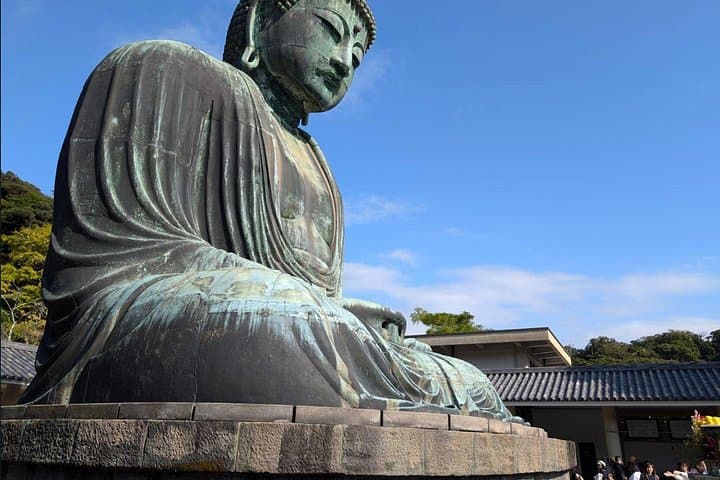
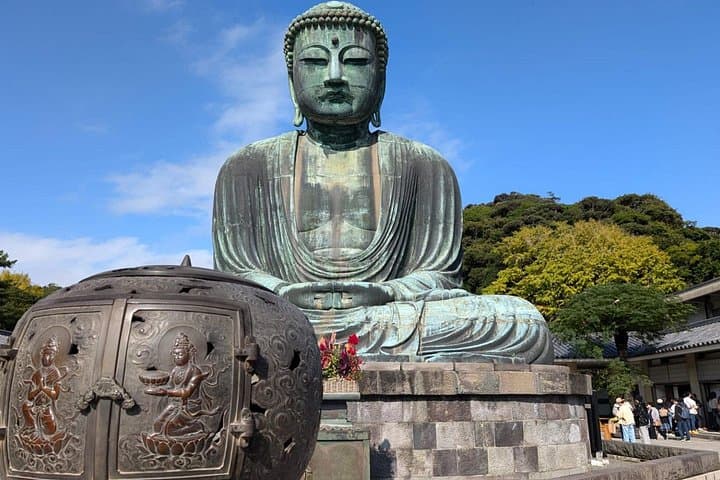

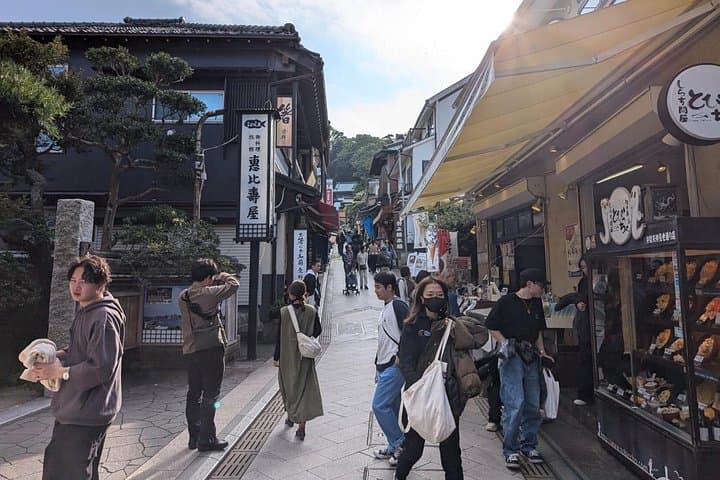
You step off the train into a town where cedar-lined streets give way to temple gates and the sea breathes salt across the horizon. The day begins in Kamakura’s compact center: wooden eaves, bronze statues, and narrow alleys that lead toward the ocean. Later, the walk across the bridge to Enoshima feels like a small expedition—stairs, shrine lanes, and the sea candle standing watch above the island.
You step off the train into a town where cedar-lined streets give way to temple gates and the sea breathes salt across the horizon. The day begins in Kamakura’s compact center: wooden eaves, bronze statues, and narrow alleys that lead toward the ocean. Later, the walk across the bridge to Enoshima feels like a small expedition—stairs, shrine lanes, and the sea candle standing watch above the island.
Kamakura was Japan’s military capital in the 12th century; its temples and shrines reflect samurai-era patronage fused with coastal religious traditions. Geology here is straightforward—coastal terraces and rugged headlands carved by tides and storms—so views change with every turn and tide. Enoshima’s volcanic-derived rock and sandy shorelines host marine life and small fishing communities whose culinary life centers on shirasu (whitebait).
A local Spanish-speaking guide narrows the gap between signs and story: how Hase-dera’s wooden halls came to house a towering Kannon, why Hachiman shrines dot the hills, and where to find the best grilled seafood in a side lane. The itinerary balances landmark time with pockets for wandering Komachi-dori and the island’s panoramic lookout.
Practical notes: expect roughly 8 hours of mostly easy walking with some stairs and uneven stone in shrines. Bring comfortable shoes, a light waterproof layer, and cash for small shrine offerings and snacks. Morning light favors temple photos; late afternoon gives warm views over Sagami Bay. With a small private group and a local guide, this tour is both accessible and rich in on-the-ground context.