THE ADVENTURE COLLECTIVE® · Independent discovery and booking for outdoor travel

Start your day tracking four seaside viewpoints in Kamakura with a licensed guide who ties coastal panoramas to samurai-era history. This hour-long morning walk is compact, sensory, and ideal for visitors wanting context before exploring the city further.
Start your day tracking four seaside viewpoints in Kamakura with a licensed guide who ties coastal panoramas to samurai-era history. This hour-long morning walk is compact, sensory, and ideal for visitors wanting context before exploring the city further.
On a crisp morning the sea in Kamakura changes expression with each gust; salt-sweet air pushes across Yuigahama and the shoreline dares you to walk its length. This guided hour moves from Sakanoshita beach toward small temple approaches and a handful of coastal vantage points, where low cliffs and sandy bays open views of the horizon and the town laid out beneath wooded ridges.
Verified experiences and guided adventures in the surrounding area.
Operated by Happy Tour · Kamakura, Kanagawa
On a crisp morning the sea in Kamakura changes expression with each gust; salt-sweet air pushes across Yuigahama and the shoreline dares you to walk its length. This guided hour moves from Sakanoshita beach toward small temple approaches and a handful of coastal vantage points, where low cliffs and sandy bays open views of the horizon and the town laid out beneath wooded ridges.
Kamakura became Japan’s military capital at the end of the 12th century, and the tour threads that history into the shoreline: samurai-era temples, surviving stone markers, and a shogun’s engraved poem that hints at political ambitions and the city’s medieval layout. Geologically, the coast is recent—river sediments and uplifted beaches backed by low hills—so expect mixed sand and paved promenades rather than high alpine terrain.
Culturally, mornings here belong to commuters, fishermen, and temple custodians; the guide connects these rhythms to the stories of Hase and the Great Buddha without entering paid temple grounds. The experience is compact and sensory: gulls wheel, offshore currents gloss the water, and cedar-scented alleys guide you between sites.
Practical guidance: the route is an easy-to-moderate, mostly flat urban walk of roughly 2–3 km over an hour with multiple short stops. Wear grippy shoes for wet stone steps, bring a light layer against morning breeze, and plan arrival by train—Kamakura Station or nearby Gokurakuji Station put you within a short walk. The group size is small; weather can sharpen the light but rarely cancels the tour.
Meeting is typically near the Sakanoshita/Yuigahama shoreline or a named nearby station exit; confirm exact meeting point on your booking voucher.
The tour is family-friendly but requires walking on some uneven surfaces; participants should have basic mobility and be comfortable walking for an hour.
The listing notes a government-licensed guide; check your booking page for the specific language offered and request accommodations in advance.
The operator’s policy does not automatically cancel for light rain; severe weather may alter or cancel the tour—check the cancellation terms and contact the provider if conditions look poor.
Happy Tour operates guided outdoor trips and adventures with an emphasis on safety, stewardship, and memorable experiences.
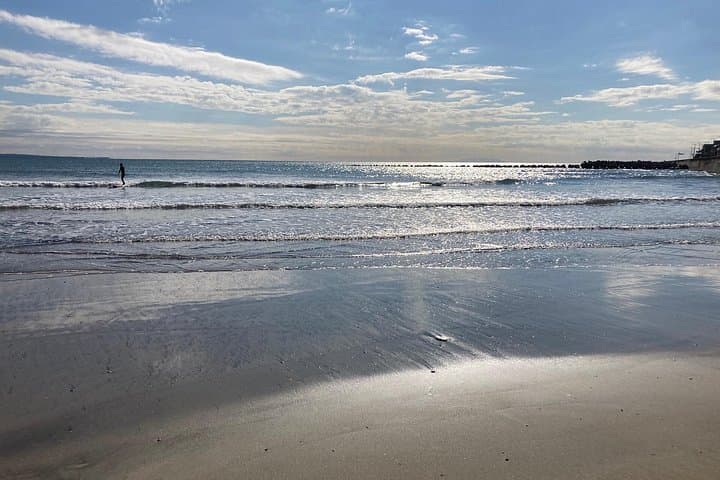



On a crisp morning the sea in Kamakura changes expression with each gust; salt-sweet air pushes across Yuigahama and the shoreline dares you to walk its length. This guided hour moves from Sakanoshita beach toward small temple approaches and a handful of coastal vantage points, where low cliffs and sandy bays open views of the horizon and the town laid out beneath wooded ridges.
On a crisp morning the sea in Kamakura changes expression with each gust; salt-sweet air pushes across Yuigahama and the shoreline dares you to walk its length. This guided hour moves from Sakanoshita beach toward small temple approaches and a handful of coastal vantage points, where low cliffs and sandy bays open views of the horizon and the town laid out beneath wooded ridges.
Kamakura became Japan’s military capital at the end of the 12th century, and the tour threads that history into the shoreline: samurai-era temples, surviving stone markers, and a shogun’s engraved poem that hints at political ambitions and the city’s medieval layout. Geologically, the coast is recent—river sediments and uplifted beaches backed by low hills—so expect mixed sand and paved promenades rather than high alpine terrain.
Culturally, mornings here belong to commuters, fishermen, and temple custodians; the guide connects these rhythms to the stories of Hase and the Great Buddha without entering paid temple grounds. The experience is compact and sensory: gulls wheel, offshore currents gloss the water, and cedar-scented alleys guide you between sites.
Practical guidance: the route is an easy-to-moderate, mostly flat urban walk of roughly 2–3 km over an hour with multiple short stops. Wear grippy shoes for wet stone steps, bring a light layer against morning breeze, and plan arrival by train—Kamakura Station or nearby Gokurakuji Station put you within a short walk. The group size is small; weather can sharpen the light but rarely cancels the tour.