THE ADVENTURE COLLECTIVE® · Independent discovery and booking for outdoor travel

A full‑day tuk‑tuk circuit through Kampot and Kep that pairs hands‑on salt fields, a live crab market and a working pepper plantation. Expect relaxed rural roads, short walks and flavorful local food stops.
A full‑day tuk‑tuk circuit through Kampot and Kep that pairs hands‑on salt fields, a live crab market and a working pepper plantation. Expect relaxed rural roads, short walks and flavorful local food stops.
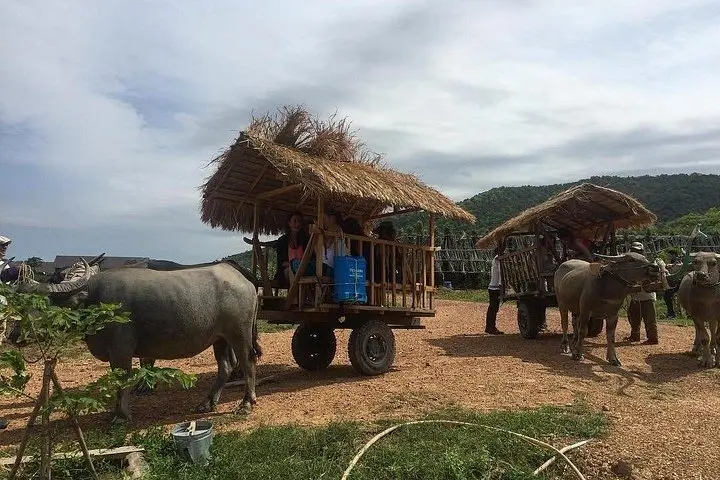
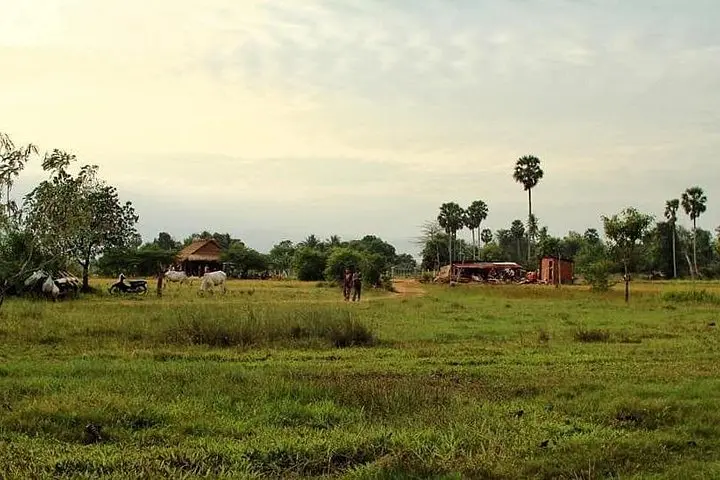
You roll out of a shaded tuk‑tuk and the first thing you notice is salt — white ridges laid out under the sun like a low, human-made plain. The day moves at the rhythm of local life: manual salt raking, seaside vendors calling, a shaded pepper grove where scent hangs heavy in the air, and a slow buffalo cart tracing village lanes.
Verified experiences and guided adventures in the surrounding area.
Operated by Royal Phnom Penh Tours · Kampot, Kampot Province
You roll out of a shaded tuk‑tuk and the first thing you notice is salt — white ridges laid out under the sun like a low, human-made plain. The day moves at the rhythm of local life: manual salt raking, seaside vendors calling, a shaded pepper grove where scent hangs heavy in the air, and a slow buffalo cart tracing village lanes.
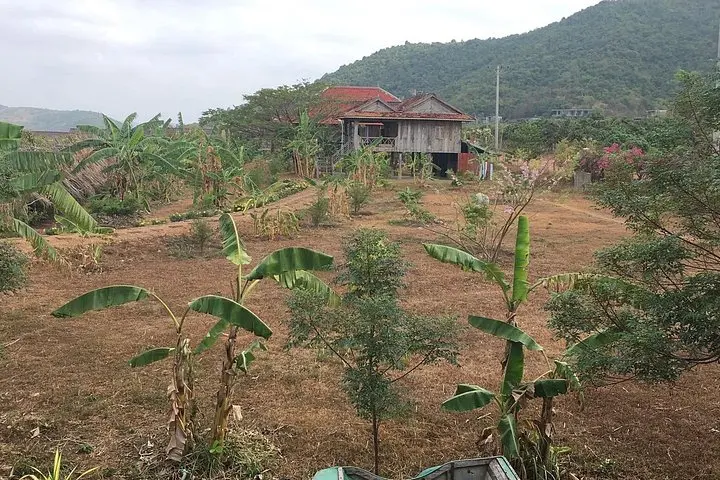
Kampot and Kep sit on Cambodia’s southern plains where alluvial soils, a calm coastal shelf and a long wet season shape agriculture. Kampot pepper has a long local pedigree and small-scale plantations like La Plantation have grown into social enterprises that support schools and harvest traditions. Kep’s crab market grew from a fishing village economy and remains a working shorefront where seafood is bought live and cooked on the spot. Limestone caves and small temple shrines around Kampot reflect the region’s mixed Buddhist and colonial-era heritage.
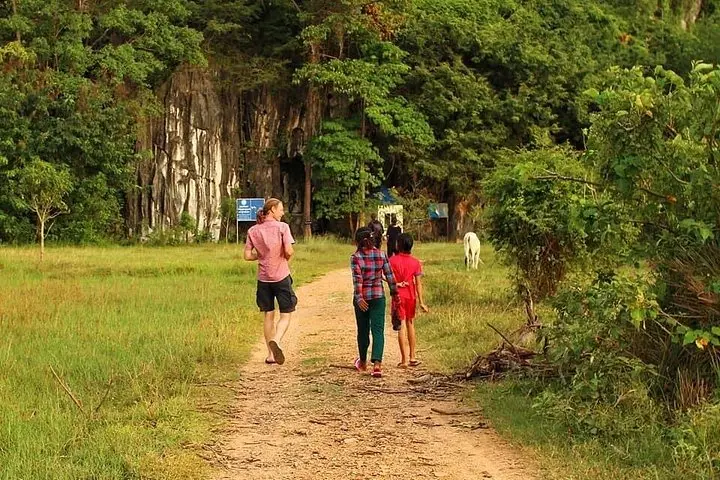
Practical guidance: the tour lasts about 6–7 hours with hotel pickup and a tuk‑tuk as transport. Expect flat, dusty rural roads and short, slippery climbs in cave temples — closed-toe shoes with good grip are recommended. Bring cash for market snacks and small entry fees, insect repellent for village edges, and sun protection; bottled water is provided but a reusable bottle is handy. The pace is relaxed with multiple short stops: salt fields (manual production), Kep crab market (seafood and snacks), cave temple (steep sections), La Plantation (pepper demo), and a buffalo‑cart loop around Secret Lake. Respect working areas, ask before photographing people at work, and time your visit earlier or late afternoon to avoid the strongest heat.
The tour is approximately 6–7 hours with tuk‑tuk transport and hotel pickup/drop‑off included.
Meals are not included, but the itinerary stops at Kep Crab Market where you can buy fresh seafood and local snacks on site.
Yes—this tour is rated easy and family friendly, though infants must sit on laps and cave sections have uneven surfaces to negotiate.
Yes, but it’s respectful to ask workers before close-up portraits; casual landscape shots are commonly accepted.
Royal Phnom Penh Tours operates guided outdoor trips and adventures with an emphasis on safety, stewardship, and memorable experiences.
You roll out of a shaded tuk‑tuk and the first thing you notice is salt — white ridges laid out under the sun like a low, human-made plain. The day moves at the rhythm of local life: manual salt raking, seaside vendors calling, a shaded pepper grove where scent hangs heavy in the air, and a slow buffalo cart tracing village lanes.
You roll out of a shaded tuk‑tuk and the first thing you notice is salt — white ridges laid out under the sun like a low, human-made plain. The day moves at the rhythm of local life: manual salt raking, seaside vendors calling, a shaded pepper grove where scent hangs heavy in the air, and a slow buffalo cart tracing village lanes.
Kampot and Kep sit on Cambodia’s southern plains where alluvial soils, a calm coastal shelf and a long wet season shape agriculture. Kampot pepper has a long local pedigree and small-scale plantations like La Plantation have grown into social enterprises that support schools and harvest traditions. Kep’s crab market grew from a fishing village economy and remains a working shorefront where seafood is bought live and cooked on the spot. Limestone caves and small temple shrines around Kampot reflect the region’s mixed Buddhist and colonial-era heritage.
Practical guidance: the tour lasts about 6–7 hours with hotel pickup and a tuk‑tuk as transport. Expect flat, dusty rural roads and short, slippery climbs in cave temples — closed-toe shoes with good grip are recommended. Bring cash for market snacks and small entry fees, insect repellent for village edges, and sun protection; bottled water is provided but a reusable bottle is handy. The pace is relaxed with multiple short stops: salt fields (manual production), Kep crab market (seafood and snacks), cave temple (steep sections), La Plantation (pepper demo), and a buffalo‑cart loop around Secret Lake. Respect working areas, ask before photographing people at work, and time your visit earlier or late afternoon to avoid the strongest heat.