THE ADVENTURE COLLECTIVE® · Independent discovery and booking for outdoor travel

Leave Bangkok for a single-day excursion that pairs the solemn history of the River Kwai with the cool tiers of Erawan Waterfall. This practical guide helps you know what to expect—distance, terrain, and the best times to visit.
Leave Bangkok for a single-day excursion that pairs the solemn history of the River Kwai with the cool tiers of Erawan Waterfall. This practical guide helps you know what to expect—distance, terrain, and the best times to visit.
A morning leaves Bangkok’s humid clutter behind as the van hums west along the highway and the air opens to low limestone ridges and rice paddies. By midmorning the steel slats of the River Kwai Bridge come into view, metal blinking under tropical sun; footsteps across the planks measure history where the Death Railway once scarred the valley.
Verified experiences and guided adventures in the surrounding area.
Operated by DiscoverEase Tours · Kanchanaburi, Kanchanaburi Province
A morning leaves Bangkok’s humid clutter behind as the van hums west along the highway and the air opens to low limestone ridges and rice paddies. By midmorning the steel slats of the River Kwai Bridge come into view, metal blinking under tropical sun; footsteps across the planks measure history where the Death Railway once scarred the valley.
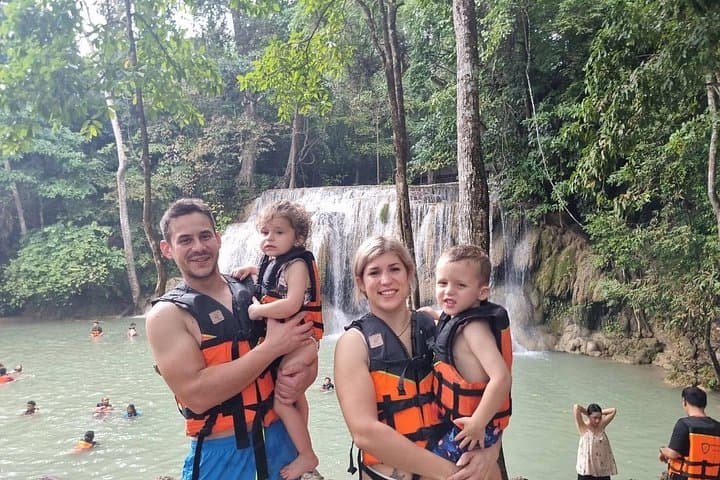
The route pairs human history with geological drama. The bridge and nearby war cemetery tell the wartime story of the Thai-Burma Railway—constructed under Japanese occupation during WWII—while Erawan National Park, carved from limestone and sandstone, showcases layered cliffs and seven emerald tiers tumbling into jade pools.
Visitors move between culture and canopy: a short climb at Wat Tham Sua (Tiger Cave Temple) rewards with wide floodplain panoramas and Buddhist iconography; downriver, farmers still irrigate paddies the same way their families have for generations.
Practicalities are straightforward. The day runs about 7–8 hours with roughly 1–2 hours at the bridge and 2–3 hours exploring Erawan’s falls; the main waterfall trail to the top tiers is a steady uphill of roughly 1.2–1.5 km with about 150–250 m of elevation gain via steps and rock paths. Trails are well marked but can be slippery after rain; swimming in designated pools is common. Bring sturdy shoes, sun protection, and a small dry bag for wet swims. Midday is hottest—plan the falls for late morning or late afternoon light and expect guided commentary at each stop. This itinerary balances reflection and refreshment: history presented with respect, nature offered with room to cool off in clear, limestone pools.
Yes—this tour lists entrance fees to Erawan and the bridge plus lunch and bottled water as included in the itinerary.
Expect 1.2–1.5 km one-way on the main trail with 150–250 m of elevation gain to reach upper tiers; time at the falls is typically 2–3 hours.
Swimming is allowed in designated pools at several tiers; follow park rules, avoid using soap, and heed any closed-area signs after heavy rain.
The bridge walk is flat and accessible, but nearby museums and cemetery pathways may have uneven surfaces; the Erawan trail is not recommended for those with serious mobility limits.
DiscoverEase Tours operates guided outdoor trips and adventures with an emphasis on safety, stewardship, and memorable experiences.



A morning leaves Bangkok’s humid clutter behind as the van hums west along the highway and the air opens to low limestone ridges and rice paddies. By midmorning the steel slats of the River Kwai Bridge come into view, metal blinking under tropical sun; footsteps across the planks measure history where the Death Railway once scarred the valley.
A morning leaves Bangkok’s humid clutter behind as the van hums west along the highway and the air opens to low limestone ridges and rice paddies. By midmorning the steel slats of the River Kwai Bridge come into view, metal blinking under tropical sun; footsteps across the planks measure history where the Death Railway once scarred the valley.
The route pairs human history with geological drama. The bridge and nearby war cemetery tell the wartime story of the Thai-Burma Railway—constructed under Japanese occupation during WWII—while Erawan National Park, carved from limestone and sandstone, showcases layered cliffs and seven emerald tiers tumbling into jade pools.
Visitors move between culture and canopy: a short climb at Wat Tham Sua (Tiger Cave Temple) rewards with wide floodplain panoramas and Buddhist iconography; downriver, farmers still irrigate paddies the same way their families have for generations.
Practicalities are straightforward. The day runs about 7–8 hours with roughly 1–2 hours at the bridge and 2–3 hours exploring Erawan’s falls; the main waterfall trail to the top tiers is a steady uphill of roughly 1.2–1.5 km with about 150–250 m of elevation gain via steps and rock paths. Trails are well marked but can be slippery after rain; swimming in designated pools is common. Bring sturdy shoes, sun protection, and a small dry bag for wet swims. Midday is hottest—plan the falls for late morning or late afternoon light and expect guided commentary at each stop. This itinerary balances reflection and refreshment: history presented with respect, nature offered with room to cool off in clear, limestone pools.