THE ADVENTURE COLLECTIVE® · Independent discovery and booking for outdoor travel
Combine a reflective visit to the Bridge over the River Kwai with a scenic train ride along the Death Railway and a refreshing climb to Erawan’s emerald pools. This full-day tour pairs wartime history with waterfall swims and forested trails.
Combine a reflective visit to the Bridge over the River Kwai with a scenic train ride along the Death Railway and a refreshing climb to Erawan’s emerald pools. This full-day tour pairs wartime history with waterfall swims and forested trails.
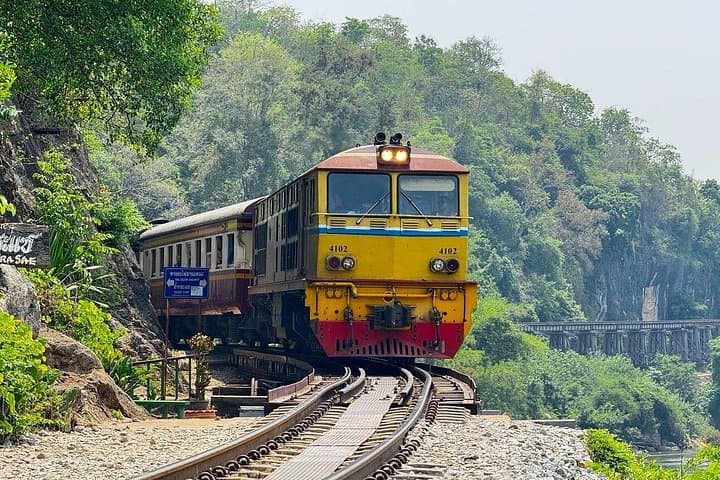
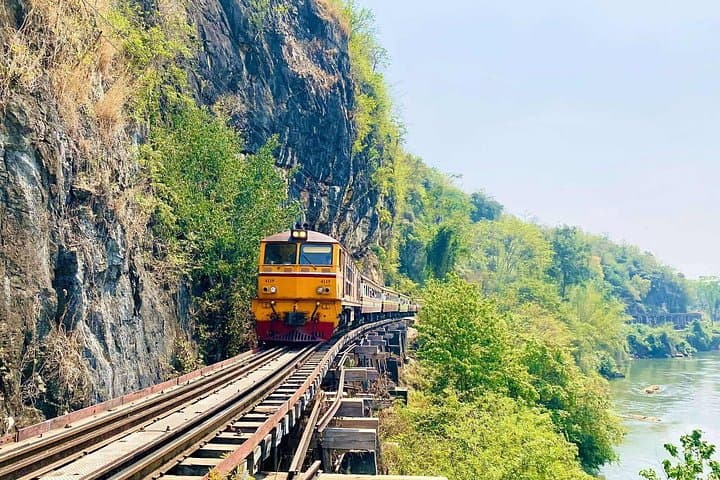
Morning light slices across the river as the convoy leaves Bangkok and the landscape opens into low limestone hills and rice paddies. By the time the train rumbles along the old Burma Railway, the clang of metal and river wind draw attention away from the map—this is a place where landscape and history push at one another.
Verified experiences and guided adventures in the surrounding area.
Operated by Overchill Tours and Travel · Kanchanaburi, Kanchanaburi Province
Morning light slices across the river as the convoy leaves Bangkok and the landscape opens into low limestone hills and rice paddies. By the time the train rumbles along the old Burma Railway, the clang of metal and river wind draw attention away from the map—this is a place where landscape and history push at one another.
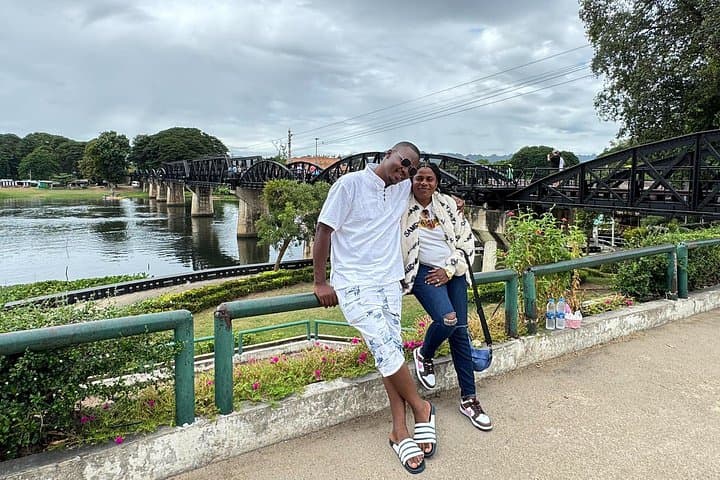
The Bridge over the River Kwai marks a stark chapter: the Death Railway was constructed under Japanese occupation in World War II using forced labor and POWs, and the cemetery nearby lays out that human cost in rows of names.
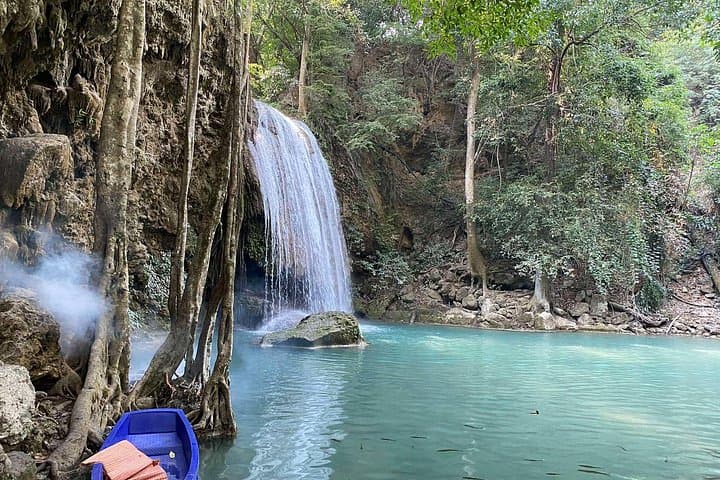
Geology here is simple and clear—soft sedimentary ridges give way to karst outcrops, and Erawan’s springs cascade over terraced limestone shelves into emerald pools. Local communities around Kanchanaburi are largely Thai-Burmese in heritage; market stalls sell sticky rice and grilled fish to visitors returning from the falls.
Practically, the day balances heritage with active nature: a short walking loop at the bridge and cemetery, a scenic train ride with a stop at Krasae Cave station, then a 1–4 km ascent through well-marked trails at Erawan to reach up to seven tiers of falls. Levels 1–4 are gentle; 5–7 require steadier footing and steps. Bring swimwear for clear pools, sturdy shoes for rocky steps, and expect humidity year-round.
Plan for early pickup from Kanchanaburi or Bangkok, sunscreen that’s reef-safe for swims, and cash for park entrance and local vendors. The combined day is equal parts reflection and river-swollen adventure—history pulls at you at the bridge; the river dares you to cool off in its green basins.
The itinerary runs about 8 hours from hotel pickup to return, covering the bridge, a train segment, Erawan Falls, and the war cemetery.
Yes — the tour includes a ride along the Death Railway with a stop at Krasae Cave station; ticket is provided with the tour inclusions.
Yes — levels 1–4 are easily accessed without swimming; higher tiers involve wet sections and short swims, so non-swimmers can still enjoy most of the park.
Erawan has uneven limestone steps and some steep sections; it’s not recommended for travelers with serious mobility or spinal issues.
Overchill Tours and Travel operates guided outdoor trips and adventures with an emphasis on safety, stewardship, and memorable experiences.
Morning light slices across the river as the convoy leaves Bangkok and the landscape opens into low limestone hills and rice paddies. By the time the train rumbles along the old Burma Railway, the clang of metal and river wind draw attention away from the map—this is a place where landscape and history push at one another.
Morning light slices across the river as the convoy leaves Bangkok and the landscape opens into low limestone hills and rice paddies. By the time the train rumbles along the old Burma Railway, the clang of metal and river wind draw attention away from the map—this is a place where landscape and history push at one another.
The Bridge over the River Kwai marks a stark chapter: the Death Railway was constructed under Japanese occupation in World War II using forced labor and POWs, and the cemetery nearby lays out that human cost in rows of names.
Geology here is simple and clear—soft sedimentary ridges give way to karst outcrops, and Erawan’s springs cascade over terraced limestone shelves into emerald pools. Local communities around Kanchanaburi are largely Thai-Burmese in heritage; market stalls sell sticky rice and grilled fish to visitors returning from the falls.
Practically, the day balances heritage with active nature: a short walking loop at the bridge and cemetery, a scenic train ride with a stop at Krasae Cave station, then a 1–4 km ascent through well-marked trails at Erawan to reach up to seven tiers of falls. Levels 1–4 are gentle; 5–7 require steadier footing and steps. Bring swimwear for clear pools, sturdy shoes for rocky steps, and expect humidity year-round.
Plan for early pickup from Kanchanaburi or Bangkok, sunscreen that’s reef-safe for swims, and cash for park entrance and local vendors. The combined day is equal parts reflection and river-swollen adventure—history pulls at you at the bridge; the river dares you to cool off in its green basins.
