THE ADVENTURE COLLECTIVE® · Independent discovery and booking for outdoor travel

A full-day loop from Kandy that pairs the dramatic Sigiriya Rock climb and Pidurangala viewpoint with ancient cave temples and an authentic village safari—boat, cart and a hands-on cooking experience.
A full-day loop from Kandy that pairs the dramatic Sigiriya Rock climb and Pidurangala viewpoint with ancient cave temples and an authentic village safari—boat, cart and a hands-on cooking experience.
You arrive in the early heat of a Sri Lankan morning, the road from Kandy opening into low, grid-like rice paddies dotted with water buffalo. The driver eases the van onto a narrow lane and the landscape sharpens: a single, squat monolith rises from the plain—Sigiriya—its sheer face catching sunlight like an ancient watchtower. The day will move between carved rock, painted caves and quiet village life, a compact loop of history and habitat that rewards attention more than speed.
Verified experiences and guided adventures in the surrounding area.
Operated by Travel with Hasith · Sigiriya, Central Province
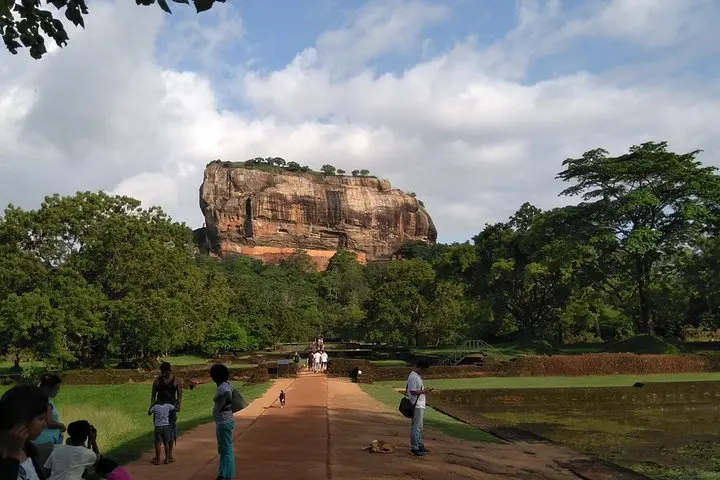
You arrive in the early heat of a Sri Lankan morning, the road from Kandy opening into low, grid-like rice paddies dotted with water buffalo. The driver eases the van onto a narrow lane and the landscape sharpens: a single, squat monolith rises from the plain—Sigiriya—its sheer face catching sunlight like an ancient watchtower. The day will move between carved rock, painted caves and quiet village life, a compact loop of history and habitat that rewards attention more than speed.
First stop is the Rangiri Dambulla Cave Temple, where five painted sanctuaries cling to a low outcrop. The caves hold Buddhist murals and statues stretching back two millennia; the cool, shaded chambers feel like a carved memory of Sri Lanka’s island kingdoms. Geologically, these sites sit on Precambrian bedrock—ancient gneiss interrupted here by later volcanic intrusions—so the climbing is sudden rather than gradual: stone steps, iron railings and short scrambles.
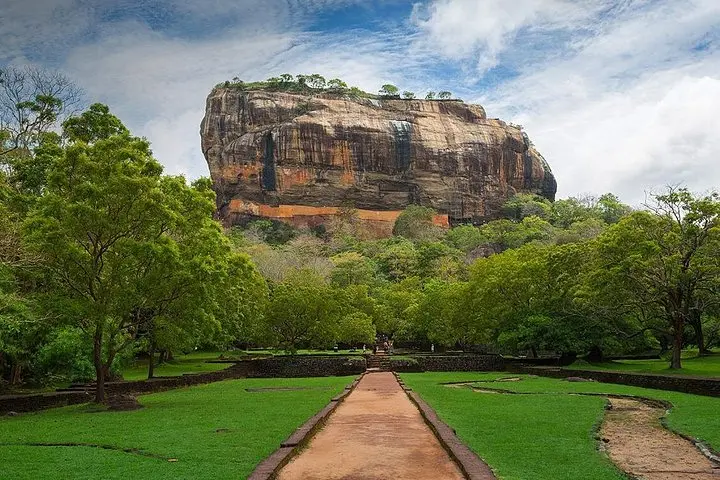
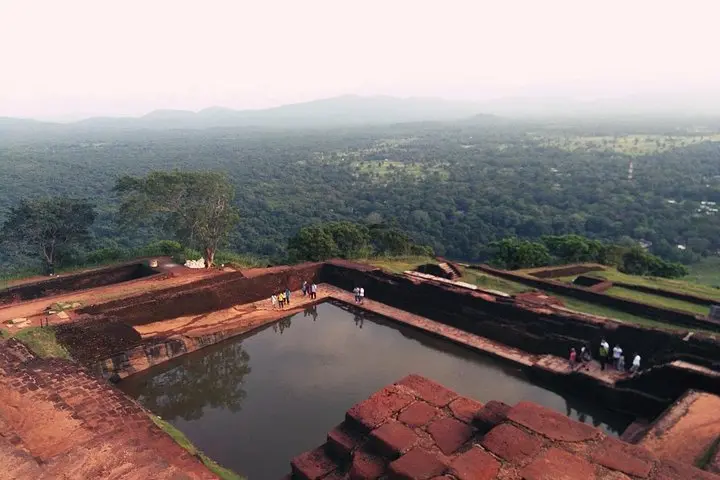
At Sigiriya Rock Fortress the scene shifts. Built in the 5th century CE by King Kasyapa, the plateau commands views across the surrounding wetlands and gardens; the rock itself rises roughly 200 metres above the plain and the ascent includes steep stairways and the famous mirror wall and fresco galleries. Adjacent Pidurangala offers a different perspective: a rough 15–30 minute climb with about 150–200 metres of elevation gain that ends on a broad slab where Sigiriya sits framed like a painting.
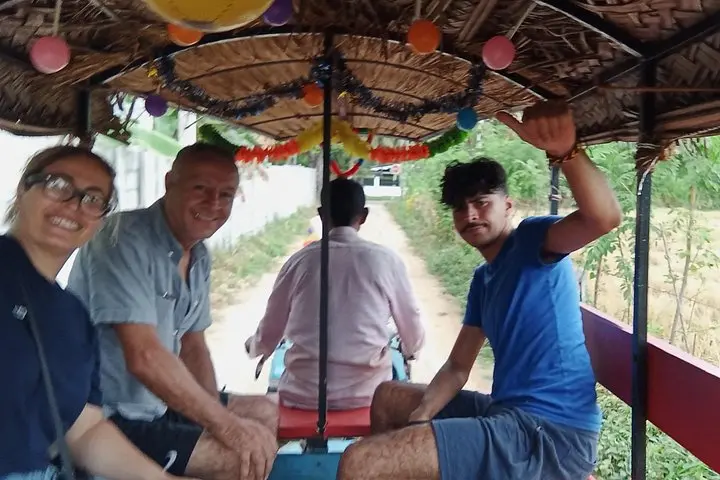
The second half of the day slows down. A village cart safari and boat ride on a reservoir are low-slung, sensory experiences—birds inspect you as you pass, villagers wave from paddy edges, and a home-cooked lunch offers hands-on lessons in spices and cooking methods. The hand-tractor ride back across bumpy country is an honest reminder this is a working landscape, not a theme park.
Practicalities: plan for a full day (6–9 hours). The tour includes private transport, water and air-conditioned comfort between stops, but admissions to heritage sites are typically paid on site. Wear sturdy walking shoes—the Sigiriya climb involves roughly 1,200 steps and narrow passages—and carry sun protection, at least 1.5 liters of water, and modest clothing for the temple. Start early to avoid midday heat and to catch better light for photos.
For travelers who want culture with movement, this loop is efficient: a history-rich climb, a quieter summit at Pidurangala, and a village stretch that reintroduces you to everyday Sri Lanka. It moves at an easy pace when you let it, but it rewards the curious with close-up views of rock art, temple life and wetland birds—small encounters that sit large in memory.
No—admissions to Dambulla, Sigiriya and other heritage sites are usually paid on site by travelers.
Expect about 2–3 hours one way depending on traffic; the full day tour is planned around this travel time.
Yes for many families—however the Sigiriya climb involves steep stairs; those with mobility issues may find it challenging.
The itinerary includes a traditional village lunch during the cooking experience; bottled water is provided in the vehicle.
Modest clothing that covers shoulders and knees; a sarong or shawl is useful and often required at entrances.
Yes, photography is allowed in most outdoor areas, but be respectful in the caves and follow any site-specific rules regarding flash or restricted areas.
Travel with Hasith operates guided outdoor trips and adventures with an emphasis on safety, stewardship, and memorable experiences.
You arrive in the early heat of a Sri Lankan morning, the road from Kandy opening into low, grid-like rice paddies dotted with water buffalo. The driver eases the van onto a narrow lane and the landscape sharpens: a single, squat monolith rises from the plain—Sigiriya—its sheer face catching sunlight like an ancient watchtower. The day will move between carved rock, painted caves and quiet village life, a compact loop of history and habitat that rewards attention more than speed.
You arrive in the early heat of a Sri Lankan morning, the road from Kandy opening into low, grid-like rice paddies dotted with water buffalo. The driver eases the van onto a narrow lane and the landscape sharpens: a single, squat monolith rises from the plain—Sigiriya—its sheer face catching sunlight like an ancient watchtower. The day will move between carved rock, painted caves and quiet village life, a compact loop of history and habitat that rewards attention more than speed.
First stop is the Rangiri Dambulla Cave Temple, where five painted sanctuaries cling to a low outcrop. The caves hold Buddhist murals and statues stretching back two millennia; the cool, shaded chambers feel like a carved memory of Sri Lanka’s island kingdoms. Geologically, these sites sit on Precambrian bedrock—ancient gneiss interrupted here by later volcanic intrusions—so the climbing is sudden rather than gradual: stone steps, iron railings and short scrambles.
At Sigiriya Rock Fortress the scene shifts. Built in the 5th century CE by King Kasyapa, the plateau commands views across the surrounding wetlands and gardens; the rock itself rises roughly 200 metres above the plain and the ascent includes steep stairways and the famous mirror wall and fresco galleries. Adjacent Pidurangala offers a different perspective: a rough 15–30 minute climb with about 150–200 metres of elevation gain that ends on a broad slab where Sigiriya sits framed like a painting.
The second half of the day slows down. A village cart safari and boat ride on a reservoir are low-slung, sensory experiences—birds inspect you as you pass, villagers wave from paddy edges, and a home-cooked lunch offers hands-on lessons in spices and cooking methods. The hand-tractor ride back across bumpy country is an honest reminder this is a working landscape, not a theme park.
Practicalities: plan for a full day (6–9 hours). The tour includes private transport, water and air-conditioned comfort between stops, but admissions to heritage sites are typically paid on site. Wear sturdy walking shoes—the Sigiriya climb involves roughly 1,200 steps and narrow passages—and carry sun protection, at least 1.5 liters of water, and modest clothing for the temple. Start early to avoid midday heat and to catch better light for photos.
For travelers who want culture with movement, this loop is efficient: a history-rich climb, a quieter summit at Pidurangala, and a village stretch that reintroduces you to everyday Sri Lanka. It moves at an easy pace when you let it, but it rewards the curious with close-up views of rock art, temple life and wetland birds—small encounters that sit large in memory.