THE ADVENTURE COLLECTIVE® · Independent discovery and booking for outdoor travel

Start before sunrise in Kandy and spend a full day exploring Sigiriya’s cliff-top palace, a traditional village, and the painted caves of Dambulla. This private transfer combines history, hands-on culture, and practical logistics for a compact Sri Lankan circuit.
Start before sunrise in Kandy and spend a full day exploring Sigiriya’s cliff-top palace, a traditional village, and the painted caves of Dambulla. This private transfer combines history, hands-on culture, and practical logistics for a compact Sri Lankan circuit.
You set out before dawn from Kandy, the city’s cool mist peeling back as the road threads into a patchwork of paddy fields and palm-lined lanes. By the time the limestone cliffs of Sigiriya come into view, the sun has nudged color into the sky and the solitary Lion Rock stands like a carved challenge—its vertical face daring you to climb. The day unfolds as a sequence of contrasts: a fortress perched 200 meters above its plain, a village that still cooks over wood fires, and a cave temple whose painted walls quietly insist on reverence.
Verified experiences and guided adventures in the surrounding area.
Operated by Lanka Ceylon Tours · Sigiriya, Central Province
You set out before dawn from Kandy, the city’s cool mist peeling back as the road threads into a patchwork of paddy fields and palm-lined lanes. By the time the limestone cliffs of Sigiriya come into view, the sun has nudged color into the sky and the solitary Lion Rock stands like a carved challenge—its vertical face daring you to climb. The day unfolds as a sequence of contrasts: a fortress perched 200 meters above its plain, a village that still cooks over wood fires, and a cave temple whose painted walls quietly insist on reverence.
Sigiriya is no mere lookout; it was King Kasyapa’s palace and defensive citadel in the 5th century CE. Walkways, water gardens and remnants of royal chambers trace an engineered landscape that channels rain and mirrors. The rock’s famous frescoes—painted on sheltered ledges—survive because generations of monks and villagers respected the site’s careful microclimate. A short drive away, Dambulla’s cave temple complex dates to the 1st century BCE when King Valagamba converted natural caverns into shrines; the caves are layered with more than 150 Buddha statues and two millennia of murals that map Sri Lanka’s religious history.
Between monuments the village tour offers a practical, human counterpoint: bullock cart ruts, hand-threshed grain, a catamaran skimming the irrigation tanks and a cookery demo that ends with a midday rice-and-curry lunch. The food—simple, bright, spiced—tells the same story as the landscape: water and soil first, then careful hands.
Practical guide: the full excursion runs eight to ten hours with hotel pickup in Kandy around 6:00 a.m. Expect 2–3 hours of driving round trip; the Sigiriya climb takes roughly 90–150 minutes on stairs and metal walkways and gains about 200 meters in elevation. Wear closed shoes with grip—the ascent includes narrow steps and iron platforms—and carry water, sunscreen and a hat. Temple etiquette is strict: shoulders and knees should be covered and shoes removed before entering sacred spaces. Entrance fees are typically not included on private transfers, so bring local currency.
Timing matters: climb Sigiriya early to avoid heat and afternoon crowds, and save energy for the heat and humidity that builds by midday. If you want a quieter alternative, climb nearby Pidurangala at sunset for a mirror view of Lion Rock. Respect the sites: stay on marked paths, avoid touching frescoes, and follow your guide’s directions to protect fragile archaeological fabric.
By dusk you’re back in Kandy, the day’s images—sunlit rock, painted caves, a village meal—settling like dust on your boots, tangible and uncomplicated. It’s a circuit of geography and history that leaves a clear map in your head: how people shaped the land, and how the land in turn shaped them.
The private transfer takes about 2–3 hours each way depending on traffic; the full tour is typically 8–10 hours including stops.
Admission is usually not included in the private transfer—bring cash (Sri Lankan rupees) to pay site fees on arrival.
It’s a strenuous stair climb with roughly 200 meters of elevation gain; reasonable fitness and steady footing are needed, but no technical climbing skills.
Dress modestly: cover shoulders and knees. Remove shoes before entering temple interiors and avoid loud clothing or behavior.
A traditional village lunch and cookery demonstration are part of this itinerary, but confirm dietary needs when booking.
Yes—guides usually allow time at key viewpoints; early morning offers the softest light on Sigiriya and fewer people for cleaner shots.
Lanka Ceylon Tours operates guided outdoor trips and adventures with an emphasis on safety, stewardship, and memorable experiences.
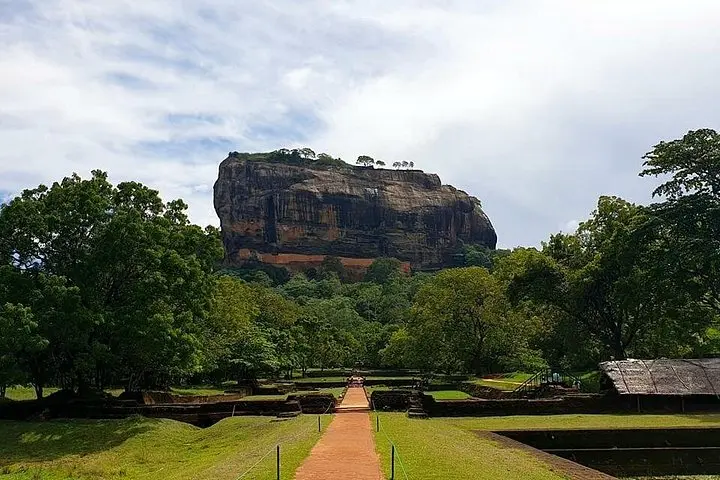
You set out before dawn from Kandy, the city’s cool mist peeling back as the road threads into a patchwork of paddy fields and palm-lined lanes. By the time the limestone cliffs of Sigiriya come into view, the sun has nudged color into the sky and the solitary Lion Rock stands like a carved challenge—its vertical face daring you to climb. The day unfolds as a sequence of contrasts: a fortress perched 200 meters above its plain, a village that still cooks over wood fires, and a cave temple whose painted walls quietly insist on reverence.
You set out before dawn from Kandy, the city’s cool mist peeling back as the road threads into a patchwork of paddy fields and palm-lined lanes. By the time the limestone cliffs of Sigiriya come into view, the sun has nudged color into the sky and the solitary Lion Rock stands like a carved challenge—its vertical face daring you to climb. The day unfolds as a sequence of contrasts: a fortress perched 200 meters above its plain, a village that still cooks over wood fires, and a cave temple whose painted walls quietly insist on reverence.
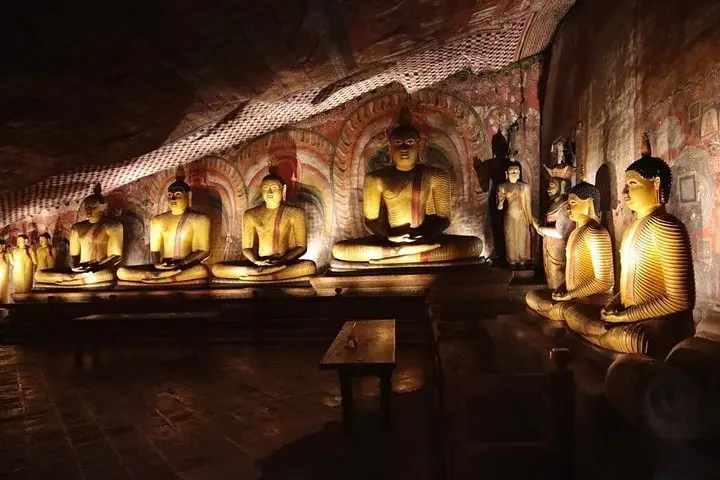
Sigiriya is no mere lookout; it was King Kasyapa’s palace and defensive citadel in the 5th century CE. Walkways, water gardens and remnants of royal chambers trace an engineered landscape that channels rain and mirrors. The rock’s famous frescoes—painted on sheltered ledges—survive because generations of monks and villagers respected the site’s careful microclimate. A short drive away, Dambulla’s cave temple complex dates to the 1st century BCE when King Valagamba converted natural caverns into shrines; the caves are layered with more than 150 Buddha statues and two millennia of murals that map Sri Lanka’s religious history.
Between monuments the village tour offers a practical, human counterpoint: bullock cart ruts, hand-threshed grain, a catamaran skimming the irrigation tanks and a cookery demo that ends with a midday rice-and-curry lunch. The food—simple, bright, spiced—tells the same story as the landscape: water and soil first, then careful hands.
Practical guide: the full excursion runs eight to ten hours with hotel pickup in Kandy around 6:00 a.m. Expect 2–3 hours of driving round trip; the Sigiriya climb takes roughly 90–150 minutes on stairs and metal walkways and gains about 200 meters in elevation. Wear closed shoes with grip—the ascent includes narrow steps and iron platforms—and carry water, sunscreen and a hat. Temple etiquette is strict: shoulders and knees should be covered and shoes removed before entering sacred spaces. Entrance fees are typically not included on private transfers, so bring local currency.
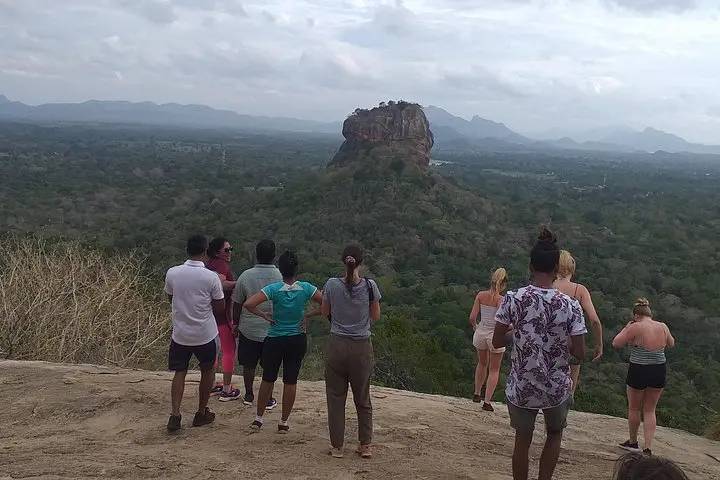
Timing matters: climb Sigiriya early to avoid heat and afternoon crowds, and save energy for the heat and humidity that builds by midday. If you want a quieter alternative, climb nearby Pidurangala at sunset for a mirror view of Lion Rock. Respect the sites: stay on marked paths, avoid touching frescoes, and follow your guide’s directions to protect fragile archaeological fabric.
By dusk you’re back in Kandy, the day’s images—sunlit rock, painted caves, a village meal—settling like dust on your boots, tangible and uncomplicated. It’s a circuit of geography and history that leaves a clear map in your head: how people shaped the land, and how the land in turn shaped them.