THE ADVENTURE COLLECTIVE® · Independent discovery and booking for outdoor travel

From sea lions at Seal Bay to the wind-sculpted granite of Remarkable Rocks, this full-day tour threads Kangaroo Island’s greatest hits into one easy loop. Expect wild coastlines, resilient landscapes, and boardwalk strolls where wildlife and weather call the shots.
From sea lions at Seal Bay to the wind-sculpted granite of Remarkable Rocks, this full-day tour threads Kangaroo Island’s greatest hits into one easy loop. Expect wild coastlines, resilient landscapes, and boardwalk strolls where wildlife and weather call the shots.
Morning breaks over Kangaroo Island with the Southern Ocean flexing at the edges of Australia. Salt rides the wind, the mallee scrub whispers, and the tour bus rolls west from Kingscote toward a coastline that never sits still. At Seal Bay, a timber boardwalk glides through dunes where Australian sea lions nap like sun-drunk lifeguards. Pups pester the tide; bulls grumble at the surf. The ocean keeps the rhythm, daring you to linger on the platforms as spray drifts in on the breeze.
Verified experiences and guided adventures in the surrounding area.
Operated by Kangaroo Island Tours & Bus Charters · Kingscote, South Australia
Morning breaks over Kangaroo Island with the Southern Ocean flexing at the edges of Australia. Salt rides the wind, the mallee scrub whispers, and the tour bus rolls west from Kingscote toward a coastline that never sits still. At Seal Bay, a timber boardwalk glides through dunes where Australian sea lions nap like sun-drunk lifeguards. Pups pester the tide; bulls grumble at the surf. The ocean keeps the rhythm, daring you to linger on the platforms as spray drifts in on the breeze.
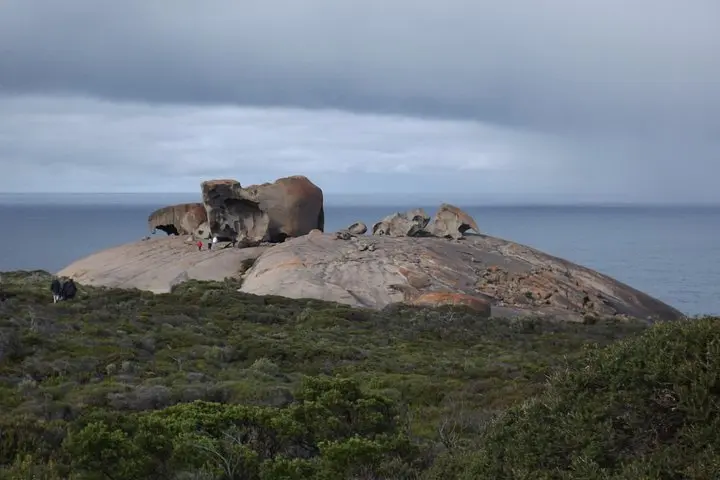
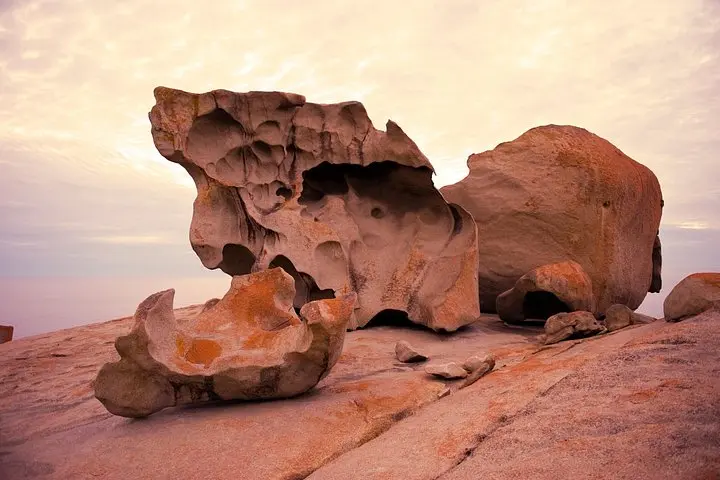
The day arcs from bluewater calm to granite drama. Vivonne Bay shows its hand early—water so clear it feels edited, a jetty planked with history and fishing tales. Then Flinders Chase takes over, the landscape broad-shouldered and tough after the 2019–20 bushfires. Green shoots push through blackened limbs; the park’s resilience is plain and raw. Remarkable Rocks wait on a headland like modern sculpture that never needed a gallery: orange lichen paints wind-carved boulders, while the granite underfoot grips your boots and warms in the sun. Admirals Arch adds a final exclamation—a sea cave framed by dripping stalactites, long-nosed fur seals slipping through whitewater as swell breathes in and out of the cliff.
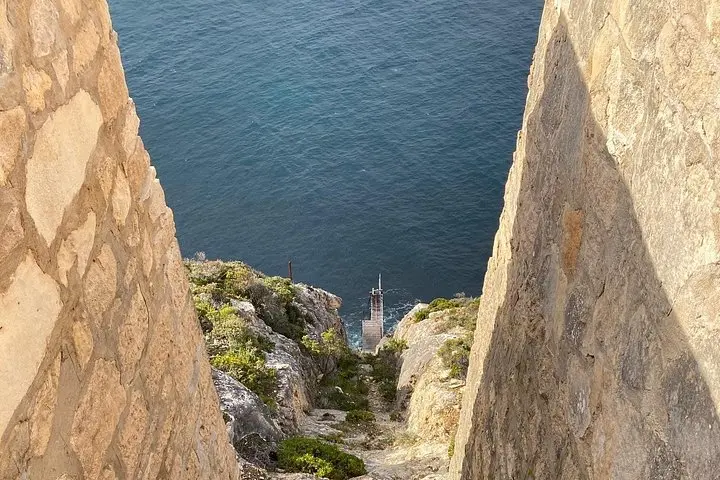
Geology is the quiet narrator here. Ancient granites and metamorphic rocks—some among the oldest in South Australia—have been ground into shapes by wind that tests your balance and swell that keeps pushing forward. Human history threads in at Cape du Couedic Lightstation, built in 1909 to keep ships off the rocks; supplies once winched up from Weirs Cove where the coast refuses easy landings. Today, carefully built boardwalks and platforms protect both the fragile headlands and the animals that live here.
Logistics are straightforward. Expect a full day (about 9 hours) with easy to moderate walking: short boardwalks, some steps, and exposed viewpoints where gusts can bite. Sturdy shoes, sun protection, and a windproof layer matter as much as your camera. Water and snacks are available in towns, but carry a bottle—shade is scarce on the headlands. The guide handles the driving; you handle the wandering and the watching.
This is an island that makes you work just enough for its views—and pays you back quickly. Sea lions own the beach, the ocean writes the coastline, and the light is always rewriting the granite. By late afternoon, you’ve traced a looping story of wildlife, rock, and weather, and the bus hums back toward Kingscote while the Southern Ocean keeps talking to the cliffs you just left behind.
Expect several short walks throughout the day—typically 0.5–1 km each—on boardwalks and formed paths with some steps at Admirals Arch.
Meals are not typically included; you’ll have time to purchase food at a local stop or bring a packed lunch.
Many boardwalks are stroller-friendly, though some sections (like the steps to Admirals Arch) are not. Infant seats are available on the bus upon request.
Australian sea lions at Seal Bay are common, and long-nosed fur seals are often visible near Admirals Arch. Kangaroos and tamar wallabies are frequent roadside sightings.
Drones are generally prohibited in South Australia’s national parks without a permit; leave it packed unless you have written approval.
Kangaroo Island is great year-round. Summer offers long days and calm seas; winter brings dramatic swells and fewer crowds. Spring and fall balance mild weather with active wildlife.
Kangaroo Island Tours & Bus Charters operates guided outdoor trips and adventures with an emphasis on safety, stewardship, and memorable experiences.
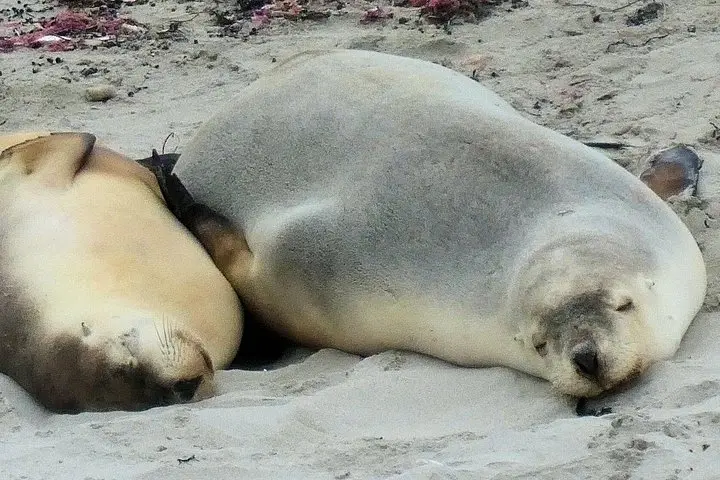
Morning breaks over Kangaroo Island with the Southern Ocean flexing at the edges of Australia. Salt rides the wind, the mallee scrub whispers, and the tour bus rolls west from Kingscote toward a coastline that never sits still. At Seal Bay, a timber boardwalk glides through dunes where Australian sea lions nap like sun-drunk lifeguards. Pups pester the tide; bulls grumble at the surf. The ocean keeps the rhythm, daring you to linger on the platforms as spray drifts in on the breeze.
Morning breaks over Kangaroo Island with the Southern Ocean flexing at the edges of Australia. Salt rides the wind, the mallee scrub whispers, and the tour bus rolls west from Kingscote toward a coastline that never sits still. At Seal Bay, a timber boardwalk glides through dunes where Australian sea lions nap like sun-drunk lifeguards. Pups pester the tide; bulls grumble at the surf. The ocean keeps the rhythm, daring you to linger on the platforms as spray drifts in on the breeze.
The day arcs from bluewater calm to granite drama. Vivonne Bay shows its hand early—water so clear it feels edited, a jetty planked with history and fishing tales. Then Flinders Chase takes over, the landscape broad-shouldered and tough after the 2019–20 bushfires. Green shoots push through blackened limbs; the park’s resilience is plain and raw. Remarkable Rocks wait on a headland like modern sculpture that never needed a gallery: orange lichen paints wind-carved boulders, while the granite underfoot grips your boots and warms in the sun. Admirals Arch adds a final exclamation—a sea cave framed by dripping stalactites, long-nosed fur seals slipping through whitewater as swell breathes in and out of the cliff.
Geology is the quiet narrator here. Ancient granites and metamorphic rocks—some among the oldest in South Australia—have been ground into shapes by wind that tests your balance and swell that keeps pushing forward. Human history threads in at Cape du Couedic Lightstation, built in 1909 to keep ships off the rocks; supplies once winched up from Weirs Cove where the coast refuses easy landings. Today, carefully built boardwalks and platforms protect both the fragile headlands and the animals that live here.
Logistics are straightforward. Expect a full day (about 9 hours) with easy to moderate walking: short boardwalks, some steps, and exposed viewpoints where gusts can bite. Sturdy shoes, sun protection, and a windproof layer matter as much as your camera. Water and snacks are available in towns, but carry a bottle—shade is scarce on the headlands. The guide handles the driving; you handle the wandering and the watching.
This is an island that makes you work just enough for its views—and pays you back quickly. Sea lions own the beach, the ocean writes the coastline, and the light is always rewriting the granite. By late afternoon, you’ve traced a looping story of wildlife, rock, and weather, and the bus hums back toward Kingscote while the Southern Ocean keeps talking to the cliffs you just left behind.