THE ADVENTURE COLLECTIVE® · Independent discovery and booking for outdoor travel

Explore Karlovy Vary’s steaming colonnades and Grandhotel Pupp, then cross to Loket’s medieval castle on this private full‑day from Prague. A guided blend of spa culture, geology, and compact castle exploration.
Explore Karlovy Vary’s steaming colonnades and Grandhotel Pupp, then cross to Loket’s medieval castle on this private full‑day from Prague. A guided blend of spa culture, geology, and compact castle exploration.
You step out of the air-conditioned transfer into a ribbon of steam and pastel façades — Karlovy Vary’s colonnades release a mineral-scented breath that has drawn visitors since medieval times. The city runs along the Teplá River, its pebble banks and café terraces punctuated by the ornate Grandhotel Pupp, a landmark that once doubled as a film set and now presides over a promenade of spa cups and walking sticks.
Verified experiences and guided adventures in the surrounding area.
Operated by Prague: Local Historian Tours · Karlovy Vary, Karlovy Vary Region
You step out of the air-conditioned transfer into a ribbon of steam and pastel façades — Karlovy Vary’s colonnades release a mineral-scented breath that has drawn visitors since medieval times. The city runs along the Teplá River, its pebble banks and café terraces punctuated by the ornate Grandhotel Pupp, a landmark that once doubled as a film set and now presides over a promenade of spa cups and walking sticks.
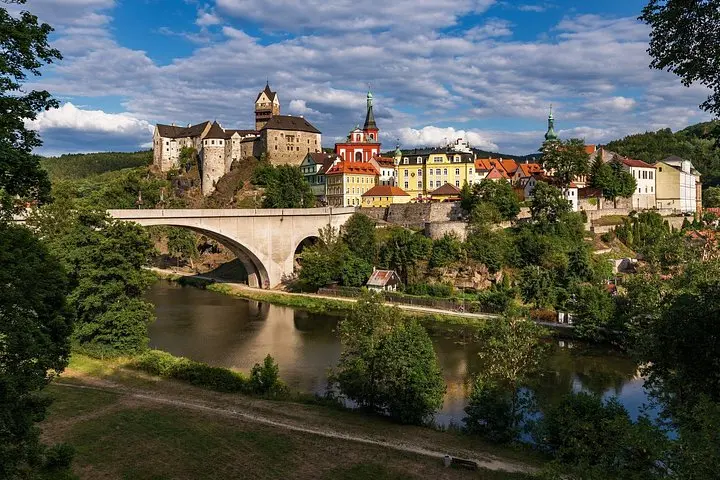
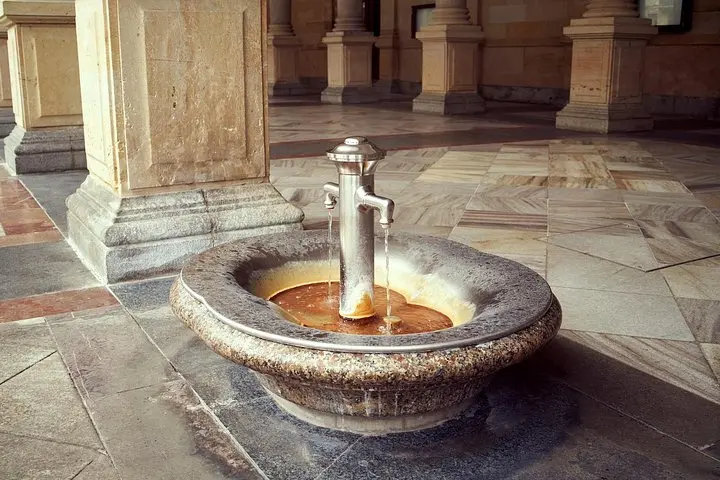
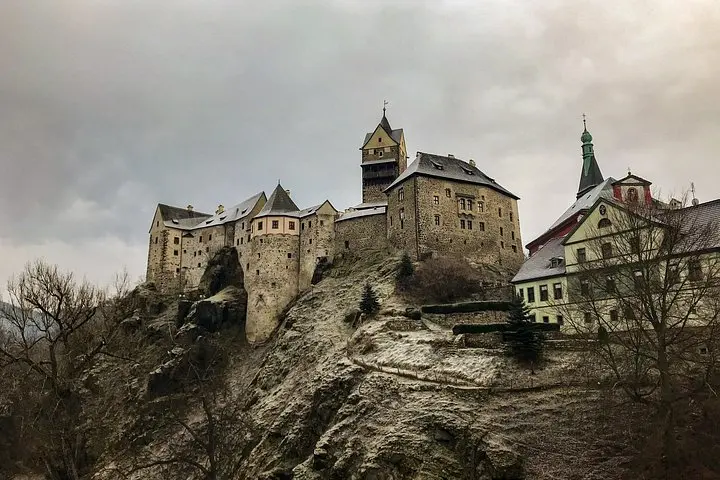
Geology here is visible: hot springs bubble where deep groundwater meets fractured bedrock, feeding the town’s dozen-plus thermal outlets. The spa culture dates to the 14th century when Charles IV helped popularize the baths; glassmakers and hoteliers followed, leaving an architecture of Art Nouveau and Baroque facades. By mid‑afternoon the tour slips into Loket, a compact Gothic fortress perched on an oxbow of the Ohře River — thick stone walls and a castle keep that trace Bohemia’s medieval border defenses.
Practical rhythm: expect mostly urban walking on cobbles (roughly 3–5 km in Karlovy Vary) with a short, steeper climb to a viewpoint near Diana Tower (≈100–150 m elevation gain). The private format means a guide-led loop, a local canteen lunch, and time to taste the spring water safely from colonnades.
Plan for weather shifting quickly; wear sturdy shoes for uneven surfaces, carry layers and a refillable bottle, and keep passport/ID handy for castle entry. This day blends cultural history, geological curiosity, and accessible walking — ideal for travelers who want a lively, low-impact dive into Bohemia’s spa towns.
The tour is approximately 8 hours; it includes a professional guide, air‑conditioned transport, bottled water, and stops in Karlovy Vary and Loket with a lunch break at a local canteen.
Standard admissions are typically not included—confirm with the operator if castle entry or special exhibitions are covered.
Many areas and the transport are wheelchair accessible, but cobbled surfaces and viewpoint climbs in Loket may be limiting—check specifics with the guide ahead of time.
Weekday mornings outside July–August are quietest; early or late visits to the Grandhotel Pupp and colonnades reduce crowding.
Prague: Local Historian Tours operates guided outdoor trips and adventures with an emphasis on safety, stewardship, and memorable experiences.
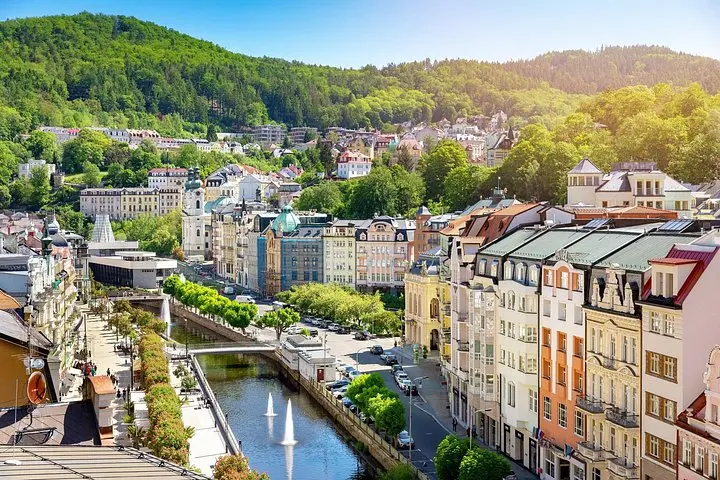
You step out of the air-conditioned transfer into a ribbon of steam and pastel façades — Karlovy Vary’s colonnades release a mineral-scented breath that has drawn visitors since medieval times. The city runs along the Teplá River, its pebble banks and café terraces punctuated by the ornate Grandhotel Pupp, a landmark that once doubled as a film set and now presides over a promenade of spa cups and walking sticks.
You step out of the air-conditioned transfer into a ribbon of steam and pastel façades — Karlovy Vary’s colonnades release a mineral-scented breath that has drawn visitors since medieval times. The city runs along the Teplá River, its pebble banks and café terraces punctuated by the ornate Grandhotel Pupp, a landmark that once doubled as a film set and now presides over a promenade of spa cups and walking sticks.
Geology here is visible: hot springs bubble where deep groundwater meets fractured bedrock, feeding the town’s dozen-plus thermal outlets. The spa culture dates to the 14th century when Charles IV helped popularize the baths; glassmakers and hoteliers followed, leaving an architecture of Art Nouveau and Baroque facades. By mid‑afternoon the tour slips into Loket, a compact Gothic fortress perched on an oxbow of the Ohře River — thick stone walls and a castle keep that trace Bohemia’s medieval border defenses.
Practical rhythm: expect mostly urban walking on cobbles (roughly 3–5 km in Karlovy Vary) with a short, steeper climb to a viewpoint near Diana Tower (≈100–150 m elevation gain). The private format means a guide-led loop, a local canteen lunch, and time to taste the spring water safely from colonnades.
Plan for weather shifting quickly; wear sturdy shoes for uneven surfaces, carry layers and a refillable bottle, and keep passport/ID handy for castle entry. This day blends cultural history, geological curiosity, and accessible walking — ideal for travelers who want a lively, low-impact dive into Bohemia’s spa towns.