THE ADVENTURE COLLECTIVE® · Independent discovery and booking for outdoor travel

Spend a day outside Prague exploring medieval Karlštejn Castle and the dramatic Americká (Quarry America). This semi‑private tour pairs royal history with raw limestone cliffs and scenic viewpoints—ideal for travelers who want guided context with room to roam.
Spend a day outside Prague exploring medieval Karlštejn Castle and the dramatic Americká (Quarry America). This semi‑private tour pairs royal history with raw limestone cliffs and scenic viewpoints—ideal for travelers who want guided context with room to roam.
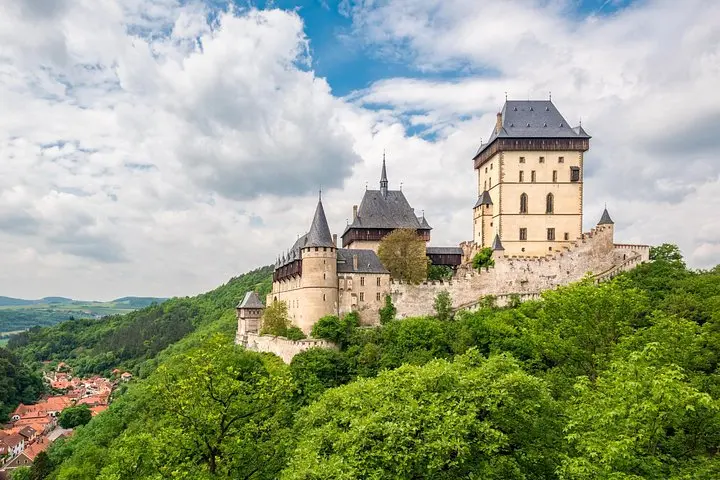
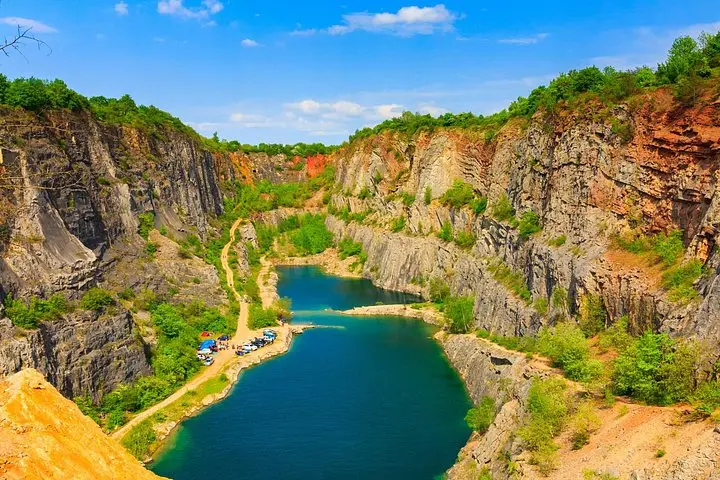
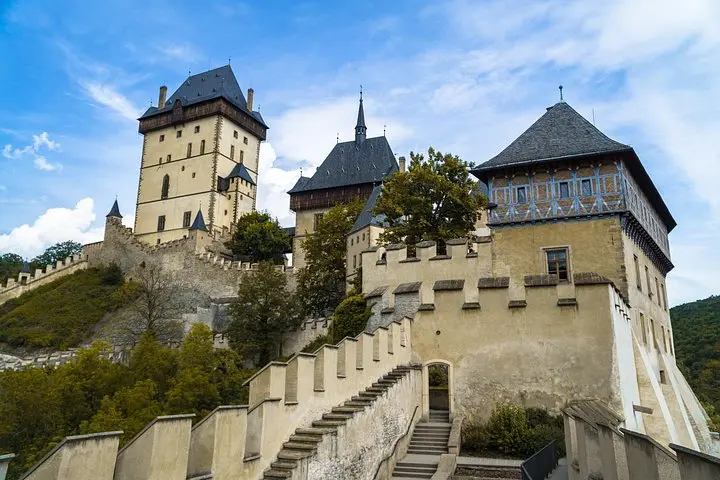
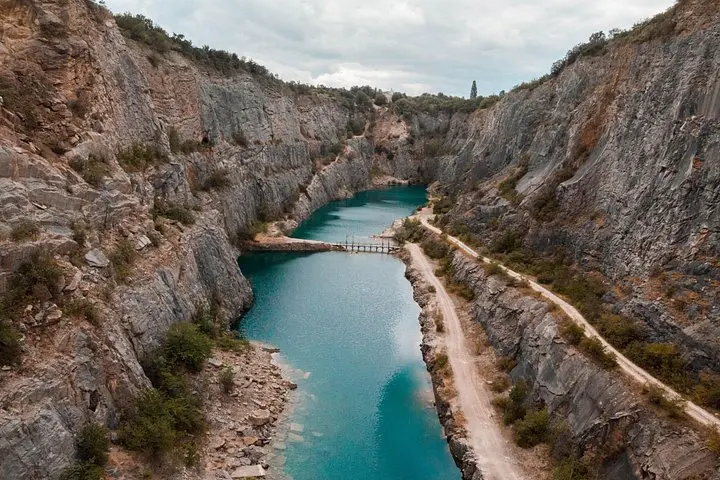
A low, slate-gray morning lifts off Prague as the minivan threads country lanes toward the silhouette of Karlštejn. The castle perches on a forested spur; stone walls catch the light and the guide’s voice folds into the wind. Later, the landscape opens into Americká Quarry—steep limestone faces drop into green water, and the canyon dares travelers to peer over its rim.
Verified experiences and guided adventures in the surrounding area.
Operated by Prague: Local Historian Tours · Karlštejn, Central Bohemian Region
A low, slate-gray morning lifts off Prague as the minivan threads country lanes toward the silhouette of Karlštejn. The castle perches on a forested spur; stone walls catch the light and the guide’s voice folds into the wind. Later, the landscape opens into Americká Quarry—steep limestone faces drop into green water, and the canyon dares travelers to peer over its rim.
Karlštejn was founded by Charles IV in the mid-14th century to protect royal regalia and church treasures; its Imperial Palace preserves that sense of guarded ceremony even when only viewed from outside. The surrounding hills are part of the Bohemian Karst, where layers of Cretaceous limestone have been carved by millennia of water and quarrying—hence the raw, vertical faces at Quarry America and the pocketed caves nearby.
Culturally, Karlštejn village remains small and serviceable—family-run restaurace, local beers, and stone-paved lanes that show their medieval plan. Guides on semi‑private tours balance history with geology, pointing out strata, viewing platforms, and conservation challenges created by tourism and past extraction.
Practical guidance: plan for a 6–7 hour outing, dress in sturdy shoes—the walkways around both sites are uneven—and bring a windproof layer; the quarry can be surprisingly cool in shade. Interiors of the castle are sometimes closed in winter, and admission to the castle interior isn’t always included in semi‑private packages, so confirm beforehand. Midweek mornings are best to avoid crowds. Hydrate on the move (bottled water is typically provided) and stay on marked trails: the quarry’s cliffs are unstable and hazardous.
Interior admission is sometimes optional and may be closed in winter; check the tour details and confirm if the Imperial Palace visit is included.
The semi‑private excursion is about 6–7 hours total with guided stops: expect moderate-paced walks of up to a few miles and time at viewpoints.
Yes—Karlštejn is reachable by train or public bus from Prague, but this tour typically includes private transport for convenience and time efficiency.
No—steep limestone faces and unstable edges make swimming and climbing unsafe; admire the quarry from designated viewpoints only.
Prague: Local Historian Tours operates guided outdoor trips and adventures with an emphasis on safety, stewardship, and memorable experiences.
A low, slate-gray morning lifts off Prague as the minivan threads country lanes toward the silhouette of Karlštejn. The castle perches on a forested spur; stone walls catch the light and the guide’s voice folds into the wind. Later, the landscape opens into Americká Quarry—steep limestone faces drop into green water, and the canyon dares travelers to peer over its rim.
A low, slate-gray morning lifts off Prague as the minivan threads country lanes toward the silhouette of Karlštejn. The castle perches on a forested spur; stone walls catch the light and the guide’s voice folds into the wind. Later, the landscape opens into Americká Quarry—steep limestone faces drop into green water, and the canyon dares travelers to peer over its rim.
Karlštejn was founded by Charles IV in the mid-14th century to protect royal regalia and church treasures; its Imperial Palace preserves that sense of guarded ceremony even when only viewed from outside. The surrounding hills are part of the Bohemian Karst, where layers of Cretaceous limestone have been carved by millennia of water and quarrying—hence the raw, vertical faces at Quarry America and the pocketed caves nearby.
Culturally, Karlštejn village remains small and serviceable—family-run restaurace, local beers, and stone-paved lanes that show their medieval plan. Guides on semi‑private tours balance history with geology, pointing out strata, viewing platforms, and conservation challenges created by tourism and past extraction.
Practical guidance: plan for a 6–7 hour outing, dress in sturdy shoes—the walkways around both sites are uneven—and bring a windproof layer; the quarry can be surprisingly cool in shade. Interiors of the castle are sometimes closed in winter, and admission to the castle interior isn’t always included in semi‑private packages, so confirm beforehand. Midweek mornings are best to avoid crowds. Hydrate on the move (bottled water is typically provided) and stay on marked trails: the quarry’s cliffs are unstable and hazardous.