THE ADVENTURE COLLECTIVE® · Independent discovery and booking for outdoor travel

Watch Karnak’s colossal columns and hieroglyphs come alive as light and narration reveal the lives of pharaohs and gods. This two-hour evening show pairs accessible storytelling with dramatic visuals—ideal for travelers seeking a concise cultural immersion in Luxor.
Watch Karnak’s colossal columns and hieroglyphs come alive as light and narration reveal the lives of pharaohs and gods. This two-hour evening show pairs accessible storytelling with dramatic visuals—ideal for travelers seeking a concise cultural immersion in Luxor.
Night settles over the east bank of the Nile and the columns of Karnak begin to take on a slow, deliberate glow. Visitors sit beneath towering pylons while voices—ancient rulers and modern narrators—carve the air, unraveling the temple’s political drama and ritual life. The colored lights trace hieroglyphs and reliefs, making stone frescoes read like pages turning under a bedside lamp.
Verified experiences and guided adventures in the surrounding area.
Operated by Luxor Taxi - DayTour · Luxor, Luxor Governorate
Night settles over the east bank of the Nile and the columns of Karnak begin to take on a slow, deliberate glow. Visitors sit beneath towering pylons while voices—ancient rulers and modern narrators—carve the air, unraveling the temple’s political drama and ritual life. The colored lights trace hieroglyphs and reliefs, making stone frescoes read like pages turning under a bedside lamp.
Karnak grew across a millennium into one of ancient Egypt’s most massive religious complexes; each pharaoh added pylons, obelisks and hypostyle halls. The granite and sandstone here tell of Nile-borne trade, quarrying at Aswan and labor systems that shaped the region’s economy and beliefs. Culturally the show interprets gods, kings and the centrality of Amun-Ra, placing visitors in a lineage of pilgrimage and state spectacle.
Practical details are straightforward: the program runs about two hours and is suitable for most visitors. Expect uneven stone surfaces and open-air seating—bring a jacket for desert evenings and a light for steps. Hotel pickup is common; it’s night photography-friendly but challenging in low light without a tripod. Timing your visit outside the peak tourist months gives quieter viewing.
This experience is part history lesson, part theatrical production: it frames monumental architecture with modern storytelling. For travelers, it’s an efficient cultural evening—sensory, informative and accessible—offering a clear window into why Karnak has occupied the Egyptian imagination for millennia.
The full program runs about two hours, including time for arrival and a short post-show period.
Portions are uneven and include steps; attendants can assist but full accessibility is limited—contact the operator ahead for specifics.
Cancellations made at least 24 hours before departure are fully refundable per the booking policy.
Yes—photography is permitted, but low-light conditions mean a tripod or steady device improves results; avoid flash that disturbs other guests.
Luxor Taxi - DayTour operates guided outdoor trips and adventures with an emphasis on safety, stewardship, and memorable experiences.
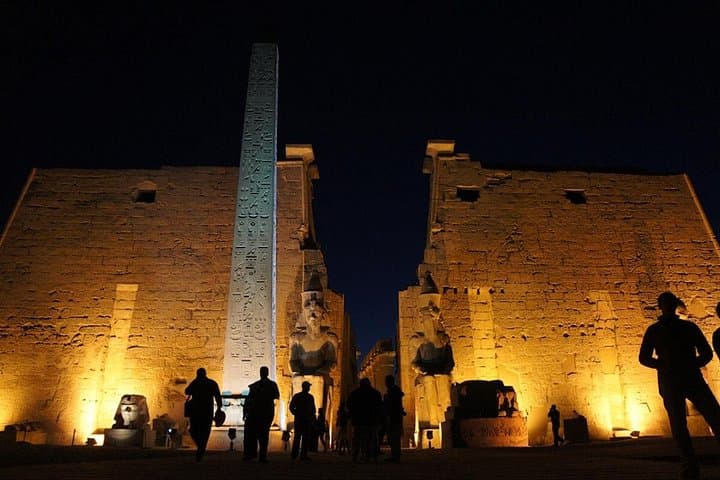
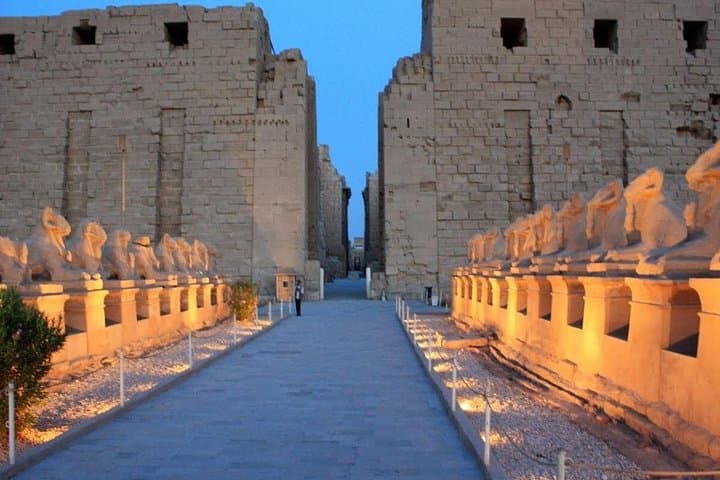
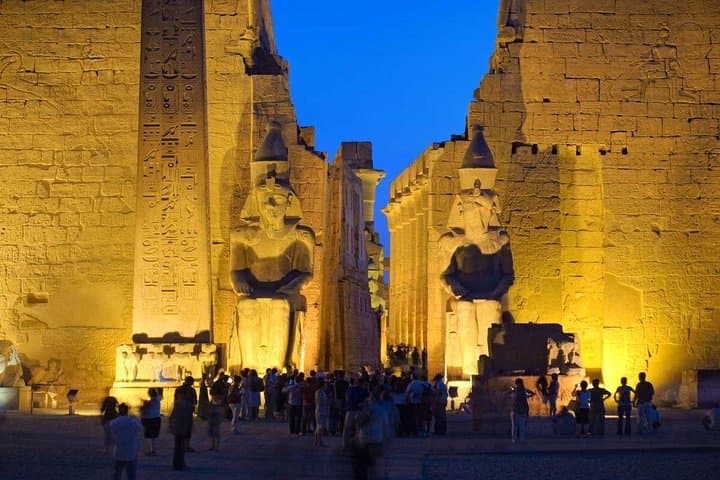
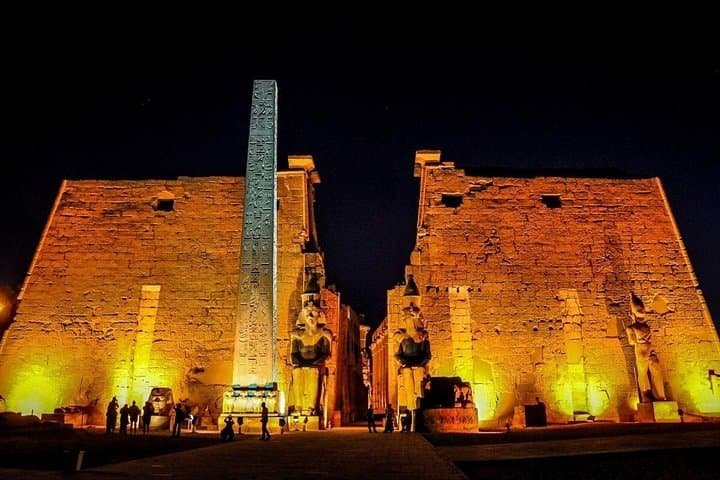
Night settles over the east bank of the Nile and the columns of Karnak begin to take on a slow, deliberate glow. Visitors sit beneath towering pylons while voices—ancient rulers and modern narrators—carve the air, unraveling the temple’s political drama and ritual life. The colored lights trace hieroglyphs and reliefs, making stone frescoes read like pages turning under a bedside lamp.
Night settles over the east bank of the Nile and the columns of Karnak begin to take on a slow, deliberate glow. Visitors sit beneath towering pylons while voices—ancient rulers and modern narrators—carve the air, unraveling the temple’s political drama and ritual life. The colored lights trace hieroglyphs and reliefs, making stone frescoes read like pages turning under a bedside lamp.
Karnak grew across a millennium into one of ancient Egypt’s most massive religious complexes; each pharaoh added pylons, obelisks and hypostyle halls. The granite and sandstone here tell of Nile-borne trade, quarrying at Aswan and labor systems that shaped the region’s economy and beliefs. Culturally the show interprets gods, kings and the centrality of Amun-Ra, placing visitors in a lineage of pilgrimage and state spectacle.
Practical details are straightforward: the program runs about two hours and is suitable for most visitors. Expect uneven stone surfaces and open-air seating—bring a jacket for desert evenings and a light for steps. Hotel pickup is common; it’s night photography-friendly but challenging in low light without a tripod. Timing your visit outside the peak tourist months gives quieter viewing.
This experience is part history lesson, part theatrical production: it frames monumental architecture with modern storytelling. For travelers, it’s an efficient cultural evening—sensory, informative and accessible—offering a clear window into why Karnak has occupied the Egyptian imagination for millennia.