THE ADVENTURE COLLECTIVE® · Independent discovery and booking for outdoor travel
Watch Karnak’s ancient stones come alive under floodlights as a narrated sound-and-light show traces the rise of Thebes. This short evening tour pairs dramatic illumination with local history and practical transfer service from Luxor.
Watch Karnak’s ancient stones come alive under floodlights as a narrated sound-and-light show traces the rise of Thebes. This short evening tour pairs dramatic illumination with local history and practical transfer service from Luxor.
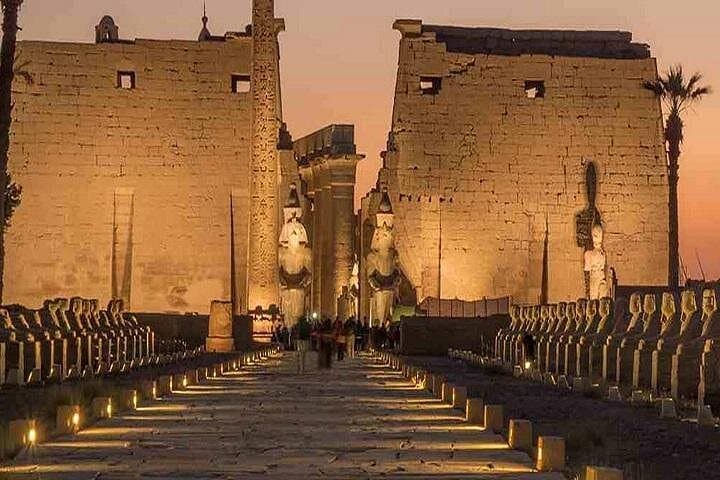
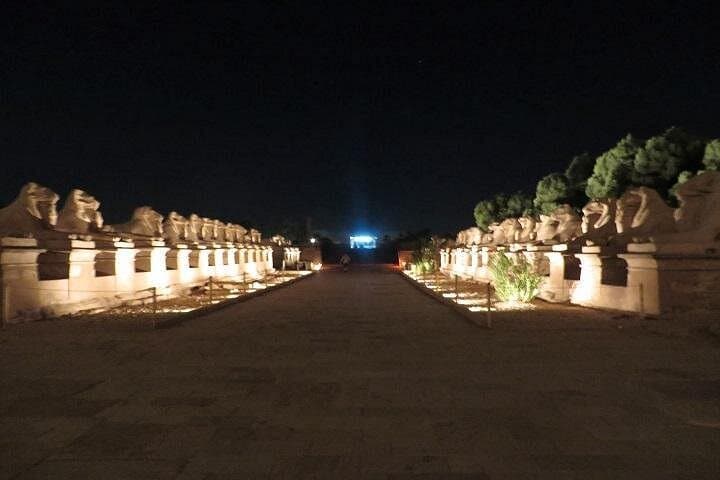
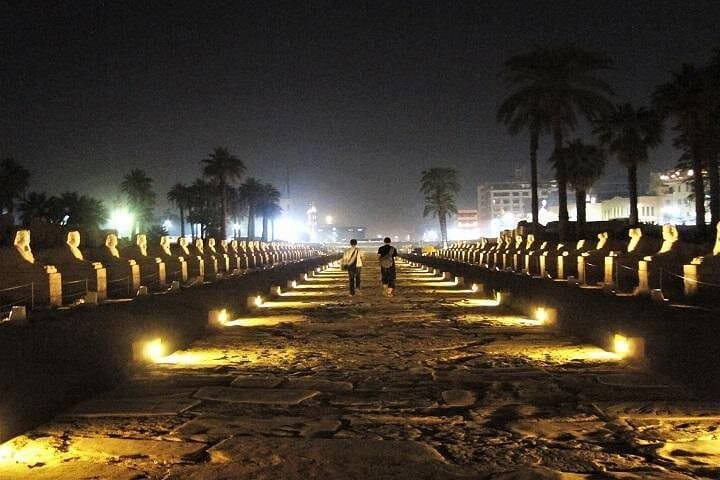
Night falls and the hypostyle hall of Karnak wakes under light.
Verified experiences and guided adventures in the surrounding area.
Operated by Oman Day Tours · Luxor, Luxor Governorate
Night falls and the hypostyle hall of Karnak wakes under light.
Floodlit columns throw long shadows across worn stone; the Sacred Lake mirrors the glow and the Nile, a low presence nearby, dares you to listen closer. The show strings voice and sound across the ruins, narrating Thebes’ rise while projecting scenes onto obelisks and pylons so the past reads in bronze and light.
Karnak is part of a sprawling precinct built over 1,500 years by pharaohs who enlarged the temple complex to honor Amun-Ra. The bedrock of the east bank of the Nile and the soft desert sand carried sandstone blocks and obelisks into place; the result is a maze of colonnades and monumental gateways that appear even larger after dark.
Local guides blend archaeology with legend, explaining how festivals and ritual barges once plied the Sacred Lake. That mix of culture, geology and Nile-borne commerce is what you see in miniature during the show: stone, water and story arranged to impress.
Practical guidance: allow 2–3 hours for pickup, transfers and the performance. Expect uneven surfaces and low lighting between illuminated areas—good balance and steady footing are essential. Dress conservatively for a religious site and bring a light jacket for desert nights. Photography is allowed but flash can spoil projections and other visitors’ experience. If you have mobility issues or serious health concerns, check accessibility and medical advisories ahead of booking. The show is an efficient, atmospheric way to experience Karnak after the heat of day, translating heavy history into a focused, sensory evening.
Plan for 2–3 hours total including hotel transfers; the performance itself lasts about an hour with time before and after for arrival and departure.
Some areas have level access and seating, but many paths are uneven and there are steps; contact the operator ahead to confirm specific accessibility arrangements.
Yes—children are allowed, but the sound effects and darkness can be startling for very young kids; parents should judge comfort with loud narration and low light.
Photography is generally permitted but flash is discouraged because it interferes with the projections; large tripods may be restricted during the performance.
Oman Day Tours operates guided outdoor trips and adventures with an emphasis on safety, stewardship, and memorable experiences.
Night falls and the hypostyle hall of Karnak wakes under light.
Night falls and the hypostyle hall of Karnak wakes under light.
Floodlit columns throw long shadows across worn stone; the Sacred Lake mirrors the glow and the Nile, a low presence nearby, dares you to listen closer. The show strings voice and sound across the ruins, narrating Thebes’ rise while projecting scenes onto obelisks and pylons so the past reads in bronze and light.
Karnak is part of a sprawling precinct built over 1,500 years by pharaohs who enlarged the temple complex to honor Amun-Ra. The bedrock of the east bank of the Nile and the soft desert sand carried sandstone blocks and obelisks into place; the result is a maze of colonnades and monumental gateways that appear even larger after dark.
Local guides blend archaeology with legend, explaining how festivals and ritual barges once plied the Sacred Lake. That mix of culture, geology and Nile-borne commerce is what you see in miniature during the show: stone, water and story arranged to impress.
Practical guidance: allow 2–3 hours for pickup, transfers and the performance. Expect uneven surfaces and low lighting between illuminated areas—good balance and steady footing are essential. Dress conservatively for a religious site and bring a light jacket for desert nights. Photography is allowed but flash can spoil projections and other visitors’ experience. If you have mobility issues or serious health concerns, check accessibility and medical advisories ahead of booking. The show is an efficient, atmospheric way to experience Karnak after the heat of day, translating heavy history into a focused, sensory evening.
