THE ADVENTURE COLLECTIVE® · Independent discovery and booking for outdoor travel

Drive the Karakoram Highway from Kashgar to Baisha (White Sand) Lake and Karakul Lake on a private full-day tour. Expect dramatic mountain views, lakeside walks at high elevation, local market stops, and flexible photo breaks.
Drive the Karakoram Highway from Kashgar to Baisha (White Sand) Lake and Karakul Lake on a private full-day tour. Expect dramatic mountain views, lakeside walks at high elevation, local market stops, and flexible photo breaks.
The engine hums as the road peels away from Kashgar and the Karakoram Highway draws you south, mountains taking up the horizon like patient guards. Within an hour villages thin, and the air sharpens; Oytagh Red Mountain appears, a rust-streaked wall that dares you to stop and look closer. At Baisha (White Sand) Lake, the water sits glass-blue against dunes that are almost white — an improbable pocket where desert light meets alpine cold. Later the road climbs to Karakul Lake at roughly 3,600 m, where Muztagh Ata and the Kongur peaks lean into the sky and their reflections push across the lake surface.
Verified experiences and guided adventures in the surrounding area.
Operated by Kashgar Uighur Tours-Kashgar Private One-day Tour · Kashgar, Xinjiang
The engine hums as the road peels away from Kashgar and the Karakoram Highway draws you south, mountains taking up the horizon like patient guards. Within an hour villages thin, and the air sharpens; Oytagh Red Mountain appears, a rust-streaked wall that dares you to stop and look closer. At Baisha (White Sand) Lake, the water sits glass-blue against dunes that are almost white — an improbable pocket where desert light meets alpine cold. Later the road climbs to Karakul Lake at roughly 3,600 m, where Muztagh Ata and the Kongur peaks lean into the sky and their reflections push across the lake surface.
This stretch of Xinjiang is a crossroads of geology and history: the Kunlun and Pamir ranges collide here, and the Karakoram Highway follows a modern artery that traces ancient Silk Road approaches. Cultural layers surface at roadside markets in Upal Village — fresh nang and baked buns remind travelers that food and hospitality are local constants.
Practically, expect long driving stretches punctuated by short walks and photo stops. High altitude dictates a slower pace; symptoms of mild altitude sickness are common and manageable with rest and hydration. Surfaces range from paved highway to packed sand at lakeshores; footwear that handles both is ideal. Lunch is typically at a simple lakeside restaurant; bring cash for entrance fees and tips. Timing matters: early light yields the best reflections at Karakul, while late afternoon warms the sand tones at Baisha. The trip is sensory and straightforward — winded, clear, and wide — giving a compact window into one of Central Asia’s most dramatic borderlands.
Expect roughly 4–6 hours of driving round-trip plus stops; total tour time is typically 8–11 hours depending on traffic and photo breaks.
Entrance fees are usually paid on site by travelers, so bring local cash for lake or park admissions and any meals.
Karakul is about 3,600 m; mild symptoms (headache, breathlessness) are common—rest, hydrate, and descend if symptoms worsen.
Infants must sit on an adult’s lap; specialized infant seats may be available, but discuss needs with the operator when booking.
Kashgar Uighur Tours-Kashgar Private One-day Tour operates guided outdoor trips and adventures with an emphasis on safety, stewardship, and memorable experiences.
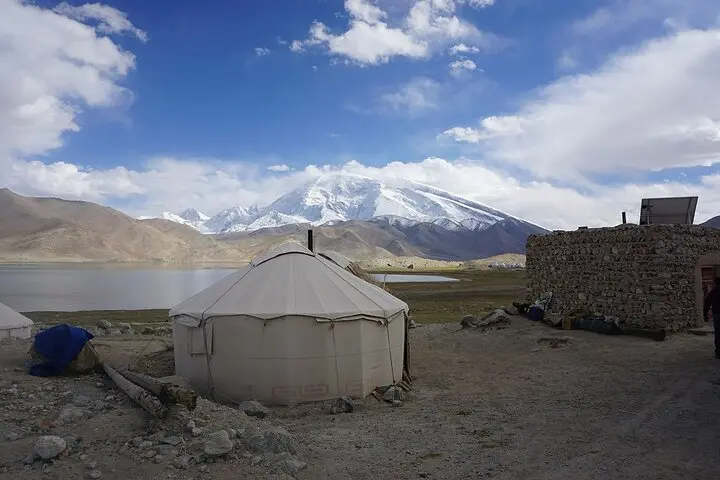
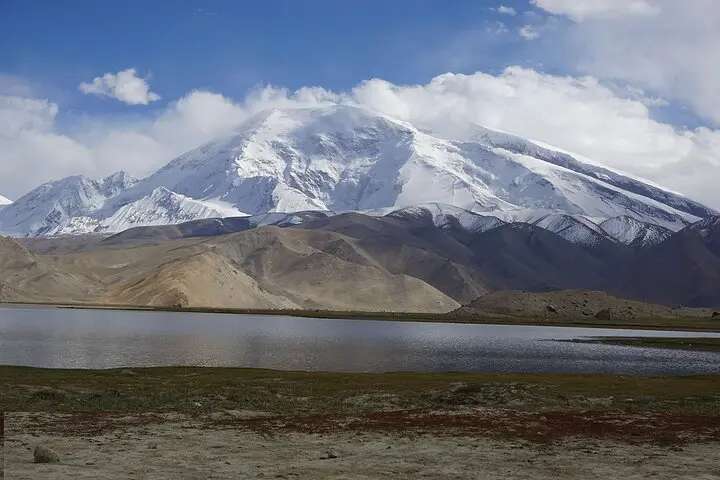
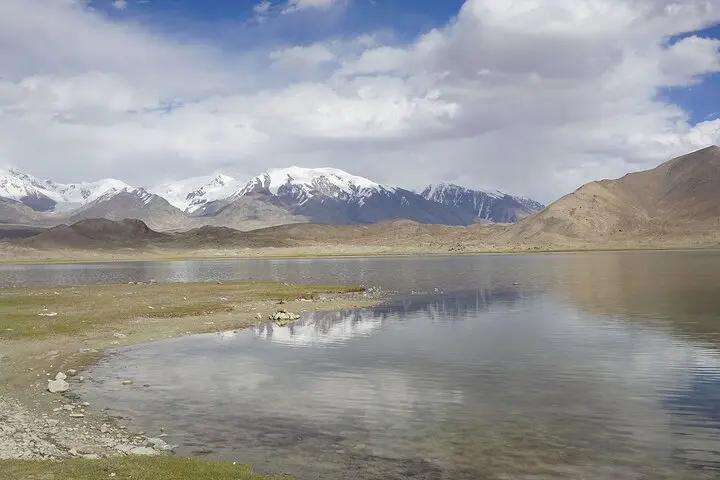
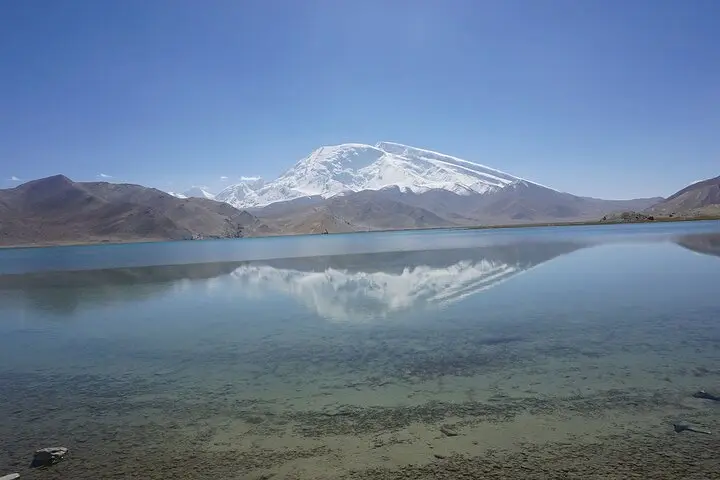
The engine hums as the road peels away from Kashgar and the Karakoram Highway draws you south, mountains taking up the horizon like patient guards. Within an hour villages thin, and the air sharpens; Oytagh Red Mountain appears, a rust-streaked wall that dares you to stop and look closer. At Baisha (White Sand) Lake, the water sits glass-blue against dunes that are almost white — an improbable pocket where desert light meets alpine cold. Later the road climbs to Karakul Lake at roughly 3,600 m, where Muztagh Ata and the Kongur peaks lean into the sky and their reflections push across the lake surface.
The engine hums as the road peels away from Kashgar and the Karakoram Highway draws you south, mountains taking up the horizon like patient guards. Within an hour villages thin, and the air sharpens; Oytagh Red Mountain appears, a rust-streaked wall that dares you to stop and look closer. At Baisha (White Sand) Lake, the water sits glass-blue against dunes that are almost white — an improbable pocket where desert light meets alpine cold. Later the road climbs to Karakul Lake at roughly 3,600 m, where Muztagh Ata and the Kongur peaks lean into the sky and their reflections push across the lake surface.
This stretch of Xinjiang is a crossroads of geology and history: the Kunlun and Pamir ranges collide here, and the Karakoram Highway follows a modern artery that traces ancient Silk Road approaches. Cultural layers surface at roadside markets in Upal Village — fresh nang and baked buns remind travelers that food and hospitality are local constants.
Practically, expect long driving stretches punctuated by short walks and photo stops. High altitude dictates a slower pace; symptoms of mild altitude sickness are common and manageable with rest and hydration. Surfaces range from paved highway to packed sand at lakeshores; footwear that handles both is ideal. Lunch is typically at a simple lakeside restaurant; bring cash for entrance fees and tips. Timing matters: early light yields the best reflections at Karakul, while late afternoon warms the sand tones at Baisha. The trip is sensory and straightforward — winded, clear, and wide — giving a compact window into one of Central Asia’s most dramatic borderlands.