THE ADVENTURE COLLECTIVE® · Independent discovery and booking for outdoor travel

Fly from Urumqi to Kashgar for a two-day private tour that pairs lively Silk Road markets and Uyghur culture with a dramatic drive to Karakul Lake on the Pamir Plateau. Expect high-altitude panoramas, historic mosques and hands-on market experiences.
Fly from Urumqi to Kashgar for a two-day private tour that pairs lively Silk Road markets and Uyghur culture with a dramatic drive to Karakul Lake on the Pamir Plateau. Expect high-altitude panoramas, historic mosques and hands-on market experiences.
You step off a short morning flight into Kashgar and the air changes — drier, thinner, threaded with spices and diesel. Narrow lanes of the old town open into courtyards where merchants lay out flat, oven-hot nang and strings of dried fruit; beyond, the Pamir foothills loom like patient giants. The first day moves through carved tile and minarets at the Apa Hoja Mausoleum, the bustling Grand Bazaar and the workshops of Handicraft Street, each stop a living page of Silk Road trade and Uyghur daily life.
Verified experiences and guided adventures in the surrounding area.
Operated by SilkRoadTrips · Kashgar, Xinjiang
You step off a short morning flight into Kashgar and the air changes — drier, thinner, threaded with spices and diesel. Narrow lanes of the old town open into courtyards where merchants lay out flat, oven-hot nang and strings of dried fruit; beyond, the Pamir foothills loom like patient giants. The first day moves through carved tile and minarets at the Apa Hoja Mausoleum, the bustling Grand Bazaar and the workshops of Handicraft Street, each stop a living page of Silk Road trade and Uyghur daily life.
Kashgar sits at a cultural crossroads shaped by centuries of caravan traffic; its architecture blends Central Asian timberwork, blue-glazed domes and Islamic motifs. Geologically, the journey to Karakul Lake climbs onto the Pamir plateau — roads sweep past red hills and ice-polished scree toward a high-altitude basin framed by Muztagata (7,509 m). Karakul’s cold, glassy surface reflects jagged peaks and yurt camps of Kyrgyz herders, a landscape written by uplift and glaciation.
Practically, this is a driving-and-walking tour: expect short urban walks, a hosted lunch in a local home, and a 3–4 hour road segment to the lake at 3,600 m (11,811 ft). Altitude awareness matters; move deliberately, sip fluids, and pause at roadside viewpoints. Dress in layers for strong sun and sudden wind, and allow time for market browsing — the bazaar’s rhythms reward patience.
This private itinerary suits travelers who want concentrated cultural immersion plus high-country scenery in two days; it pairs accessible logistics with the raw visual payoff of the Pamir’s rim.
The road transfer is roughly 190 km and takes about 3–4 hours one way, depending on stops and road conditions.
No special tourist permits are typically required for these sites, but carry your passport and travel documents as requested for domestic flights and hotel check-in.
Karakul sits around 3,600 m (11,811 ft); mild altitude symptoms are possible — ascend slowly, rest, hydrate, and consult a doctor if you have a history of altitude illness.
Local lunches include Uyghur dishes; notify the operator in advance for vegetarian or allergy needs so hosts can prepare alternatives.
SilkRoadTrips operates guided outdoor trips and adventures with an emphasis on safety, stewardship, and memorable experiences.


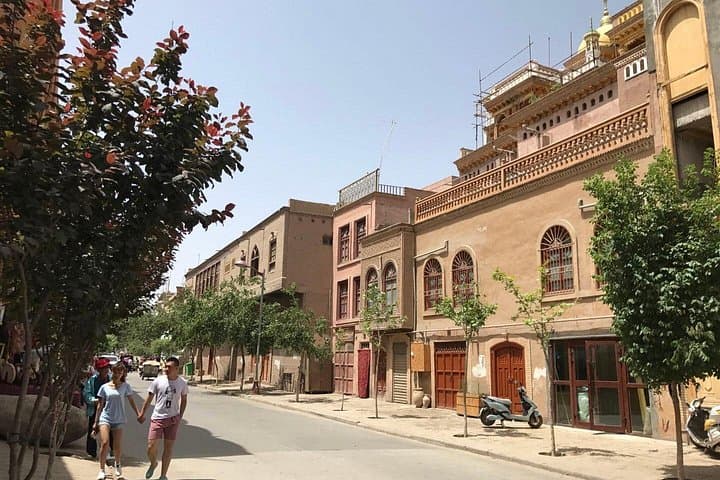
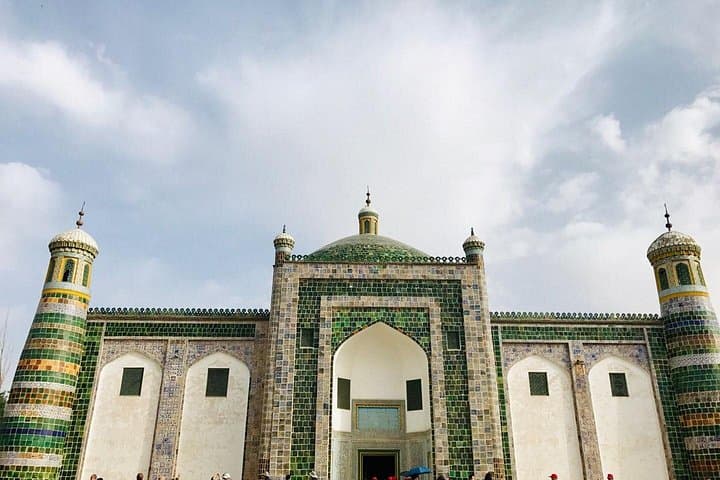
You step off a short morning flight into Kashgar and the air changes — drier, thinner, threaded with spices and diesel. Narrow lanes of the old town open into courtyards where merchants lay out flat, oven-hot nang and strings of dried fruit; beyond, the Pamir foothills loom like patient giants. The first day moves through carved tile and minarets at the Apa Hoja Mausoleum, the bustling Grand Bazaar and the workshops of Handicraft Street, each stop a living page of Silk Road trade and Uyghur daily life.
You step off a short morning flight into Kashgar and the air changes — drier, thinner, threaded with spices and diesel. Narrow lanes of the old town open into courtyards where merchants lay out flat, oven-hot nang and strings of dried fruit; beyond, the Pamir foothills loom like patient giants. The first day moves through carved tile and minarets at the Apa Hoja Mausoleum, the bustling Grand Bazaar and the workshops of Handicraft Street, each stop a living page of Silk Road trade and Uyghur daily life.
Kashgar sits at a cultural crossroads shaped by centuries of caravan traffic; its architecture blends Central Asian timberwork, blue-glazed domes and Islamic motifs. Geologically, the journey to Karakul Lake climbs onto the Pamir plateau — roads sweep past red hills and ice-polished scree toward a high-altitude basin framed by Muztagata (7,509 m). Karakul’s cold, glassy surface reflects jagged peaks and yurt camps of Kyrgyz herders, a landscape written by uplift and glaciation.
Practically, this is a driving-and-walking tour: expect short urban walks, a hosted lunch in a local home, and a 3–4 hour road segment to the lake at 3,600 m (11,811 ft). Altitude awareness matters; move deliberately, sip fluids, and pause at roadside viewpoints. Dress in layers for strong sun and sudden wind, and allow time for market browsing — the bazaar’s rhythms reward patience.
This private itinerary suits travelers who want concentrated cultural immersion plus high-country scenery in two days; it pairs accessible logistics with the raw visual payoff of the Pamir’s rim.