THE ADVENTURE COLLECTIVE® · Independent discovery and booking for outdoor travel

Watch Kata Tjuta’s rounded domes ignite as the sun drops over Uluru-Kata Tjuta National Park. This half-day sunset tour from Ayers Rock Resort pairs concise cultural commentary with sparkling wine and a dramatic hour of changing light.
Watch Kata Tjuta’s rounded domes ignite as the sun drops over Uluru-Kata Tjuta National Park. This half-day sunset tour from Ayers Rock Resort pairs concise cultural commentary with sparkling wine and a dramatic hour of changing light.
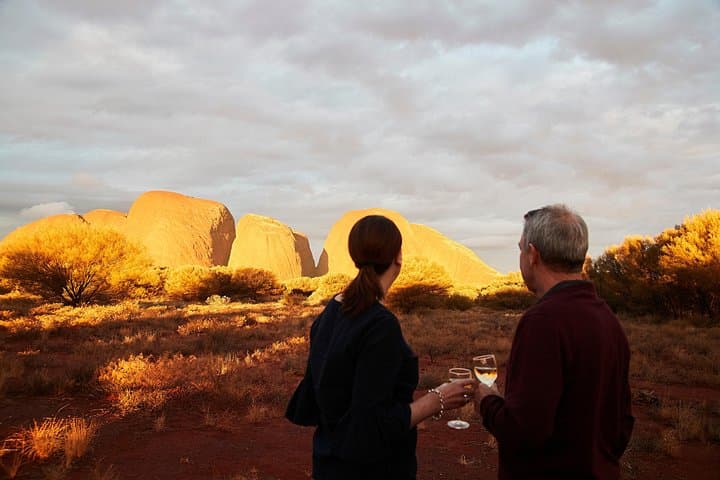
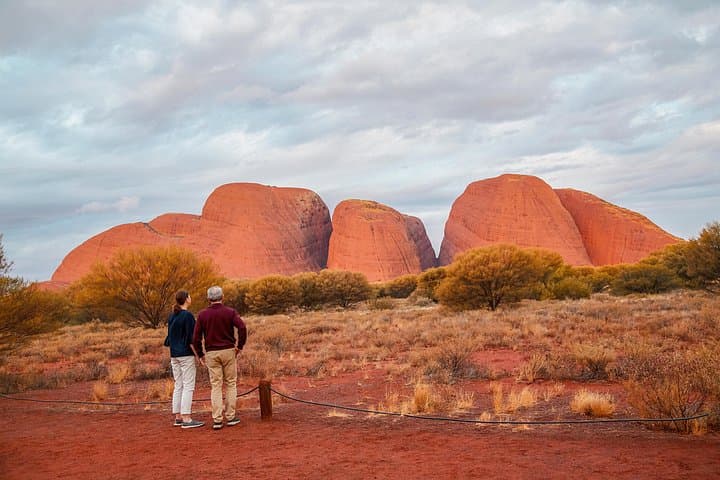
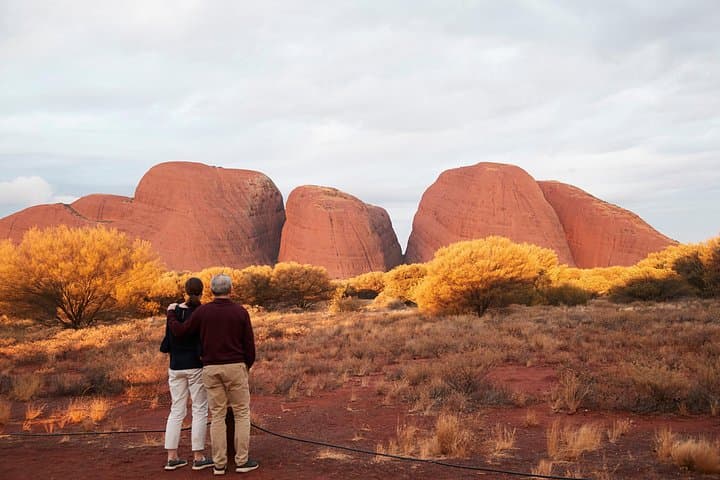
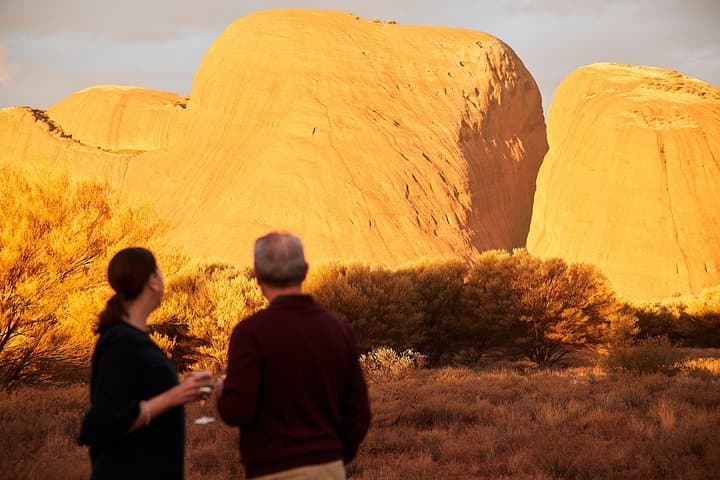
The coach pulls off the red ribbon of highway and the domes of Kata Tjuta appear like a cluster of slow-moving giants, their rounded flanks absorbing the last heat of the day. As you step from the vehicle the air changes—thinner, dust-scented, and cooler—and the rocks begin to perform. Minute by minute the domes shift from ochre to deep crimson, each face catching light at a different angle, until the whole formation seems to breathe.
Verified experiences and guided adventures in the surrounding area.
Operated by AAT Kings · Yulara, Northern Territory
The coach pulls off the red ribbon of highway and the domes of Kata Tjuta appear like a cluster of slow-moving giants, their rounded flanks absorbing the last heat of the day. As you step from the vehicle the air changes—thinner, dust-scented, and cooler—and the rocks begin to perform. Minute by minute the domes shift from ochre to deep crimson, each face catching light at a different angle, until the whole formation seems to breathe.
Kata Tjuta, often called the Olgas, are ancient sedimentary and conglomerate formations that once lay joined as a single mass, then fractured and eroded over millions of years. They sit within Uluru-Kata Tjuta National Park, a landscape shaped both by geology and Anangu cultural stories that predate written history. Your driver-guide interlaces natural science with Indigenous perspectives, sketching how seasonal rains carve hidden gullies and how local plants—spinifex and desert oaks—anchor fragile soils.
The tour is compact but vivid: a scenic drive from Ayers Rock Resort, a short commentary on local flora and fauna, and a sunset viewing with sparkling wine and nibbles. The moment the sun drops, light becomes a physical thing you can follow across the domes; shadows lengthen and the valley exhales. For photographers and anyone drawn to elemental landscapes, this is a concentrated hour of theatre.
Practically, this is a low-impact, low-effort outing that requires little more than reasonable mobility and respect for place. The operator provides pickup from most resort hotels about 90 minutes before sunset—times change with the season, so reconfirm 24–48 hours ahead. Park entry for Uluru-Kata Tjuta National Park is charged separately (currently around AUD 38 for adults) and should be arranged before departure or through the tour operator.
Wear enclosed walking shoes; even on short walks the ground is uneven and can be sharp. In summer bring a flynet and plan for heat, dehydration, and strong UV; in winter bring warm layers—the desert cools quickly once the sun sets. The tour is wheelchair accessible with some assistance but involves standing on natural ground during the sunset viewing.
Beyond the moment of sunset, linger on what you heard: stories of the land, the science of formation, and the care required to keep this place intact. The trip is more than a photo-op; it’s a compact lesson in desert time and a reminder that these rocks are living pages in a much longer story.
Yes. Uluru-Kata Tjuta National Park entry is charged separately (around AUD 38 per adult); purchase before departure or ask the operator to assist.
The tour is approximately 2.5 hours and departs about 90 minutes before local sunset; exact pickup times vary seasonally and must be reconfirmed.
Yes; the itinerary notes stroller access and is family-friendly, though infants must sit on an adult’s lap for transport.
The tour is listed as wheelchair accessible, but some assistance may be required at the natural viewing area—contact the operator for specifics.
Yes. Sparkling wine and nibbles are served during the sunset viewing.
No. Drones are prohibited in Uluru-Kata Tjuta National Park to respect cultural sites and wildlife.
AAT Kings operates guided outdoor trips and adventures with an emphasis on safety, stewardship, and memorable experiences.
The coach pulls off the red ribbon of highway and the domes of Kata Tjuta appear like a cluster of slow-moving giants, their rounded flanks absorbing the last heat of the day. As you step from the vehicle the air changes—thinner, dust-scented, and cooler—and the rocks begin to perform. Minute by minute the domes shift from ochre to deep crimson, each face catching light at a different angle, until the whole formation seems to breathe.
The coach pulls off the red ribbon of highway and the domes of Kata Tjuta appear like a cluster of slow-moving giants, their rounded flanks absorbing the last heat of the day. As you step from the vehicle the air changes—thinner, dust-scented, and cooler—and the rocks begin to perform. Minute by minute the domes shift from ochre to deep crimson, each face catching light at a different angle, until the whole formation seems to breathe.
Kata Tjuta, often called the Olgas, are ancient sedimentary and conglomerate formations that once lay joined as a single mass, then fractured and eroded over millions of years. They sit within Uluru-Kata Tjuta National Park, a landscape shaped both by geology and Anangu cultural stories that predate written history. Your driver-guide interlaces natural science with Indigenous perspectives, sketching how seasonal rains carve hidden gullies and how local plants—spinifex and desert oaks—anchor fragile soils.
The tour is compact but vivid: a scenic drive from Ayers Rock Resort, a short commentary on local flora and fauna, and a sunset viewing with sparkling wine and nibbles. The moment the sun drops, light becomes a physical thing you can follow across the domes; shadows lengthen and the valley exhales. For photographers and anyone drawn to elemental landscapes, this is a concentrated hour of theatre.
Practically, this is a low-impact, low-effort outing that requires little more than reasonable mobility and respect for place. The operator provides pickup from most resort hotels about 90 minutes before sunset—times change with the season, so reconfirm 24–48 hours ahead. Park entry for Uluru-Kata Tjuta National Park is charged separately (currently around AUD 38 for adults) and should be arranged before departure or through the tour operator.
Wear enclosed walking shoes; even on short walks the ground is uneven and can be sharp. In summer bring a flynet and plan for heat, dehydration, and strong UV; in winter bring warm layers—the desert cools quickly once the sun sets. The tour is wheelchair accessible with some assistance but involves standing on natural ground during the sunset viewing.
Beyond the moment of sunset, linger on what you heard: stories of the land, the science of formation, and the care required to keep this place intact. The trip is more than a photo-op; it’s a compact lesson in desert time and a reminder that these rocks are living pages in a much longer story.