THE ADVENTURE COLLECTIVE® · Independent discovery and booking for outdoor travel

A 14‑day guided trek from Kathmandu to Everest Base Camp offers a frontline view of the Khumbu: glacier tongues, Sherpa villages, and high‑altitude panoramas. This itinerary balances acclimatization days with steady ascents to reach EBC at 5,364 m.
A 14‑day guided trek from Kathmandu to Everest Base Camp offers a frontline view of the Khumbu: glacier tongues, Sherpa villages, and high‑altitude panoramas. This itinerary balances acclimatization days with steady ascents to reach EBC at 5,364 m.
A thin Himalayan dawn breaks over Kathmandu as a grainy runway and a 40‑minute mountain flight stand between the city and the high Khumbu. The aircraft drops you into Lukla’s dizzy airstrip, and the trail immediately begins to climb along the Dudh Kosi river, weaving through rhododendron groves and Sherpa villages where prayer flags snap like small voices in the wind.
Verified experiences and guided adventures in the surrounding area.
Operated by Walk Mountain Pvt Ltd. · Kathmandu, Bagmati Province
A thin Himalayan dawn breaks over Kathmandu as a grainy runway and a 40‑minute mountain flight stand between the city and the high Khumbu. The aircraft drops you into Lukla’s dizzy airstrip, and the trail immediately begins to climb along the Dudh Kosi river, weaving through rhododendron groves and Sherpa villages where prayer flags snap like small voices in the wind.
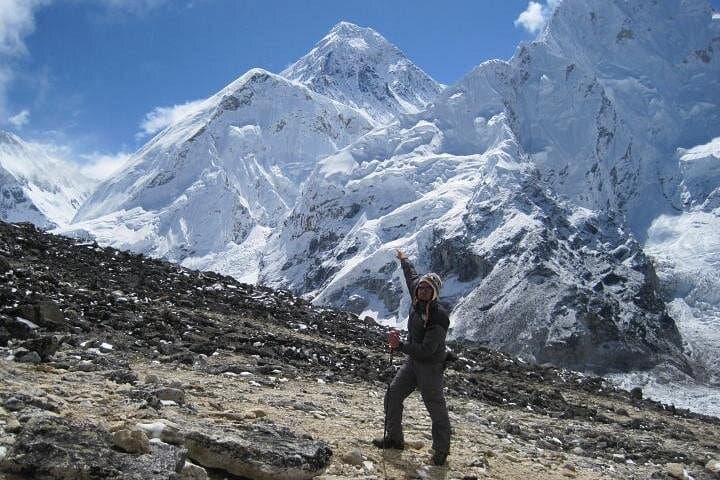
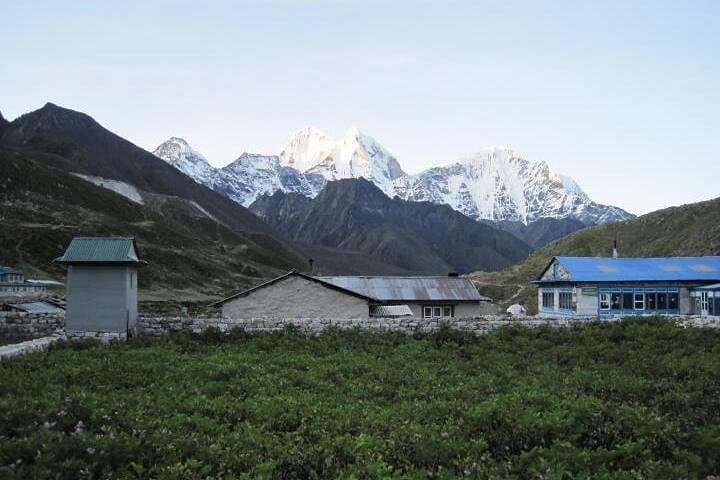
The route follows a clear historical arc: the Lukla gateway into Sagarmatha National Park, through Namche Bazaar — a Sherpa trading hub and acclimatization nerve center — then upward past Dingboche and Lobuche toward Gorak Shep and Everest Base Camp (5,364 m). Geology is on constant display: moraines and the grey-blue snout of the Khumbu Glacier, the fluted ridges of Pumori, and Ama Dablam’s jagged profile. Villages reflect Sherpa culture — mani walls, monasteries such as Tengboche, and lodges serving hearty dal bhat.
Practical guidance: the itinerary spans 14 days with planned acclimatization stops (Namche, Dingboche). Expect daily walking of 4–9 hours on uneven, rocky trails with 2,800 m (Lukla) to 5,364 m (EBC) altitude swings; temperatures vary widely and weather can ground Lukla flights. Tea houses provide meals and basic twin rooms; a sleeping bag rated to 0°F or better is recommended.
Hydration, slow ascent, and awareness of AMS (acute mountain sickness) are the priorities. Guides handle permits and logistics; travelers should carry layered clothing, sun protection, and a compact first aid kit. The trail rewards persistence with close-up alpine panoramas and the rare, quiet vastness only found above the tree line.
Previous trekking experience is helpful but not strictly required; successful completion depends on gradual acclimatization, fitness, and listening to your guide about symptoms of altitude sickness.
Flights are short but weather‑sensitive; delays and re‑scheduling are common during high winds or low clouds—plan extra buffer time around your international flights.
Tea houses provide basic twin rooms and shared facilities; meals are local, carbohydrate‑rich and filling (dal bhat, soups, noodles); hot showers are available in some places for a fee.
Namche and several larger villages have Wi‑Fi and limited cellular access (pay per use); expect slower or no service as you approach Gorak Shep and base camp.
Walk Mountain Pvt Ltd. operates guided outdoor trips and adventures with an emphasis on safety, stewardship, and memorable experiences.
A thin Himalayan dawn breaks over Kathmandu as a grainy runway and a 40‑minute mountain flight stand between the city and the high Khumbu. The aircraft drops you into Lukla’s dizzy airstrip, and the trail immediately begins to climb along the Dudh Kosi river, weaving through rhododendron groves and Sherpa villages where prayer flags snap like small voices in the wind.
A thin Himalayan dawn breaks over Kathmandu as a grainy runway and a 40‑minute mountain flight stand between the city and the high Khumbu. The aircraft drops you into Lukla’s dizzy airstrip, and the trail immediately begins to climb along the Dudh Kosi river, weaving through rhododendron groves and Sherpa villages where prayer flags snap like small voices in the wind.
The route follows a clear historical arc: the Lukla gateway into Sagarmatha National Park, through Namche Bazaar — a Sherpa trading hub and acclimatization nerve center — then upward past Dingboche and Lobuche toward Gorak Shep and Everest Base Camp (5,364 m). Geology is on constant display: moraines and the grey-blue snout of the Khumbu Glacier, the fluted ridges of Pumori, and Ama Dablam’s jagged profile. Villages reflect Sherpa culture — mani walls, monasteries such as Tengboche, and lodges serving hearty dal bhat.
Practical guidance: the itinerary spans 14 days with planned acclimatization stops (Namche, Dingboche). Expect daily walking of 4–9 hours on uneven, rocky trails with 2,800 m (Lukla) to 5,364 m (EBC) altitude swings; temperatures vary widely and weather can ground Lukla flights. Tea houses provide meals and basic twin rooms; a sleeping bag rated to 0°F or better is recommended.
Hydration, slow ascent, and awareness of AMS (acute mountain sickness) are the priorities. Guides handle permits and logistics; travelers should carry layered clothing, sun protection, and a compact first aid kit. The trail rewards persistence with close-up alpine panoramas and the rare, quiet vastness only found above the tree line.