THE ADVENTURE COLLECTIVE® · Independent discovery and booking for outdoor travel

A classic high-altitude walk from Lukla to Everest Base Camp and Kala Patthar, this 14-day trek threads Sherpa villages, glacial moraines, and Himalayan ridgelines. Expect long days, teahouse nights, and powerful summit views with careful acclimatization.
A classic high-altitude walk from Lukla to Everest Base Camp and Kala Patthar, this 14-day trek threads Sherpa villages, glacial moraines, and Himalayan ridgelines. Expect long days, teahouse nights, and powerful summit views with careful acclimatization.
The descent from the tiny Lukla airstrip feels immediate: prayer flags snap overhead, stone paths climb away from a bowl of rooftops, and the Khumbu valley opens like a map you must read with your feet.
Verified experiences and guided adventures in the surrounding area.
Operated by Mountain Kick Private Limited · Lukla, Koshi Province
The descent from the tiny Lukla airstrip feels immediate: prayer flags snap overhead, stone paths climb away from a bowl of rooftops, and the Khumbu valley opens like a map you must read with your feet.
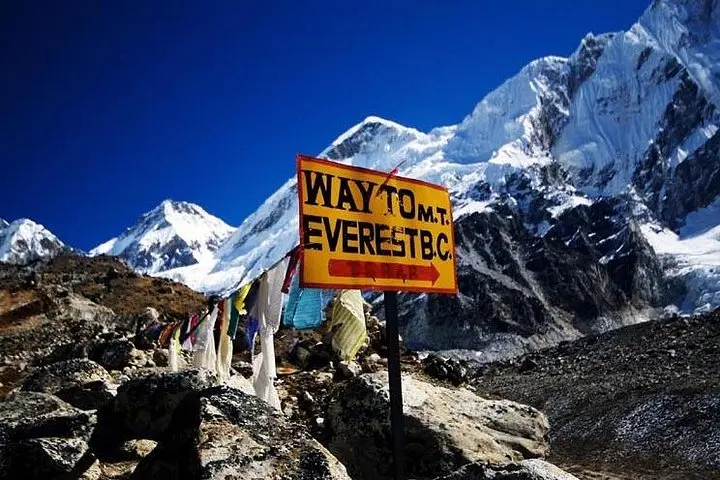
Walk past rhododendron-scented slopes, cross swing bridges that sway over rivers daring you, and drop into Sherpa villages where mani walls and tea houses mark each day’s end. The route winds through Sagarmatha National Park—declared a UNESCO World Heritage Site in 1979—along glacial moraines toward Everest Base Camp (about 5,364 m/17,598 ft) and the summit view from Kala Patthar (~5,643 m/18,514 ft).
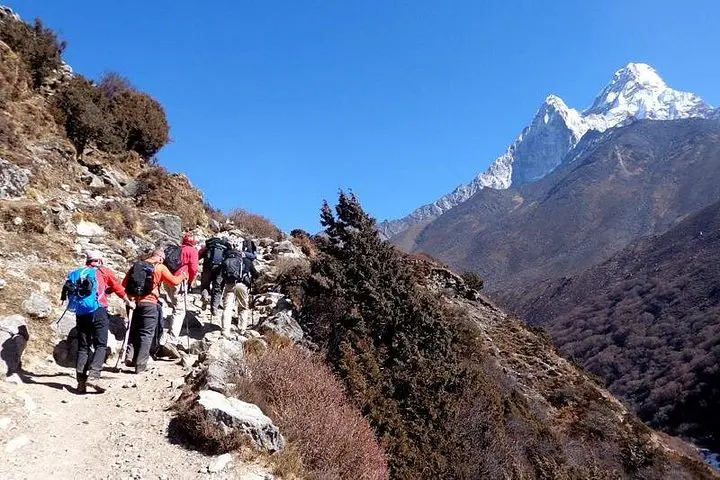
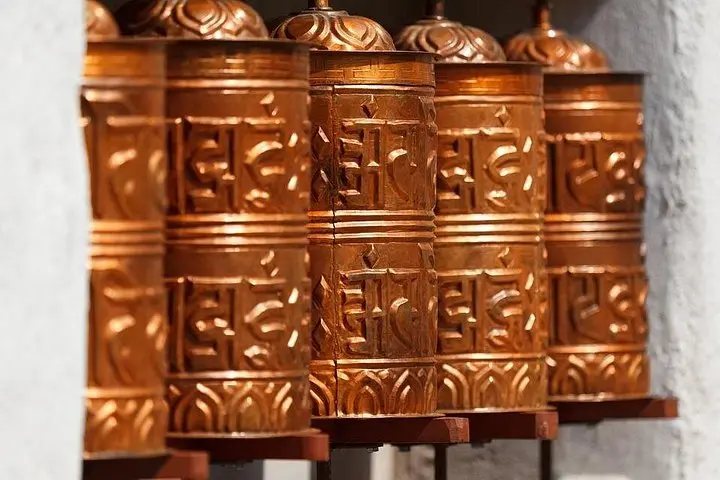
Geology here is blunt: uplifted Himalayan granite and the slow, grinding Khumbu Glacier shape a cold, sculpted landscape. Culturally, the trek moves through settlements with centuries-old Tibetan-Buddhist traditions—Tengboche Monastery offers both morning prayers and an early-morning vantage for Ama Dablam’s profile.
Practically, expect 12–14 days on the trail, roughly 120–140 km round-trip from Lukla with daily gains of a few hundred to over a thousand meters on acclimatization days. Typical walking is 4–7 hours per day on rocky, often icy trails; guesthouse lodgings and teahouse meals are standard. Weather can flip quickly, and Lukla flights are frequently delayed—build buffer days into travel plans.
Bring layered clothing for cold, wind, and sun; hydrate and pace ascent to reduce altitude risk; carry cash (limited ATM access) and leave room for flexible itineraries. The reward is immediate: standing at the foot of Everest, the mountain seems to watch back—unyielding, huge, and clarifying.
No; the trek to Everest Base Camp is a high-altitude hike rather than a technical climb, but it requires good fitness and altitude awareness.
Fall (Sept–Nov) and spring (Mar–May) offer the most stable weather and best visibility for mountain views.
Yes; Sagarmatha National Park entry permit and a TIMS card are required and usually arranged through your operator or at Kathmandu before departure.
Flights are routine but weather-dependent—fog, wind, and low clouds commonly delay or cancel flights, so allow buffer days.
Mountain Kick Private Limited operates guided outdoor trips and adventures with an emphasis on safety, stewardship, and memorable experiences.
The descent from the tiny Lukla airstrip feels immediate: prayer flags snap overhead, stone paths climb away from a bowl of rooftops, and the Khumbu valley opens like a map you must read with your feet.
The descent from the tiny Lukla airstrip feels immediate: prayer flags snap overhead, stone paths climb away from a bowl of rooftops, and the Khumbu valley opens like a map you must read with your feet.
Walk past rhododendron-scented slopes, cross swing bridges that sway over rivers daring you, and drop into Sherpa villages where mani walls and tea houses mark each day’s end. The route winds through Sagarmatha National Park—declared a UNESCO World Heritage Site in 1979—along glacial moraines toward Everest Base Camp (about 5,364 m/17,598 ft) and the summit view from Kala Patthar (~5,643 m/18,514 ft).
Geology here is blunt: uplifted Himalayan granite and the slow, grinding Khumbu Glacier shape a cold, sculpted landscape. Culturally, the trek moves through settlements with centuries-old Tibetan-Buddhist traditions—Tengboche Monastery offers both morning prayers and an early-morning vantage for Ama Dablam’s profile.
Practically, expect 12–14 days on the trail, roughly 120–140 km round-trip from Lukla with daily gains of a few hundred to over a thousand meters on acclimatization days. Typical walking is 4–7 hours per day on rocky, often icy trails; guesthouse lodgings and teahouse meals are standard. Weather can flip quickly, and Lukla flights are frequently delayed—build buffer days into travel plans.
Bring layered clothing for cold, wind, and sun; hydrate and pace ascent to reduce altitude risk; carry cash (limited ATM access) and leave room for flexible itineraries. The reward is immediate: standing at the foot of Everest, the mountain seems to watch back—unyielding, huge, and clarifying.