THE ADVENTURE COLLECTIVE® · Independent discovery and booking for outdoor travel

Spend six focused hours moving between four UNESCO heritage sites in Kathmandu: Pashupatinath’s riverside rites, the sprawling Boudhanath stupa, ornate Patan Durbar Square and the monkey-populated hill of Swayambhunath. This private day tour combines compact walking with vehicle transfers and a local guide.
Spend six focused hours moving between four UNESCO heritage sites in Kathmandu: Pashupatinath’s riverside rites, the sprawling Boudhanath stupa, ornate Patan Durbar Square and the monkey-populated hill of Swayambhunath. This private day tour combines compact walking with vehicle transfers and a local guide.
The day begins with a guide waiting at your hotel while the city slides by—the honk of rickshaws, priests moving toward the river and a patchwork of brick rooftops rising against the valley rim.
Verified experiences and guided adventures in the surrounding area.
Operated by Third Eye Adventure P. Ltd · Kathmandu, Bagmati Province
The day begins with a guide waiting at your hotel while the city slides by—the honk of rickshaws, priests moving toward the river and a patchwork of brick rooftops rising against the valley rim.
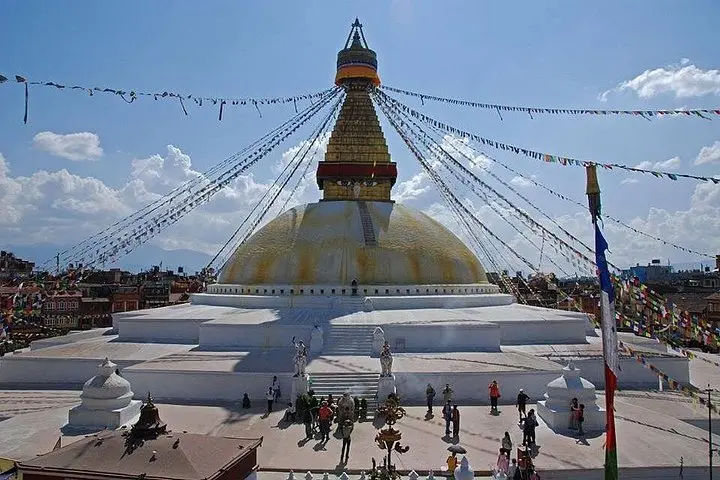
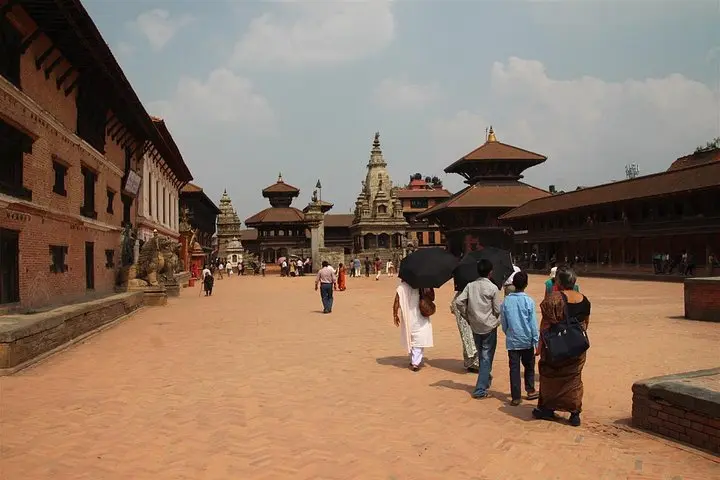
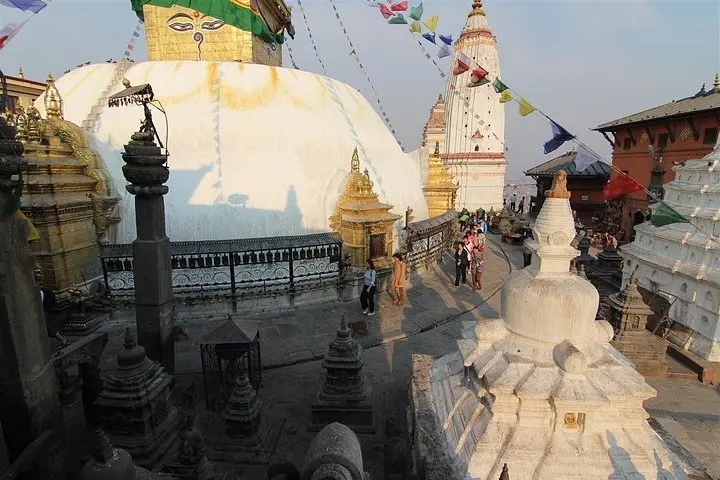
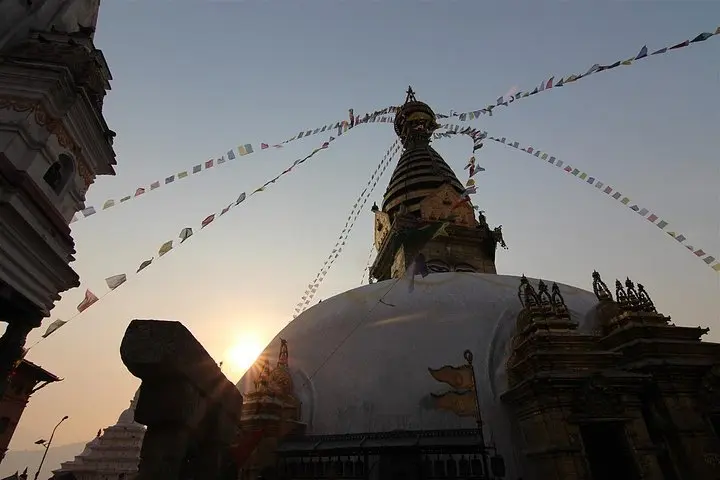
You’ll cross into Pashupatinath first, where the Bagmati River dares you to watch life and death in the open: cremation ghats, saffron-clad pilgrims and carved stone temples that mark the heart of Nepali Hindu ritual. From there Boudhanath unfolds as a white dome ringed by prayer wheels; the slow clockwise procession of circumambulating pilgrims and fluttering prayer flags makes a compact lesson in Tibetan Buddhism. After a rooftop lunch with a bird’s-eye view of the stupa you head to Patan Durbar Square—an open-air museum of Newar craftsmanship, with tiered roofs, metalwork and narrow alleys that lead to quiet courtyards. The tour closes at Swayambhunath, the hilltop “Monkey Temple,” where macaques and pigeons move through gilded eyes and painted stupas while the city stretches below — a good spot for late-afternoon light.
The Kathmandu Valley’s UNESCO sites reflect centuries of Hindu-Buddhist coexistence and Newar urban design built on an alluvial basin ringed by low hills. Expect uneven stone steps, tight alleys and active religious sites where modest dress and quiet observation are required.
Practical notes: the tour runs about six hours in an air-conditioned vehicle with a licensed guide; most temple entries require modest attire and small entrance fees. Carry water, cash for donations and shoes you can remove easily. Start early to avoid peak heat and give yourself time for rooftop cafes and short walks through Patan’s lanes.
No; the tour itinerary notes admissions are not included—bring cash for individual site fees and optional museum entries.
Yes—tour information indicates it’s physically easy; infants must sit on an adult’s lap during vehicle transfers.
Expect short to moderate walks at each site (10–30 minutes of on-foot exploring at stops), plus stairs at Swayambhunath and uneven surfaces in Patan.
Yes; the private guide can arrange a rooftop cafe or restaurant that can handle common dietary needs—note any restrictions when booking.
Third Eye Adventure P. Ltd operates guided outdoor trips and adventures with an emphasis on safety, stewardship, and memorable experiences.
The day begins with a guide waiting at your hotel while the city slides by—the honk of rickshaws, priests moving toward the river and a patchwork of brick rooftops rising against the valley rim.
The day begins with a guide waiting at your hotel while the city slides by—the honk of rickshaws, priests moving toward the river and a patchwork of brick rooftops rising against the valley rim.
You’ll cross into Pashupatinath first, where the Bagmati River dares you to watch life and death in the open: cremation ghats, saffron-clad pilgrims and carved stone temples that mark the heart of Nepali Hindu ritual. From there Boudhanath unfolds as a white dome ringed by prayer wheels; the slow clockwise procession of circumambulating pilgrims and fluttering prayer flags makes a compact lesson in Tibetan Buddhism. After a rooftop lunch with a bird’s-eye view of the stupa you head to Patan Durbar Square—an open-air museum of Newar craftsmanship, with tiered roofs, metalwork and narrow alleys that lead to quiet courtyards. The tour closes at Swayambhunath, the hilltop “Monkey Temple,” where macaques and pigeons move through gilded eyes and painted stupas while the city stretches below — a good spot for late-afternoon light.
The Kathmandu Valley’s UNESCO sites reflect centuries of Hindu-Buddhist coexistence and Newar urban design built on an alluvial basin ringed by low hills. Expect uneven stone steps, tight alleys and active religious sites where modest dress and quiet observation are required.
Practical notes: the tour runs about six hours in an air-conditioned vehicle with a licensed guide; most temple entries require modest attire and small entrance fees. Carry water, cash for donations and shoes you can remove easily. Start early to avoid peak heat and give yourself time for rooftop cafes and short walks through Patan’s lanes.