THE ADVENTURE COLLECTIVE® · Independent discovery and booking for outdoor travel

Spend a full day tracing Kathmandu’s major spiritual sites—Swayambhunath, Durbar Square, Boudhanath and Pashupatinath—with a guide who explains the city’s layered history. Expect urban walking, short drives, and close encounters with living religious traditions.
Spend a full day tracing Kathmandu’s major spiritual sites—Swayambhunath, Durbar Square, Boudhanath and Pashupatinath—with a guide who explains the city’s layered history. Expect urban walking, short drives, and close encounters with living religious traditions.
Morning light washes over Kathmandu's red-tiled roofs as your guide leads you through a waking city where prayer flags snap like conversation. The day begins with the climb to Swayambhunath—the Monkey Temple—where a ring of stupa eyes watches over the valley and a series of stone steps tests your legs and focus.
Verified experiences and guided adventures in the surrounding area.
Operated by Eco Holidays Nepal · Kathmandu, Bagmati Province
Morning light washes over Kathmandu's red-tiled roofs as your guide leads you through a waking city where prayer flags snap like conversation. The day begins with the climb to Swayambhunath—the Monkey Temple—where a ring of stupa eyes watches over the valley and a series of stone steps tests your legs and focus.
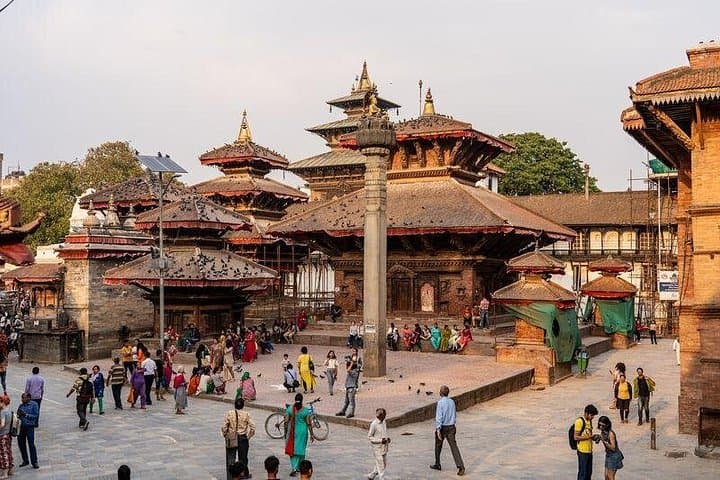
From the hilltop you descend into narrow alleys toward Durbar Square, the old royal plaza of carved wood and open courtyards. Here the living goddess Kumari has her residence and Newar craftsmen still tend to centuries-old traditions. A short drive brings you to Boudhanath: a vast white stupa with a slow-moving circumambulation of monks and locals that turns the plaza into a moving prayer wheel.
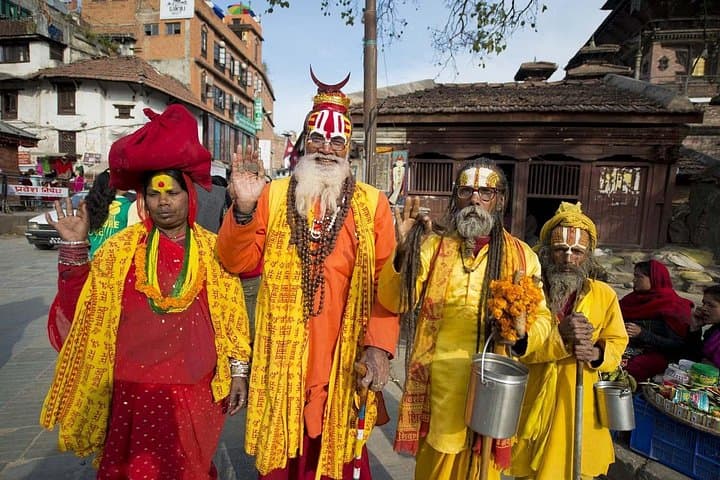
The route ends with a visit outside the inner precincts of Pashupatinath where the Bagmati River pushes life and ritual together—cremation ghats, saffron-clad priests, and a profound, sometimes uncomfortable, intimacy with local belief.
Geology and history press on every corner—Kathmandu sits at about 1,350 meters on an alluvial basin ringed by the Himalaya foothills, and its temples reflect centuries of Hindu and Buddhist interaction. Practical notes: expect 6–7 hours of mostly urban walking and short drives, uneven cobbles, and roughly 200–300 steps at Swayambhu. Dress modestly, carry a bottle of water, and be prepared for restricted access or photography rules at religious sites. Entrances may not be included; bring local cash for donations and tips. A mindful pace keeps the day immersive without rushing the rituals that define the city.
The tour runs about 6–7 hours, typically including driver transfers between sites and guided walking at each stop.
Most bookings do not include entrance fees or donations to temples—bring Nepali rupees for admissions and offerings.
Yes—it's classed as physically easy with walking and steps; let the operator know mobility needs for adapted pacing and vehicle pickup.
Non-Hindus are usually restricted from inner sanctums; visitors can view ceremonies from designated vantage points across the river.
Eco Holidays Nepal operates guided outdoor trips and adventures with an emphasis on safety, stewardship, and memorable experiences.


Morning light washes over Kathmandu's red-tiled roofs as your guide leads you through a waking city where prayer flags snap like conversation. The day begins with the climb to Swayambhunath—the Monkey Temple—where a ring of stupa eyes watches over the valley and a series of stone steps tests your legs and focus.
Morning light washes over Kathmandu's red-tiled roofs as your guide leads you through a waking city where prayer flags snap like conversation. The day begins with the climb to Swayambhunath—the Monkey Temple—where a ring of stupa eyes watches over the valley and a series of stone steps tests your legs and focus.
From the hilltop you descend into narrow alleys toward Durbar Square, the old royal plaza of carved wood and open courtyards. Here the living goddess Kumari has her residence and Newar craftsmen still tend to centuries-old traditions. A short drive brings you to Boudhanath: a vast white stupa with a slow-moving circumambulation of monks and locals that turns the plaza into a moving prayer wheel.
The route ends with a visit outside the inner precincts of Pashupatinath where the Bagmati River pushes life and ritual together—cremation ghats, saffron-clad priests, and a profound, sometimes uncomfortable, intimacy with local belief.
Geology and history press on every corner—Kathmandu sits at about 1,350 meters on an alluvial basin ringed by the Himalaya foothills, and its temples reflect centuries of Hindu and Buddhist interaction. Practical notes: expect 6–7 hours of mostly urban walking and short drives, uneven cobbles, and roughly 200–300 steps at Swayambhu. Dress modestly, carry a bottle of water, and be prepared for restricted access or photography rules at religious sites. Entrances may not be included; bring local cash for donations and tips. A mindful pace keeps the day immersive without rushing the rituals that define the city.