THE ADVENTURE COLLECTIVE® · Independent discovery and booking for outdoor travel

An early-morning drive to Nagarkot puts you on a ridge with Himalayan views and a following day-hike down to the UNESCO-listed Changu Narayan temple. Expect a mix of ridge viewpoints, terraced farmland and village lanes with a cultural finish at the temple.
An early-morning drive to Nagarkot puts you on a ridge with Himalayan views and a following day-hike down to the UNESCO-listed Changu Narayan temple. Expect a mix of ridge viewpoints, terraced farmland and village lanes with a cultural finish at the temple.
Pre-dawn at Nagarkot feels deliberately designed to sharpen the senses: cold air, a pale eastern horizon, and a ridge that waits to reveal the high peaks if weather allows. Travelers gather at the hill station’s viewing points as the first light tests the silhouettes of the Eastern Himalaya; on clear mornings, Annapurna to Everest step into view, otherwise a soft, Himalayan haze colors the valley below.
Verified experiences and guided adventures in the surrounding area.
Operated by Kathmandu Adventures Travel and Tours · Nagarkot, Bagmati Province
Pre-dawn at Nagarkot feels deliberately designed to sharpen the senses: cold air, a pale eastern horizon, and a ridge that waits to reveal the high peaks if weather allows. Travelers gather at the hill station’s viewing points as the first light tests the silhouettes of the Eastern Himalaya; on clear mornings, Annapurna to Everest step into view, otherwise a soft, Himalayan haze colors the valley below.
The walk that follows moves off the ridge and through living history. Geologically the route sits on the lower Himalayan foothills — folded slopes, terraced fields carved into the gradient, and pockets of broadleaf forest. Culturally the trail leads to Changu Narayan, a UNESCO-recognized temple complex with stone carvings and inscriptions that date back many centuries, an important site for the Newar communities around Bhaktapur and Kathmandu.
The hike is a steady descent from Nagarkot toward Changu Narayan, roughly 6–10 km depending on the line taken, with 600–900 m of net elevation loss over mixed terrain: dirt tracks, stone steps, farm roads and village lanes. Expect uneven surfaces and frequent short climbs and descents as the path threads through terraced farms and small Newari settlements.
Practical approach: leave very early for the best light and fewer crowds, bring warm layers for the summit, sturdy shoes for uneven trail, and 1–2 liters of water. Allow time at Changu Narayan to explore the temple and inscriptions; be respectful of worship practices and modest dress. Transportation back to Kathmandu is typically by vehicle, so confirm pickup times with your operator.
The walking section typically ranges 6–10 km depending on route choices, taking several hours including stops.
Visibility depends on weather and dust; on clear mornings Everest and other high peaks can be visible, but haze or clouds often limit views.
The route is non-technical but requires moderate fitness due to distance and uneven terrain; those with limited mobility may find stone steps and descents challenging.
Group programs often include standard local fees, but check the booking details; small donations at temples are customary.
Kathmandu Adventures Travel and Tours operates guided outdoor trips and adventures with an emphasis on safety, stewardship, and memorable experiences.
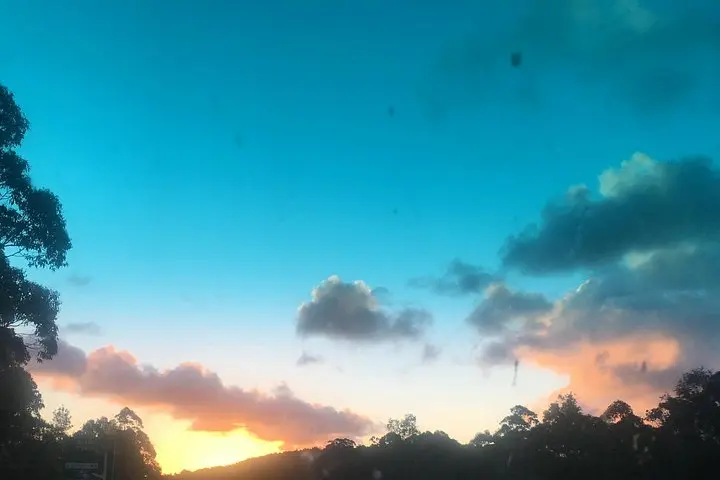
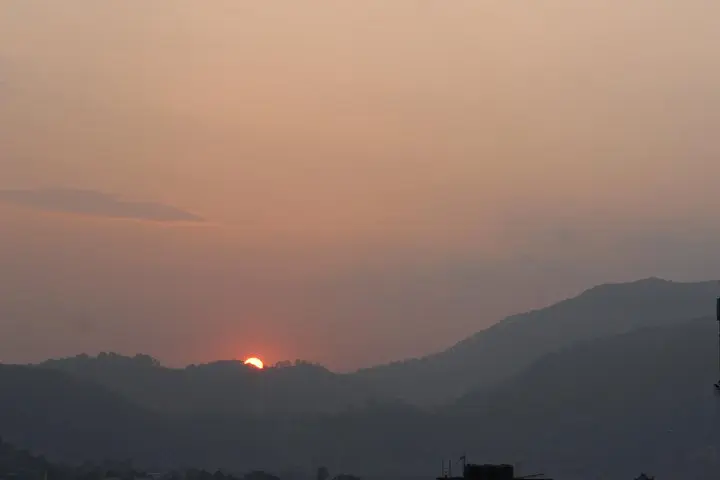
Pre-dawn at Nagarkot feels deliberately designed to sharpen the senses: cold air, a pale eastern horizon, and a ridge that waits to reveal the high peaks if weather allows. Travelers gather at the hill station’s viewing points as the first light tests the silhouettes of the Eastern Himalaya; on clear mornings, Annapurna to Everest step into view, otherwise a soft, Himalayan haze colors the valley below.
Pre-dawn at Nagarkot feels deliberately designed to sharpen the senses: cold air, a pale eastern horizon, and a ridge that waits to reveal the high peaks if weather allows. Travelers gather at the hill station’s viewing points as the first light tests the silhouettes of the Eastern Himalaya; on clear mornings, Annapurna to Everest step into view, otherwise a soft, Himalayan haze colors the valley below.
The walk that follows moves off the ridge and through living history. Geologically the route sits on the lower Himalayan foothills — folded slopes, terraced fields carved into the gradient, and pockets of broadleaf forest. Culturally the trail leads to Changu Narayan, a UNESCO-recognized temple complex with stone carvings and inscriptions that date back many centuries, an important site for the Newar communities around Bhaktapur and Kathmandu.
The hike is a steady descent from Nagarkot toward Changu Narayan, roughly 6–10 km depending on the line taken, with 600–900 m of net elevation loss over mixed terrain: dirt tracks, stone steps, farm roads and village lanes. Expect uneven surfaces and frequent short climbs and descents as the path threads through terraced farms and small Newari settlements.
Practical approach: leave very early for the best light and fewer crowds, bring warm layers for the summit, sturdy shoes for uneven trail, and 1–2 liters of water. Allow time at Changu Narayan to explore the temple and inscriptions; be respectful of worship practices and modest dress. Transportation back to Kathmandu is typically by vehicle, so confirm pickup times with your operator.