THE ADVENTURE COLLECTIVE® · Independent discovery and booking for outdoor travel

Cover Kathmandu’s UNESCO highlights in a single day: Swayambhunath, Kathmandu Durbar Square, Pashupatinath and Boudhanath. This guided circuit pairs efficient transfers with on-foot exploration of Newar streets, temples and living traditions.
Cover Kathmandu’s UNESCO highlights in a single day: Swayambhunath, Kathmandu Durbar Square, Pashupatinath and Boudhanath. This guided circuit pairs efficient transfers with on-foot exploration of Newar streets, temples and living traditions.
You step off the vehicle into a city where stone and prayer meet traffic and chai stalls; the scent of incense threads through morning air as prayer flags flutter above a steep stairway of monkeys and pilgrims. This one-day circuit threads Kathmandu’s compact UNESCO sites — Swayambhunath, Kathmandu Durbar Square, Pashupatinath and Boudhanath — giving you an intense slice of Newar urban life in seven to eight hours.
Verified experiences and guided adventures in the surrounding area.
Operated by Himalayan Excursion Nepal · Kathmandu, Bagmati Province
You step off the vehicle into a city where stone and prayer meet traffic and chai stalls; the scent of incense threads through morning air as prayer flags flutter above a steep stairway of monkeys and pilgrims. This one-day circuit threads Kathmandu’s compact UNESCO sites — Swayambhunath, Kathmandu Durbar Square, Pashupatinath and Boudhanath — giving you an intense slice of Newar urban life in seven to eight hours.
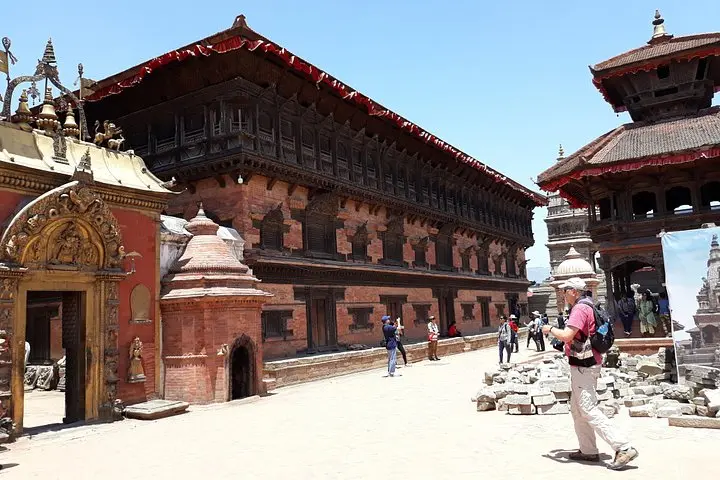
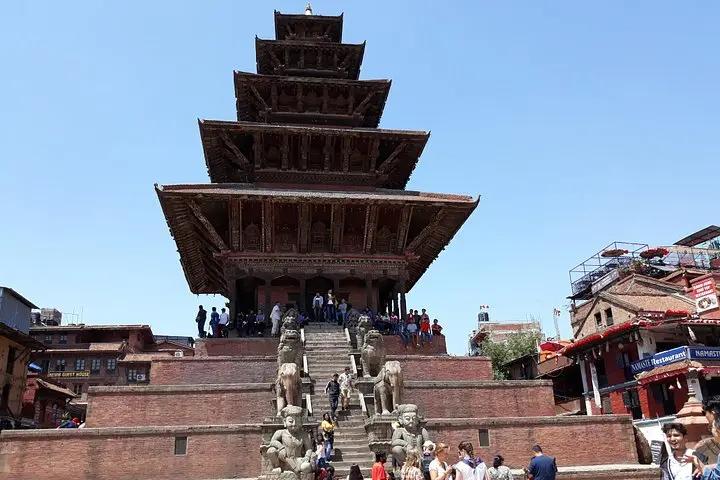
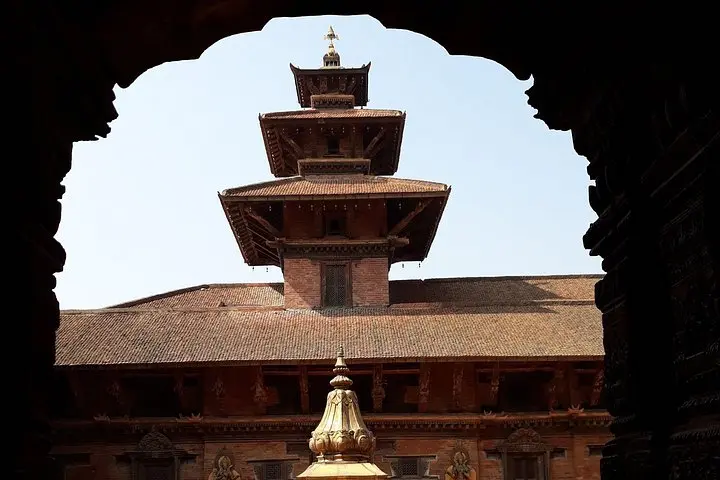
Kathmandu Valley’s history is visible in carved timber struts, tiered pagoda roofs and clay brick alleys. Geologically the valley sits in a bowl of Himalayan foothills, its construction stones and brickwork reflecting centuries of seismic repairs and rebuilding. Culturally, the Newar community maintains festivals, living goddess (Kumari) traditions and a blended Hindu–Buddhist ritual landscape; at Pashupatinath you’ll see cremation ghats that are both spiritual site and working riverside economy.
Expect narrow lanes, crowded squares, loud markets and moments of surprising quiet inside stupas. Photography is welcome in most areas but be mindful at ritual sites and around the Kumari; modest dress and a quiet voice go far. Logistics are straightforward: air‑conditioned vehicle transfers, short guided walks between landmarks and optional entry fees at some monuments.
Practical tips: start early to avoid peak traffic and heat, carry drinking water and a compact rain layer in monsoon months, and leave time for a tea stop in Patan’s old city if your schedule allows. This tour is an efficient primer on Kathmandu’s living heritage — sensory, layered and best taken with patience and respect.
Some sites require separate entry fees which are usually not included; guides typically advise on current rates and manage payments if arranged.
Yes — the tour is rated easy, but it involves walking and staircases; adjustments can be made for mobility limitations with advance notice.
A licensed guide enhances understanding of rituals and history and is included on private tours; certain inner sanctums may restrict guide access.
Expect several short walks and stair climbs totaling a few kilometers across the day; much of the transit between sites is by vehicle.
Himalayan Excursion Nepal operates guided outdoor trips and adventures with an emphasis on safety, stewardship, and memorable experiences.
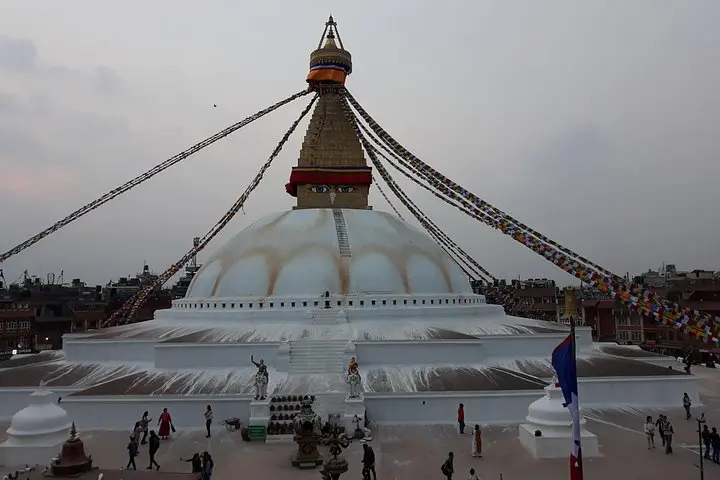
You step off the vehicle into a city where stone and prayer meet traffic and chai stalls; the scent of incense threads through morning air as prayer flags flutter above a steep stairway of monkeys and pilgrims. This one-day circuit threads Kathmandu’s compact UNESCO sites — Swayambhunath, Kathmandu Durbar Square, Pashupatinath and Boudhanath — giving you an intense slice of Newar urban life in seven to eight hours.
You step off the vehicle into a city where stone and prayer meet traffic and chai stalls; the scent of incense threads through morning air as prayer flags flutter above a steep stairway of monkeys and pilgrims. This one-day circuit threads Kathmandu’s compact UNESCO sites — Swayambhunath, Kathmandu Durbar Square, Pashupatinath and Boudhanath — giving you an intense slice of Newar urban life in seven to eight hours.
Kathmandu Valley’s history is visible in carved timber struts, tiered pagoda roofs and clay brick alleys. Geologically the valley sits in a bowl of Himalayan foothills, its construction stones and brickwork reflecting centuries of seismic repairs and rebuilding. Culturally, the Newar community maintains festivals, living goddess (Kumari) traditions and a blended Hindu–Buddhist ritual landscape; at Pashupatinath you’ll see cremation ghats that are both spiritual site and working riverside economy.
Expect narrow lanes, crowded squares, loud markets and moments of surprising quiet inside stupas. Photography is welcome in most areas but be mindful at ritual sites and around the Kumari; modest dress and a quiet voice go far. Logistics are straightforward: air‑conditioned vehicle transfers, short guided walks between landmarks and optional entry fees at some monuments.
Practical tips: start early to avoid peak traffic and heat, carry drinking water and a compact rain layer in monsoon months, and leave time for a tea stop in Patan’s old city if your schedule allows. This tour is an efficient primer on Kathmandu’s living heritage — sensory, layered and best taken with patience and respect.