THE ADVENTURE COLLECTIVE® · Independent discovery and booking for outdoor travel

Rise out of Kathmandu for a shared helicopter flight into the Khumbu: four hours that deliver glacial basins, Himalayan summits, and Sherpa villages in a single sweep. Best taken in the morning and weather‑dependent, this is the quickest way to see Everest’s high country.
Rise out of Kathmandu for a shared helicopter flight into the Khumbu: four hours that deliver glacial basins, Himalayan summits, and Sherpa villages in a single sweep. Best taken in the morning and weather‑dependent, this is the quickest way to see Everest’s high country.
The helicopter rises above the noisy sprawl of Kathmandu and the valley tilts away — terraced hills shrink, rivers thread the plain, and then the Himalaya announces itself: a raw skyline of serrated teeth and silver glaciers. From the cabin the Khumbu region unrolls like a map in motion — blue ice, hanging glaciers, and peaks that push the sky back.
Verified experiences and guided adventures in the surrounding area.
Operated by Nepal Horizon Treks and Expedition Pvt. Ltd. · Kathmandu, Bagmati Province
The helicopter rises above the noisy sprawl of Kathmandu and the valley tilts away — terraced hills shrink, rivers thread the plain, and then the Himalaya announces itself: a raw skyline of serrated teeth and silver glaciers. From the cabin the Khumbu region unrolls like a map in motion — blue ice, hanging glaciers, and peaks that push the sky back.
This flight puts the geography and history of Everest within sight lines. The Greater Himalaya was driven up by the Indian plate punching into Asia; glaciers carved its valleys and fed the Sherpa communities who settled high trails centuries ago. From the air you’ll see the Khumbu Glacier’s crevassed tongue, the white basin around Everest’s summit, and the line of villages—Lukla, Namche, Tengboche—where Sherpa culture meets mountaineering history.
Locals in the region have long balanced pilgrimage and livelihood: monasteries perch on ridgelines, mani walls mark high passes, and yak meadows still sweat summer pastures. Helicopter tours offer that perspective without the multi‑day trek: short access to remote vistas with hotel pickup in Kathmandu and, on shared flights, small groups (often up to five).
Practical guidance is straightforward. Book morning departures for the clearest light and lowest winds; expect weather cancellations and bring flexible plans. Dress in warm layers — temperatures drop fast at altitude — and secure camera gear with a good zoom. Passengers with recent spinal, cardiac, or pregnancy concerns should avoid the flight. Bring your passport and print or mobile voucher; the operator typically includes pickup and drop‑off. A shared Everest heli tour is the most immediate way to meet the high Himalaya: fast, visual, and logistically simple — but always weather‑dependent.
Typical shared helicopter tours last about four hours door‑to‑door, including hotel pickup in Kathmandu, the flight over the Khumbu region with aerial viewing, and return transfer to your hotel.
Mountain weather is changeable; operators often cancel same or previous day if visibility or winds are unsafe — mornings have the best odds but no guarantee.
Passengers with recent spinal injuries, serious heart conditions, or who are pregnant are usually advised not to fly; consult the operator and your doctor before booking.
Shared sightseeing tours usually overfly key high points (Everest viewpoint, Khumbu Glacier) and may hover for photos but typically do not land at the summit area on standard shared departures.
Nepal Horizon Treks and Expedition Pvt. Ltd. operates guided outdoor trips and adventures with an emphasis on safety, stewardship, and memorable experiences.
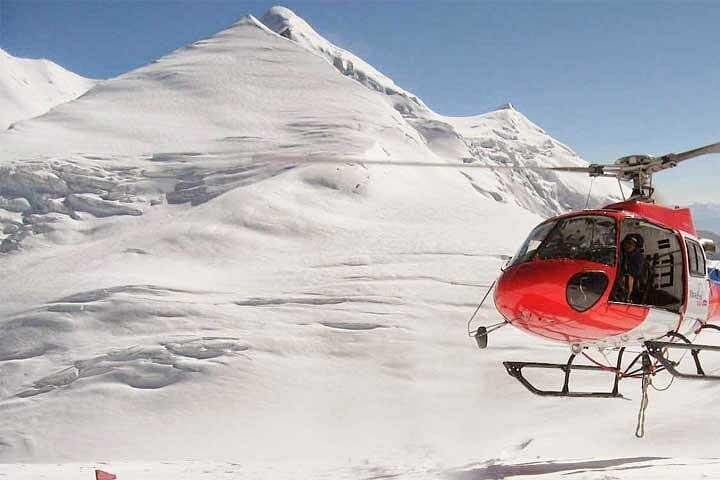
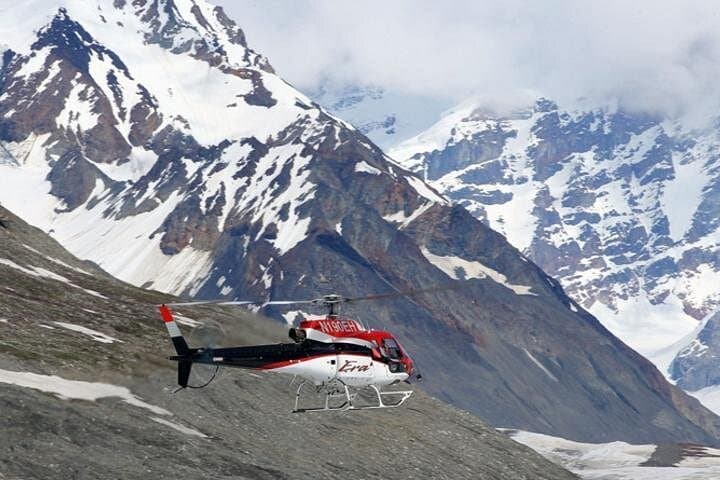
The helicopter rises above the noisy sprawl of Kathmandu and the valley tilts away — terraced hills shrink, rivers thread the plain, and then the Himalaya announces itself: a raw skyline of serrated teeth and silver glaciers. From the cabin the Khumbu region unrolls like a map in motion — blue ice, hanging glaciers, and peaks that push the sky back.
The helicopter rises above the noisy sprawl of Kathmandu and the valley tilts away — terraced hills shrink, rivers thread the plain, and then the Himalaya announces itself: a raw skyline of serrated teeth and silver glaciers. From the cabin the Khumbu region unrolls like a map in motion — blue ice, hanging glaciers, and peaks that push the sky back.
This flight puts the geography and history of Everest within sight lines. The Greater Himalaya was driven up by the Indian plate punching into Asia; glaciers carved its valleys and fed the Sherpa communities who settled high trails centuries ago. From the air you’ll see the Khumbu Glacier’s crevassed tongue, the white basin around Everest’s summit, and the line of villages—Lukla, Namche, Tengboche—where Sherpa culture meets mountaineering history.
Locals in the region have long balanced pilgrimage and livelihood: monasteries perch on ridgelines, mani walls mark high passes, and yak meadows still sweat summer pastures. Helicopter tours offer that perspective without the multi‑day trek: short access to remote vistas with hotel pickup in Kathmandu and, on shared flights, small groups (often up to five).
Practical guidance is straightforward. Book morning departures for the clearest light and lowest winds; expect weather cancellations and bring flexible plans. Dress in warm layers — temperatures drop fast at altitude — and secure camera gear with a good zoom. Passengers with recent spinal, cardiac, or pregnancy concerns should avoid the flight. Bring your passport and print or mobile voucher; the operator typically includes pickup and drop‑off. A shared Everest heli tour is the most immediate way to meet the high Himalaya: fast, visual, and logistically simple — but always weather‑dependent.