THE ADVENTURE COLLECTIVE® · Independent discovery and booking for outdoor travel

Take the short, dramatic flight from Kathmandu to Lukla to reach the trailhead for Everest and Khumbu treks. Expect a morning-only schedule, tight runways, and stunning alpine views that introduce Sherpa culture and high Himalayan geology.
Take the short, dramatic flight from Kathmandu to Lukla to reach the trailhead for Everest and Khumbu treks. Expect a morning-only schedule, tight runways, and stunning alpine views that introduce Sherpa culture and high Himalayan geology.
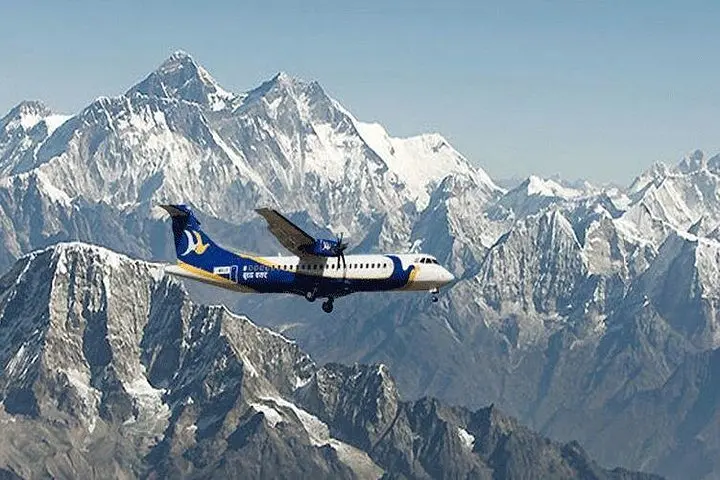
The plane lifts from Kathmandu under a pale Himalayan dawn and the valley begins to fold away: terraced fields, the Bow River's course, the ragged ridge of the Kathmandu Valley giving way to rising snow.
Verified experiences and guided adventures in the surrounding area.
Operated by Himalayan Adventure Treks and Tours Pvt Ltd · Lukla, Solukhumbu
The plane lifts from Kathmandu under a pale Himalayan dawn and the valley begins to fold away: terraced fields, the Bow River's course, the ragged ridge of the Kathmandu Valley giving way to rising snow.
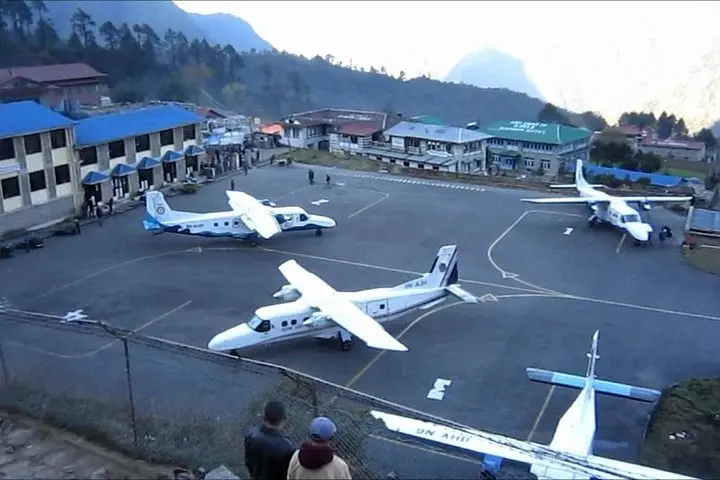
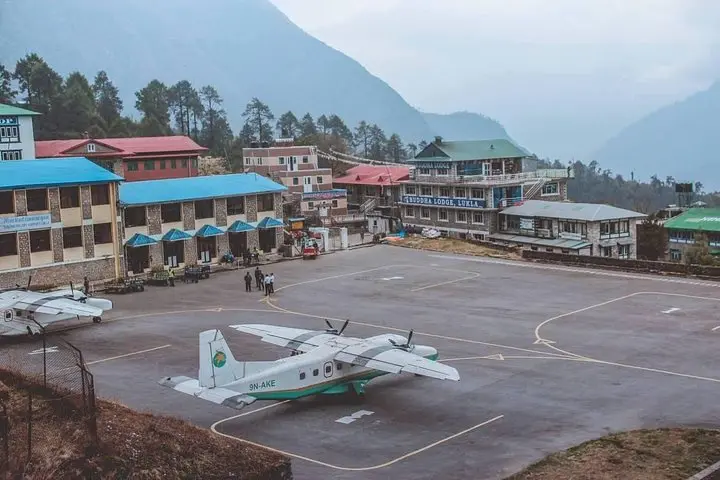
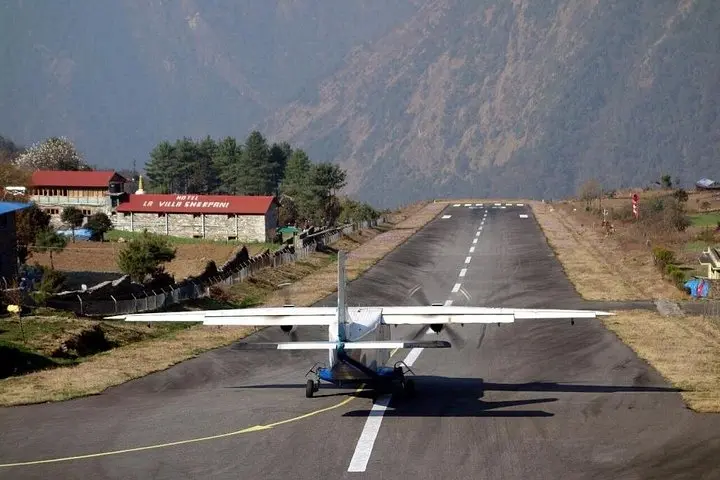
Within about 30–40 minutes the aircraft descends toward Lukla’s short, sloped runway, a dramatic arrival at Tenzing-Hillary Airport (LUA). The approach feels decisive — mountains press close and the air smells of cold rock and pine. This flight is less transit and more introduction to Sherpa country: high ridgelines, hanging glaciers, and villages clinging to steep slopes.
Everest (Sagarmatha) and the Khumbu were recognized as protected landscapes when Everest National Park was established in 1976 and later inscribed as a UNESCO Natural World Heritage Site in 1979. Geologically the region is young, uplifted by Himalayan tectonics and carved by glacial action; culturally it’s a living Sherpa landscape where mani walls and prayer flags mark trade routes and monastery approaches.
Practically: flights operate almost exclusively in the early morning because weather closes fast; expect a roughly 30–40 minute airborne time and possible delays or cancellations if visibility drops. Aircraft are small (Twin Otter/Dornier types) and luggage limits are strict; be ready to shift to a smaller daypack for the airstrip. Anyone headed on beyond-Lukla treks should factor in altitude, give themselves time to acclimatize, and prepare for uneven terrain and basic tea-house facilities.
This flight is your first step into high-altitude trekking country — brief, scenic, and weather-dependent — and it sets the tone for the mountains ahead.
Airborne time is typically 30–40 minutes, though total travel time with ground transfers and check-in can be longer.
Mountain weather becomes unstable later in the day; operators schedule early departures when visibility and winds are usually calmer.
Small aircraft have strict baggage limits and some items may need to be repacked into smaller bags; confirm allowances with your operator before travel.
Yes — cancellations are common when visibility or winds are unsafe; build extra days into trekking plans to accommodate delays.
Himalayan Adventure Treks and Tours Pvt Ltd operates guided outdoor trips and adventures with an emphasis on safety, stewardship, and memorable experiences.
The plane lifts from Kathmandu under a pale Himalayan dawn and the valley begins to fold away: terraced fields, the Bow River's course, the ragged ridge of the Kathmandu Valley giving way to rising snow.
The plane lifts from Kathmandu under a pale Himalayan dawn and the valley begins to fold away: terraced fields, the Bow River's course, the ragged ridge of the Kathmandu Valley giving way to rising snow.
Within about 30–40 minutes the aircraft descends toward Lukla’s short, sloped runway, a dramatic arrival at Tenzing-Hillary Airport (LUA). The approach feels decisive — mountains press close and the air smells of cold rock and pine. This flight is less transit and more introduction to Sherpa country: high ridgelines, hanging glaciers, and villages clinging to steep slopes.
Everest (Sagarmatha) and the Khumbu were recognized as protected landscapes when Everest National Park was established in 1976 and later inscribed as a UNESCO Natural World Heritage Site in 1979. Geologically the region is young, uplifted by Himalayan tectonics and carved by glacial action; culturally it’s a living Sherpa landscape where mani walls and prayer flags mark trade routes and monastery approaches.
Practically: flights operate almost exclusively in the early morning because weather closes fast; expect a roughly 30–40 minute airborne time and possible delays or cancellations if visibility drops. Aircraft are small (Twin Otter/Dornier types) and luggage limits are strict; be ready to shift to a smaller daypack for the airstrip. Anyone headed on beyond-Lukla treks should factor in altitude, give themselves time to acclimatize, and prepare for uneven terrain and basic tea-house facilities.
This flight is your first step into high-altitude trekking country — brief, scenic, and weather-dependent — and it sets the tone for the mountains ahead.