THE ADVENTURE COLLECTIVE® · Independent discovery and booking for outdoor travel

Cover Kathmandu’s top cultural sites in a single, budget-friendly half-day: spin prayer wheels at Boudhanath, observe rituals at Pashupatinath, climb to Swayambhunath’s views, and explore Basantapur’s Newari streets. Practical tips on timing, dress code, and what to expect help you plan a smooth cultural introduction to the valley.
Cover Kathmandu’s top cultural sites in a single, budget-friendly half-day: spin prayer wheels at Boudhanath, observe rituals at Pashupatinath, climb to Swayambhunath’s views, and explore Basantapur’s Newari streets. Practical tips on timing, dress code, and what to expect help you plan a smooth cultural introduction to the valley.
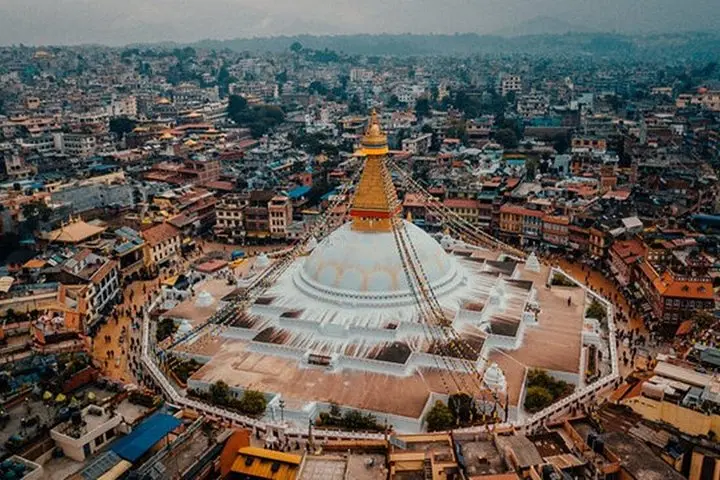
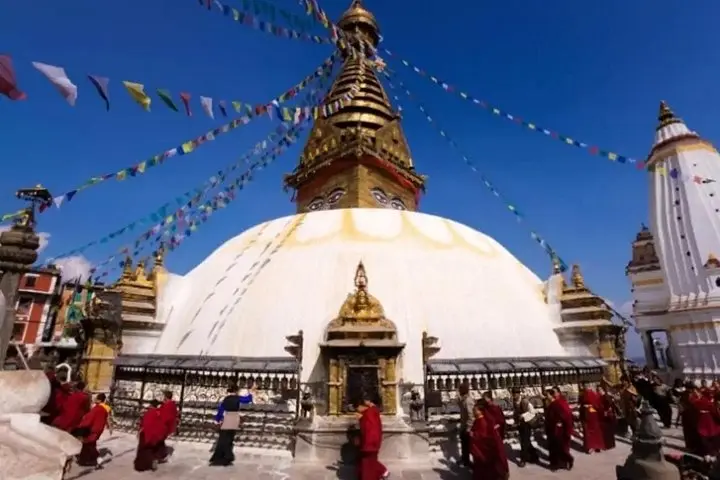
You step out of a cramped car into a wash of incense, bells and the low murmur of prayer—Kathmandu announces itself immediately. The tour threads four landmark sites across the valley: the white dome and spinning prayer wheels of Boudhanath, the riverfront shrines of Pashupatinath, the hilltop stare of Swayambhunath’s Buddha eyes, and the compact alleys and tiered temples of Basantapur Durbar Square.
Verified experiences and guided adventures in the surrounding area.
Operated by Peak to Peak Tours and Treks Pvt Ltd · Kathmandu, Bagmati Province
You step out of a cramped car into a wash of incense, bells and the low murmur of prayer—Kathmandu announces itself immediately. The tour threads four landmark sites across the valley: the white dome and spinning prayer wheels of Boudhanath, the riverfront shrines of Pashupatinath, the hilltop stare of Swayambhunath’s Buddha eyes, and the compact alleys and tiered temples of Basantapur Durbar Square.
These sites trace Kathmandu’s layered history: Newar craftsmanship and medieval Malla palaces at Durbar Square, Tibetan Buddhist influence concentrated around Boudhanath after the 1950s, and Pashupatinath’s millennia-long role as a major Shaiva pilgrimage spot on the Bagmati River. Geologically, the valley sits in an intermontane basin ringed by foothills—Swayambhunath’s prominence offers sweeping vistas because it rises above the sediment-filled plain.
Expect cobbled courtyards, steep stone steps at Swayambhu, prayer flags catching wind, and the occasional monkey challenging a backpack. Local life fills the gaps: potters and woodcarvers in Basantapur, saffron-robed monks at stupas, and cremation ghats where ritual and urban flow meet.
Practical guidance: allow 4–5 hours for a relaxed private tour with short stops at each site, carry water and modest clothing for temple protocol, and budget small cash for donations and local handicrafts. Mornings are cooler and less crowded; late afternoons offer softer light for photographs. This itinerary is compact and accessible—ideal for first-time visitors who want a concentrated cultural primer on Kathmandu Valley.
This budget private tour typically focuses on outside viewing; entrance fees to certain monuments may not be included—confirm with the operator beforehand.
The tour lists wheelchair-accessible transportation, but several sites (notably Swayambhunath and parts of Basantapur) have steps and uneven ground that limit full access.
The standard offering includes an English-licensed guide; request other languages when booking if needed.
Begin shortly after opening (early morning) to avoid mid-day crowds and to catch softer light for photography.
Peak to Peak Tours and Treks Pvt Ltd operates guided outdoor trips and adventures with an emphasis on safety, stewardship, and memorable experiences.
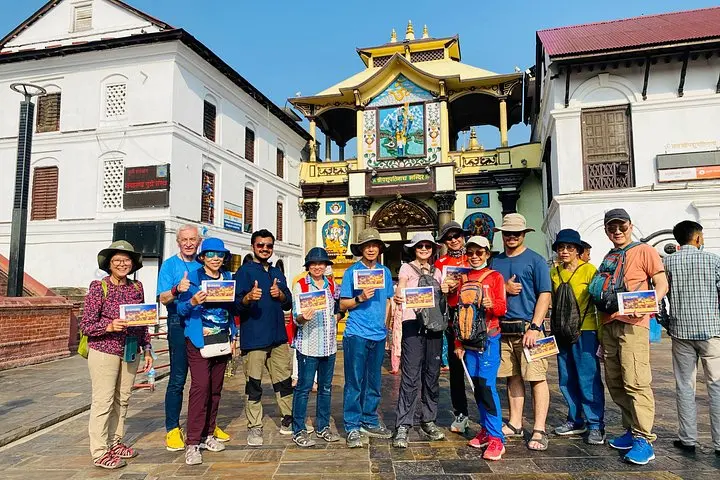
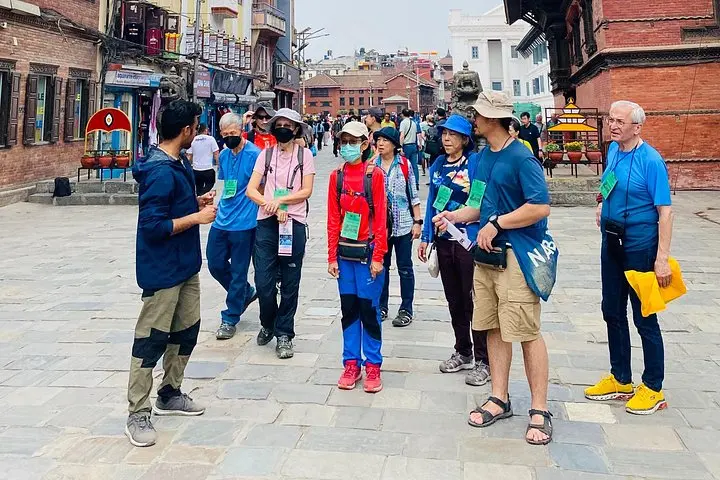
You step out of a cramped car into a wash of incense, bells and the low murmur of prayer—Kathmandu announces itself immediately. The tour threads four landmark sites across the valley: the white dome and spinning prayer wheels of Boudhanath, the riverfront shrines of Pashupatinath, the hilltop stare of Swayambhunath’s Buddha eyes, and the compact alleys and tiered temples of Basantapur Durbar Square.
You step out of a cramped car into a wash of incense, bells and the low murmur of prayer—Kathmandu announces itself immediately. The tour threads four landmark sites across the valley: the white dome and spinning prayer wheels of Boudhanath, the riverfront shrines of Pashupatinath, the hilltop stare of Swayambhunath’s Buddha eyes, and the compact alleys and tiered temples of Basantapur Durbar Square.
These sites trace Kathmandu’s layered history: Newar craftsmanship and medieval Malla palaces at Durbar Square, Tibetan Buddhist influence concentrated around Boudhanath after the 1950s, and Pashupatinath’s millennia-long role as a major Shaiva pilgrimage spot on the Bagmati River. Geologically, the valley sits in an intermontane basin ringed by foothills—Swayambhunath’s prominence offers sweeping vistas because it rises above the sediment-filled plain.
Expect cobbled courtyards, steep stone steps at Swayambhu, prayer flags catching wind, and the occasional monkey challenging a backpack. Local life fills the gaps: potters and woodcarvers in Basantapur, saffron-robed monks at stupas, and cremation ghats where ritual and urban flow meet.
Practical guidance: allow 4–5 hours for a relaxed private tour with short stops at each site, carry water and modest clothing for temple protocol, and budget small cash for donations and local handicrafts. Mornings are cooler and less crowded; late afternoons offer softer light for photographs. This itinerary is compact and accessible—ideal for first-time visitors who want a concentrated cultural primer on Kathmandu Valley.