
Kawah Ijen Blue Flame Midnight Tour — See Sulfur Fires & Sunrise Over the Crater
Hike through rainforest, arrive at the rim before dawn, and watch sulfur gas ignite into surreal blue flames beneath a rising sun. This overnight-style tour pairs volcanic geology with a glimpse into the hard work of Ijen’s sulfur miners.
An Adventure In Banyuwangi.
Hike through rainforest, arrive at the rim before dawn, and watch sulfur gas ignite into surreal blue flames beneath a rising sun. This overnight-style tour pairs volcanic geology with a glimpse into the hard work of Ijen’s sulfur miners.
Read the full experience
You reach the trailhead under a dark sky and the world narrows to the soft glow of your headlamp and the engine sighing away behind you.
You reach the trailhead under a dark sky and the world narrows to the soft glow of your headlamp and the engine sighing away behind you.
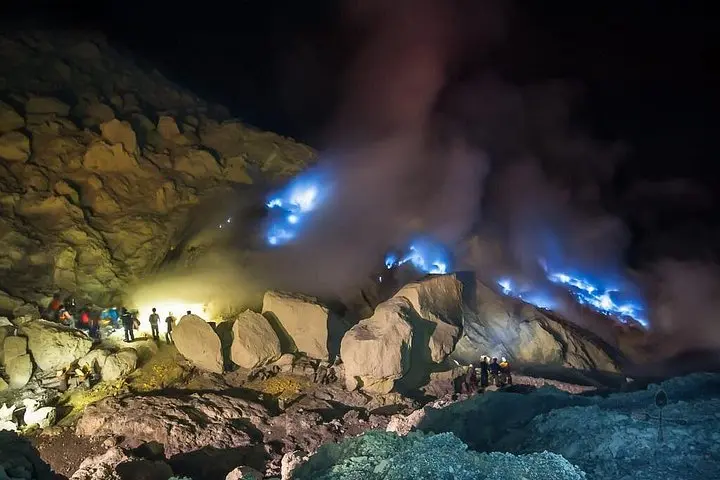
A 90-minute drive through thick rainforest delivers you to Paltuding, the Ijen parking area, where a guided hike begins toward the crater rim. The ascent is deliberate: footholds of volcanic scree, occasional stone steps, and pockets of humid montane forest that hum with insects and night birds. When you crest the ridge the blue flames appear—small tongues of sulfur gas igniting where volcanic vents exhale—an otherworldly contrast to the pale green of Kawah Ijen’s acidic lake below.
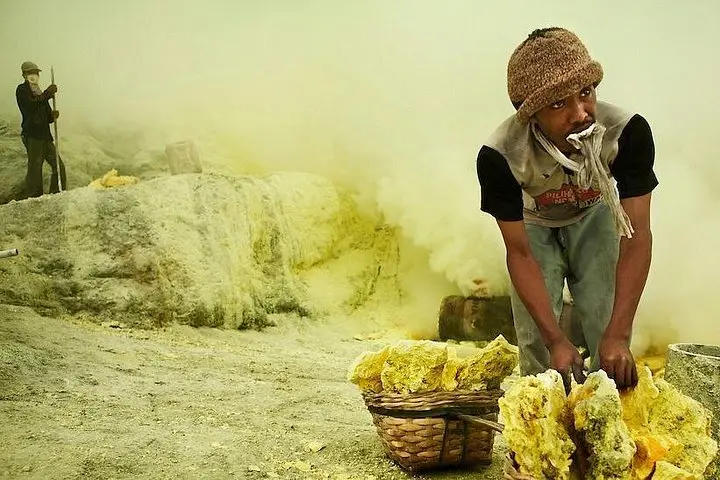
Geology here is blunt and active: an 18th-century stratovolcano whose sulfur deposits have fed local miners for generations. The miners, carrying heavy baskets, are part of a local labor tradition that blends hard physical work with deep knowledge of the crater’s microclimate.
Practical guidance follows the spectacle. Expect cold, damp air at the rim and corrosive sulfur fumes near the vents—your operator provides a gas mask, but bring a snug-fitting respirator if you have respiratory sensitivity. The walk to the blue flame can be as short as 30–60 minutes from the rim, but nighttime navigation requires steady footing and a steady pace.
Plan for early starts and limited facilities: water, layers, a reliable headlamp, and respect for miners’ working zones make the difference between a rushed visit and a careful, memorable one.
This is a sharp, tactile adventure—part geology lesson, part human story—that rewards preparation and quiet attention.
Frequently asked questions
Visibility depends on wind, volcanic gas emission, and weather; guides take you to the best viewing spots but flames are not guaranteed every night.
Children must be accompanied by adults; the operator does not recommend this trip for pregnant travelers or those with serious heart conditions.
Operators report about 30–60 minutes from the rim to the flame area, though total hiking time including ascent from Paltuding can be longer depending on pace and conditions.
The tour typically includes a gas mask, but bringing a personal tight-fitting respirator is recommended if you have respiratory sensitivity.
About This Experience
Osing Vacation operates guided outdoor trips and adventures with an emphasis on safety, stewardship, and memorable experiences.
Adventure tips
Recommended gear
- Sturdy hiking shoes: Good traction is essential on loose volcanic scree and damp steps.
- Headlamp with spare batteries: Hands-free lighting is critical for the nighttime ascent and descent.
- Respirator or disposable gas mask: Protects against sulfur fumes near vents—operators typically supply a mask, but a personal respirator fits better.
- Insulating jacket and wind layer: Keeps you warm at higher elevations before and after sunrise.
Photos of the experience
Related adventures & guides
Read the full experience
You reach the trailhead under a dark sky and the world narrows to the soft glow of your headlamp and the engine sighing away behind you.
You reach the trailhead under a dark sky and the world narrows to the soft glow of your headlamp and the engine sighing away behind you.
A 90-minute drive through thick rainforest delivers you to Paltuding, the Ijen parking area, where a guided hike begins toward the crater rim. The ascent is deliberate: footholds of volcanic scree, occasional stone steps, and pockets of humid montane forest that hum with insects and night birds. When you crest the ridge the blue flames appear—small tongues of sulfur gas igniting where volcanic vents exhale—an otherworldly contrast to the pale green of Kawah Ijen’s acidic lake below.
Geology here is blunt and active: an 18th-century stratovolcano whose sulfur deposits have fed local miners for generations. The miners, carrying heavy baskets, are part of a local labor tradition that blends hard physical work with deep knowledge of the crater’s microclimate.
Practical guidance follows the spectacle. Expect cold, damp air at the rim and corrosive sulfur fumes near the vents—your operator provides a gas mask, but bring a snug-fitting respirator if you have respiratory sensitivity. The walk to the blue flame can be as short as 30–60 minutes from the rim, but nighttime navigation requires steady footing and a steady pace.
Plan for early starts and limited facilities: water, layers, a reliable headlamp, and respect for miners’ working zones make the difference between a rushed visit and a careful, memorable one.
This is a sharp, tactile adventure—part geology lesson, part human story—that rewards preparation and quiet attention.
Make a day of it nearby.
Verified experiences and guided adventures in the surrounding area.