THE ADVENTURE COLLECTIVE® · Independent discovery and booking for outdoor travel

Hike to Kawah Ijen at midnight to witness the surreal blue fire and sunrise over an acidic crater lake. This guided night trek from Banyuwangi includes entry, a gas mask, and a chance to observe traditional sulfur mining up close.
Hike to Kawah Ijen at midnight to witness the surreal blue fire and sunrise over an acidic crater lake. This guided night trek from Banyuwangi includes entry, a gas mask, and a chance to observe traditional sulfur mining up close.
You step out just after midnight and a humid night presses close; the van eats the coastal road toward Paltuding and the headlamp beam becomes your small, steady horizon. By the time you register at the trailhead the air has cooled and the slope ahead is a ribbon of moving lights — other hikers, guides, and the occasional miner returning to work.
Verified experiences and guided adventures in the surrounding area.
Operated by Ijen Osing · Banyuwangi, East Java
You step out just after midnight and a humid night presses close; the van eats the coastal road toward Paltuding and the headlamp beam becomes your small, steady horizon. By the time you register at the trailhead the air has cooled and the slope ahead is a ribbon of moving lights — other hikers, guides, and the occasional miner returning to work.
Kawah Ijen is an active volcanic complex in East Java whose acid crater lake and sulfur vents have shaped livelihoods here for generations. The famous “blue fire” is not bioluminescence but burning sulfuric gases that ignite in the dark; miners still extract sulfur using hand-carried loads, a practice visible from the rim at sunrise.
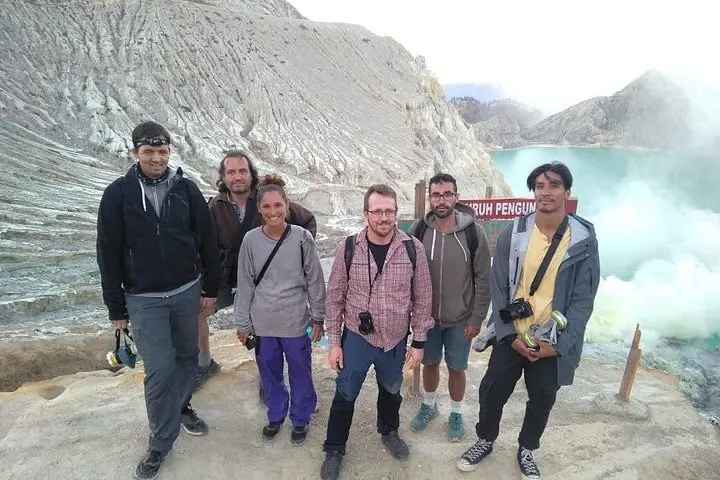
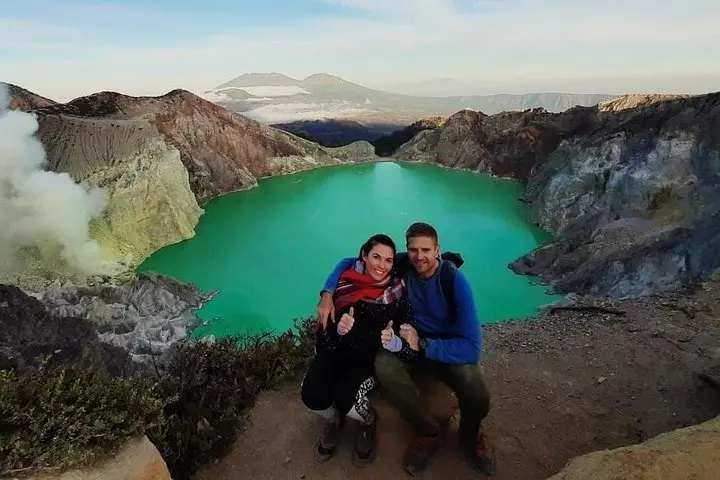
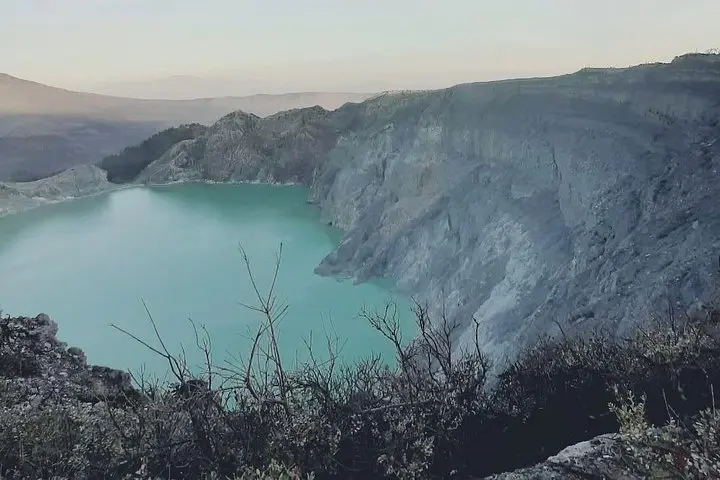
Geology is immediate: black volcanic scree underfoot, sharp pumice fragments, and a turquoise acid lake ringed by mineral deposits. Cultural notes arrive in small details — the smoke-stained clothes of miners, the roadside coffee stalls at Paltuding, and the practical guide traditions passed down locally.
Practically, expect a 1–1.5 hour steep ascent over uneven volcanic terrain, strong sulfur smells near vents, and cold winds on the rim before sunrise. Tours depart around midnight for the best view of blue flames and sunrise; gas masks and a guide are standard inclusions. Bring a reliable headlamp, warm layers, and sturdy boots. Move deliberately on descents — loose scree and early-morning fatigue are the biggest hazards. Respect miners’ space, follow your guide’s route, and budget the rest of the day for rest — the hike is short but intense.
The climb typically takes about 1 to 1.5 hours each way depending on pace and fitness; guides factor in stops for blue fire viewing and sunrise.
Guides keep visitors at a safe distance; the blue fire area emits sulfur fumes and heat—follow your guide and use a mask to reduce exposure.
Children and those with limited mobility may find the steep, uneven ascent difficult; anyone with heart or respiratory conditions is advised not to go.
Pickups in Banyuwangi are usually around 00:00–00:30, with a return to town between about 08:00–09:00, depending on traffic and group pace.
Ijen Osing operates guided outdoor trips and adventures with an emphasis on safety, stewardship, and memorable experiences.
You step out just after midnight and a humid night presses close; the van eats the coastal road toward Paltuding and the headlamp beam becomes your small, steady horizon. By the time you register at the trailhead the air has cooled and the slope ahead is a ribbon of moving lights — other hikers, guides, and the occasional miner returning to work.
You step out just after midnight and a humid night presses close; the van eats the coastal road toward Paltuding and the headlamp beam becomes your small, steady horizon. By the time you register at the trailhead the air has cooled and the slope ahead is a ribbon of moving lights — other hikers, guides, and the occasional miner returning to work.
Kawah Ijen is an active volcanic complex in East Java whose acid crater lake and sulfur vents have shaped livelihoods here for generations. The famous “blue fire” is not bioluminescence but burning sulfuric gases that ignite in the dark; miners still extract sulfur using hand-carried loads, a practice visible from the rim at sunrise.
Geology is immediate: black volcanic scree underfoot, sharp pumice fragments, and a turquoise acid lake ringed by mineral deposits. Cultural notes arrive in small details — the smoke-stained clothes of miners, the roadside coffee stalls at Paltuding, and the practical guide traditions passed down locally.
Practically, expect a 1–1.5 hour steep ascent over uneven volcanic terrain, strong sulfur smells near vents, and cold winds on the rim before sunrise. Tours depart around midnight for the best view of blue flames and sunrise; gas masks and a guide are standard inclusions. Bring a reliable headlamp, warm layers, and sturdy boots. Move deliberately on descents — loose scree and early-morning fatigue are the biggest hazards. Respect miners’ space, follow your guide’s route, and budget the rest of the day for rest — the hike is short but intense.