THE ADVENTURE COLLECTIVE® · Independent discovery and booking for outdoor travel

Trek through night air to Ijen’s crater rim to witness sulfur miners and—if conditions permit—the rare blue fire. This private midnight tour from Banyuwangi pairs a steep, 2.5–3 km ascent with close-up cultural and geological encounters.
Trek through night air to Ijen’s crater rim to witness sulfur miners and—if conditions permit—the rare blue fire. This private midnight tour from Banyuwangi pairs a steep, 2.5–3 km ascent with close-up cultural and geological encounters.
A humid night presses close as your minivan climbs away from Banyuwangi toward Paltuding. Headlights carve the slope, and the forest hushes; by midnight you step out into a thin, cool air and begin the uphill walk. The trail pulls you through eucalyptus and volcanic scree, each breath a little sharper as the crater’s sulfurous breath reaches you.
Verified experiences and guided adventures in the surrounding area.
Operated by Tera TNT · Banyuwangi, East Java
A humid night presses close as your minivan climbs away from Banyuwangi toward Paltuding. Headlights carve the slope, and the forest hushes; by midnight you step out into a thin, cool air and begin the uphill walk. The trail pulls you through eucalyptus and volcanic scree, each breath a little sharper as the crater’s sulfurous breath reaches you.
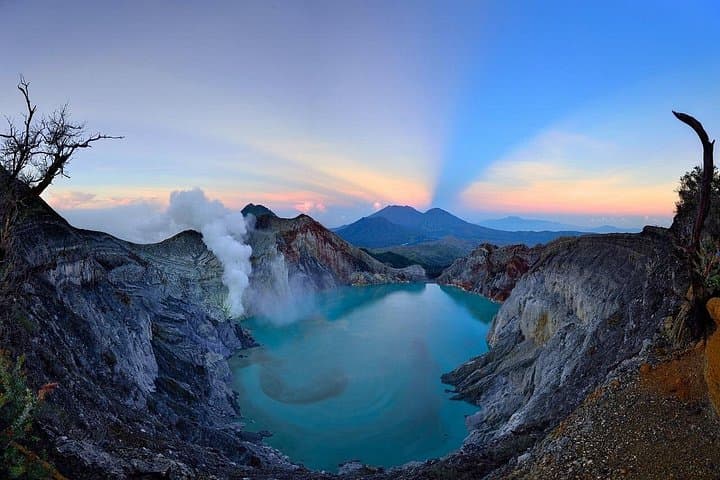
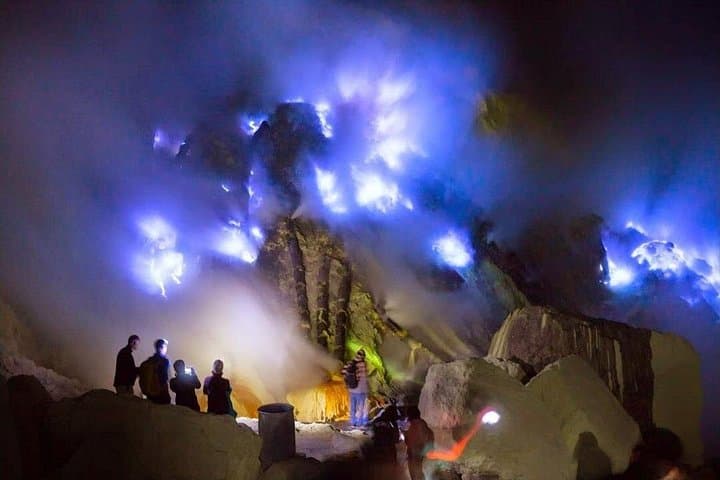
Kawah Ijen is both a geological highlight and a working landscape. The acid lake at the caldera bottom is one of the world’s largest, formed where a stratovolcano collapsed; miners have been extracting sulfur here for generations, carrying bright yellow loads down steep steps. On some nights the crater’s cracks emit an otherworldly blue flame—chemical combustion of sulfur gases—that appears only where gas ignites at high temperature and low light.
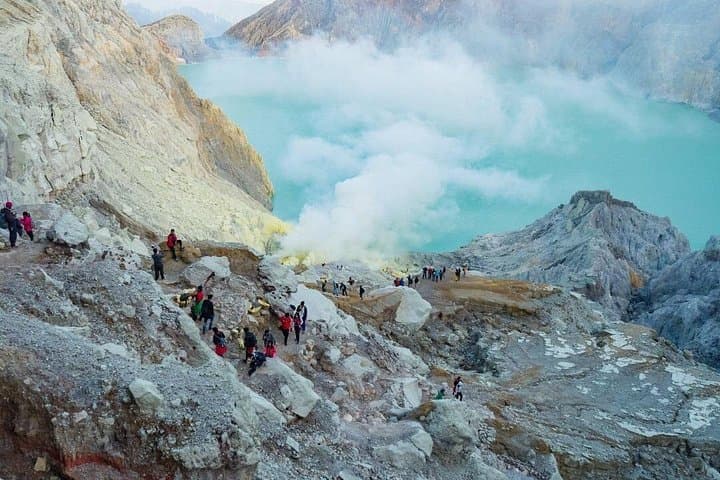
Culture and geology sit side by side: you'll likely see miners bent to their task, and the local communities in Banyuwangi keep a rhythm tuned to the volcano. Expect a steep climb from Paltuding (approx. 1,700 m) to the rim (around 2,443 m) — roughly 2.5–3 km each way with 600–800 m elevation gain in sections of loose scree and switchbacks.
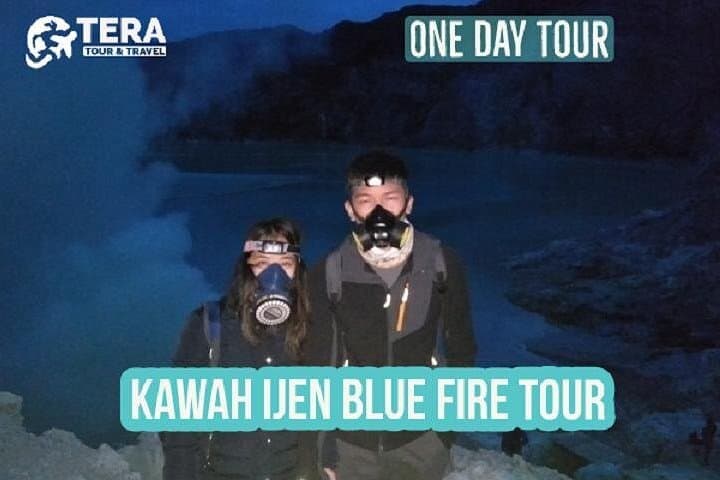
Practical guidance: depart around midnight to reach the crater before sunrise and, if conditions allow, see the blue fire. Guides supply gas masks and flashlights; bring a warm jacket, sturdy boots, and at least 1–2 liters of water. Move deliberately on the descent—rocks are loose and miners may be present. The operator’s itinerary typically includes homestay lodging, pickup from Banyuwangi, and return by midmorning, making this an intense, unforgettable night trek that pairs raw geology with living culture.
No; blue fire requires sulfur gas ignition and low wind—conditions are intermittent. Guides aim to time the trek for the best chance but sightings aren’t guaranteed.
The trail is roughly 2.5–3 km one way with about 600–800 m of elevation gain; expect 1.5–3 hours each way depending on fitness and pace.
Yes—sulfur miners often work at dawn and may be visible carrying heavy loads; give them space and follow your guide’s directions for safety and respect.
Yes — private tours include an experienced local guide, a basic gas mask, flashlight, and usually one night’s accommodation as listed in the itinerary.
Tera TNT operates guided outdoor trips and adventures with an emphasis on safety, stewardship, and memorable experiences.
A humid night presses close as your minivan climbs away from Banyuwangi toward Paltuding. Headlights carve the slope, and the forest hushes; by midnight you step out into a thin, cool air and begin the uphill walk. The trail pulls you through eucalyptus and volcanic scree, each breath a little sharper as the crater’s sulfurous breath reaches you.
A humid night presses close as your minivan climbs away from Banyuwangi toward Paltuding. Headlights carve the slope, and the forest hushes; by midnight you step out into a thin, cool air and begin the uphill walk. The trail pulls you through eucalyptus and volcanic scree, each breath a little sharper as the crater’s sulfurous breath reaches you.
Kawah Ijen is both a geological highlight and a working landscape. The acid lake at the caldera bottom is one of the world’s largest, formed where a stratovolcano collapsed; miners have been extracting sulfur here for generations, carrying bright yellow loads down steep steps. On some nights the crater’s cracks emit an otherworldly blue flame—chemical combustion of sulfur gases—that appears only where gas ignites at high temperature and low light.
Culture and geology sit side by side: you'll likely see miners bent to their task, and the local communities in Banyuwangi keep a rhythm tuned to the volcano. Expect a steep climb from Paltuding (approx. 1,700 m) to the rim (around 2,443 m) — roughly 2.5–3 km each way with 600–800 m elevation gain in sections of loose scree and switchbacks.
Practical guidance: depart around midnight to reach the crater before sunrise and, if conditions allow, see the blue fire. Guides supply gas masks and flashlights; bring a warm jacket, sturdy boots, and at least 1–2 liters of water. Move deliberately on the descent—rocks are loose and miners may be present. The operator’s itinerary typically includes homestay lodging, pickup from Banyuwangi, and return by midmorning, making this an intense, unforgettable night trek that pairs raw geology with living culture.