THE ADVENTURE COLLECTIVE® · Independent discovery and booking for outdoor travel

Witness Kawah Ijen’s rare blue flames at night and a crater-rim sunrise on this private 1-day midnight tour. Trek a rocky trail, meet traditional sulfur miners, and learn practical tips for a safe, respectful visit.
Witness Kawah Ijen’s rare blue flames at night and a crater-rim sunrise on this private 1-day midnight tour. Trek a rocky trail, meet traditional sulfur miners, and learn practical tips for a safe, respectful visit.
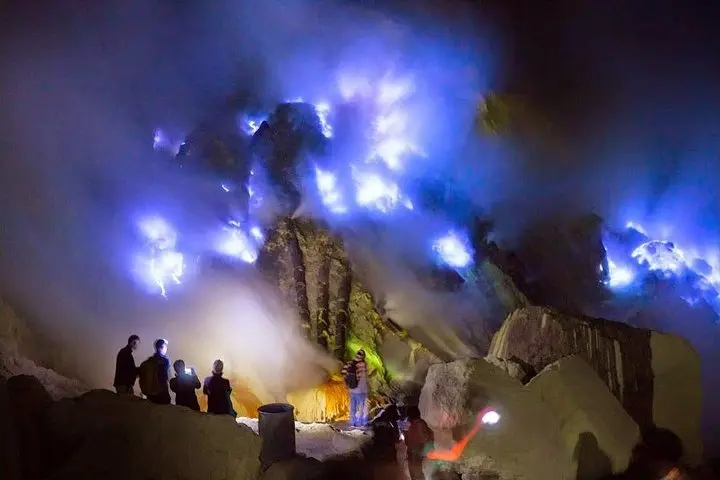
A low, electric blue flame licks the crevices around Kawah Ijen’s fumaroles as you press forward in the dark — the sight that draws travelers before dawn. You’ll arrive by private vehicle at the trailhead, shoulder a headlamp and follow a rocky switchback trail up toward the crater rim while the night cools and the sulfur smoke curls like breath.
Verified experiences and guided adventures in the surrounding area.
Operated by ijenauthentictour.com · Banyuwangi, East Java
A low, electric blue flame licks the crevices around Kawah Ijen’s fumaroles as you press forward in the dark — the sight that draws travelers before dawn. You’ll arrive by private vehicle at the trailhead, shoulder a headlamp and follow a rocky switchback trail up toward the crater rim while the night cools and the sulfur smoke curls like breath.
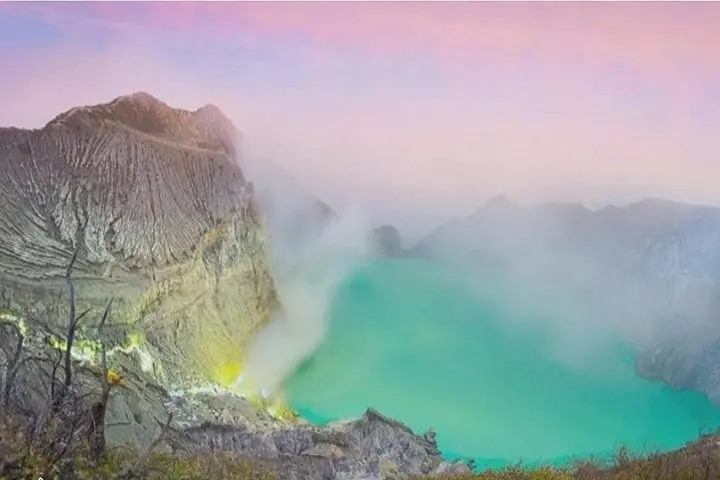
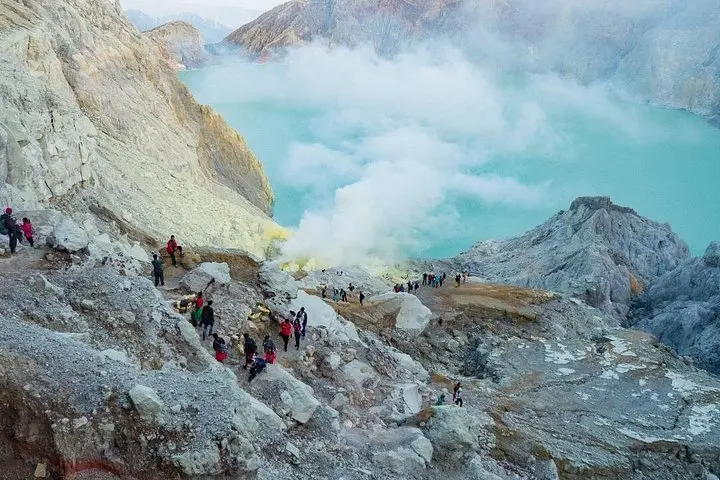
Geology here is blunt and visible: a highly acidic turquoise lake sits in the caldera below, fed by volcanic gases that combust into the famous blue flame at specific vents. The area has long been worked by local sulfur miners who haul heavy loads by hand; seeing them — often carrying baskets that can weigh as much as 70 kg — is a sobering, human detail to the raw landscape.
Culturally, Kawah Ijen sits in East Java and is approached from Banyuwangi; the route and work around the crater are inseparable from local livelihoods. Conservation-wise, the crater’s fragile chemistry and thin soils demand that visitors stay on paths, carry out trash, and minimize exposure to fumes.
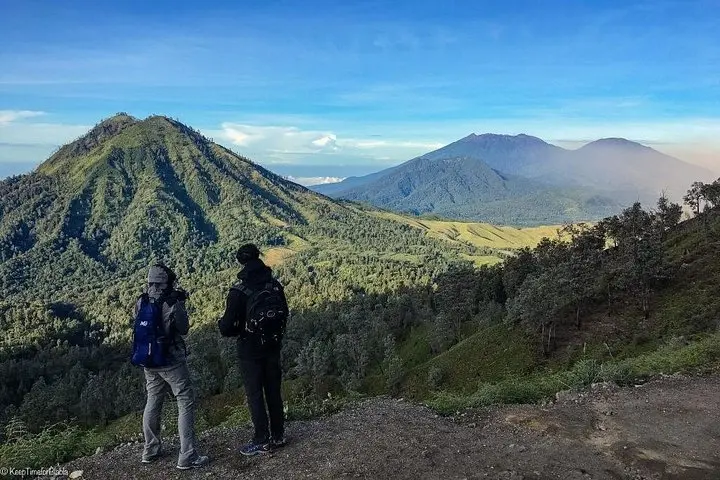
Practical guidance: expect an ascent of roughly 3 km with about 300–400 m of elevation gain from the common trailhead, taking 1.5–3 hours depending on pace and stops. A headlamp, layered warm clothes for the pre-dawn cold, sturdy boots, and a reliable respirator or mask are essential; guides normally provide gas masks and torches. Time your visit for clear nights and be prepared for strong sulfur odors and steep rocky steps on descent.
Blue flames are most visible in the darkest hours before dawn when sulfur gases ignite at the vents; timing can vary but arrive well before sunrise for the best view.
Most operators include gas masks and flashlights, but bringing your own higher-grade respirator is recommended for better protection and comfort.
The common route is roughly 3 km one way with about 300–400 m elevation gain and takes 1.5–3 hours to ascend depending on fitness; total tour time including transport is 6–8 hours.
This tour is not recommended for pregnant travelers or people with serious cardiovascular or spinal conditions due to altitude, steep terrain, and sulfur exposure.
ijenauthentictour.com operates guided outdoor trips and adventures with an emphasis on safety, stewardship, and memorable experiences.
A low, electric blue flame licks the crevices around Kawah Ijen’s fumaroles as you press forward in the dark — the sight that draws travelers before dawn. You’ll arrive by private vehicle at the trailhead, shoulder a headlamp and follow a rocky switchback trail up toward the crater rim while the night cools and the sulfur smoke curls like breath.
A low, electric blue flame licks the crevices around Kawah Ijen’s fumaroles as you press forward in the dark — the sight that draws travelers before dawn. You’ll arrive by private vehicle at the trailhead, shoulder a headlamp and follow a rocky switchback trail up toward the crater rim while the night cools and the sulfur smoke curls like breath.
Geology here is blunt and visible: a highly acidic turquoise lake sits in the caldera below, fed by volcanic gases that combust into the famous blue flame at specific vents. The area has long been worked by local sulfur miners who haul heavy loads by hand; seeing them — often carrying baskets that can weigh as much as 70 kg — is a sobering, human detail to the raw landscape.
Culturally, Kawah Ijen sits in East Java and is approached from Banyuwangi; the route and work around the crater are inseparable from local livelihoods. Conservation-wise, the crater’s fragile chemistry and thin soils demand that visitors stay on paths, carry out trash, and minimize exposure to fumes.
Practical guidance: expect an ascent of roughly 3 km with about 300–400 m of elevation gain from the common trailhead, taking 1.5–3 hours depending on pace and stops. A headlamp, layered warm clothes for the pre-dawn cold, sturdy boots, and a reliable respirator or mask are essential; guides normally provide gas masks and torches. Time your visit for clear nights and be prepared for strong sulfur odors and steep rocky steps on descent.