THE ADVENTURE COLLECTIVE® · Independent discovery and booking for outdoor travel

Paddle into Antelope Canyon from Lake Powell on a guided 5‑mile round trip that pairs stable sit‑inside kayaks with a short scenic hike through sandstone walls. Learn geology and local history while taking photos, swimming, and exploring a water‑carved canyon.
Paddle into Antelope Canyon from Lake Powell on a guided 5‑mile round trip that pairs stable sit‑inside kayaks with a short scenic hike through sandstone walls. Learn geology and local history while taking photos, swimming, and exploring a water‑carved canyon.
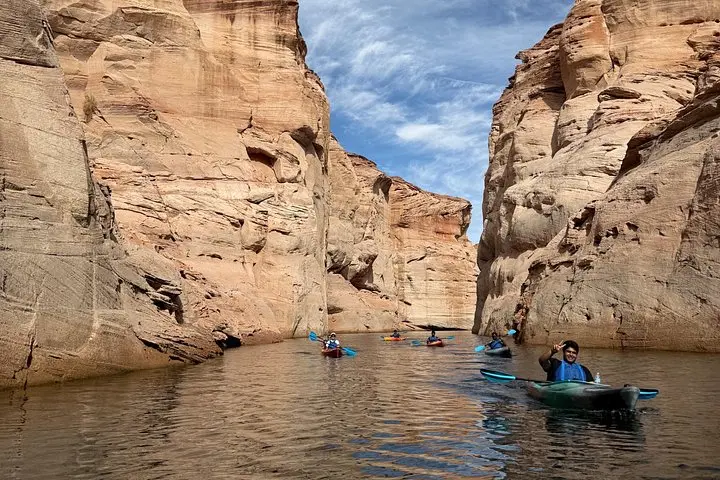
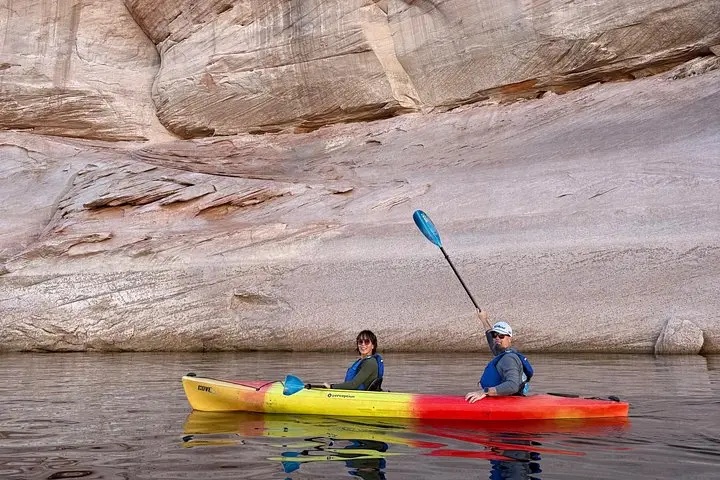
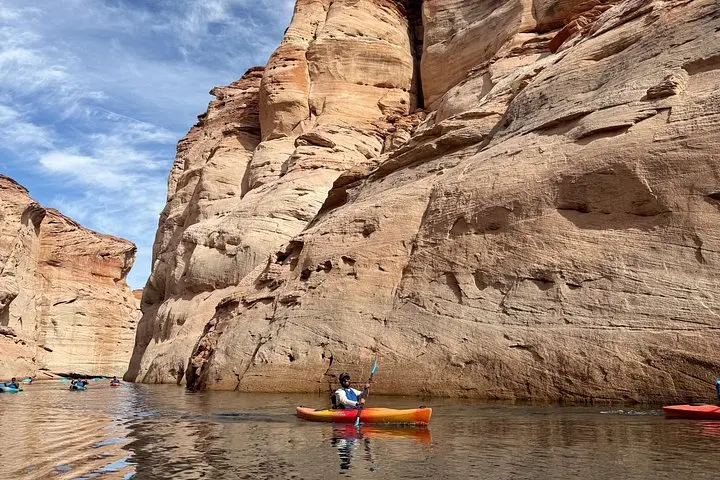
The hull slips forward and the canyon walls tighten like pages turning — warm Navajo sandstone rising from glassy blue water as the group threads a narrow waterway into Antelope Canyon. Guides adjust PFDs and give short, clear signals; the first strokes move paddles through water that reflects the canyon’s striated ribs. A 2.5‑mile inlet leads to a short 0.66‑mile footpath where hikers step from kayak to sand, walking beneath carved arches and vertical walls that hold fossilized ripples.
Verified experiences and guided adventures in the surrounding area.
Operated by Paddle Express · Page, AZ
The hull slips forward and the canyon walls tighten like pages turning — warm Navajo sandstone rising from glassy blue water as the group threads a narrow waterway into Antelope Canyon. Guides adjust PFDs and give short, clear signals; the first strokes move paddles through water that reflects the canyon’s striated ribs. A 2.5‑mile inlet leads to a short 0.66‑mile footpath where hikers step from kayak to sand, walking beneath carved arches and vertical walls that hold fossilized ripples.
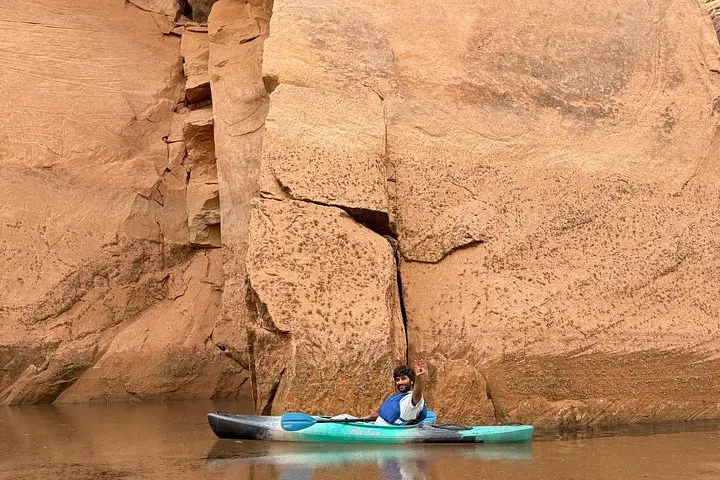
Geology here is plain to see: cross‑bedded Navajo sandstone sculpted by wind and water over millions of years, with Lake Powell’s fluctuating levels exposing polished alcoves and shelf lines. The area sits on the Colorado Plateau near Page, AZ, and carries a practical human history — from Navajo land stewardship to mid‑20th‑century damming that created Lake Powell and reshaped local hydrology.
Expect a paddle of up to 5 miles total, stable sit‑inside kayaks, and a short guided interpretive hike. Guides cover hydrology, local geology, and safety; orientation 30–40 minutes before launch is mandatory. Bring sun protection, a dry bag, water, and footwear for both paddling and scrambling onto sandy shorelines. Weather can shift quickly — afternoon winds and summer heat are real factors — so early launches are common.
This trip suits beginner to intermediate paddlers comfortable with a few miles of continuous paddling and brief hikes. It’s an accessible way to see dramatic canyon walls from the waterline, combine movement and observation, and leave with a clearer sense of how water shapes stone and place.
The paddle is up to 5 miles round trip, typically 2.5 miles each way into the canyon before the short hike.
No — instruction is provided and stable sit‑inside kayaks are used, but guests should have a moderate fitness level and basic swimming comfort.
Tours commonly accept guests aged roughly 5–62, but check operator policies and any age or weight restrictions at booking.
Trips are weather dependent and may be delayed or canceled; operators may shift departure times ±90 minutes and will notify guests — check in 24 hours prior for updates.
Paddle Express operates guided outdoor trips and adventures with an emphasis on safety, stewardship, and memorable experiences.
The hull slips forward and the canyon walls tighten like pages turning — warm Navajo sandstone rising from glassy blue water as the group threads a narrow waterway into Antelope Canyon. Guides adjust PFDs and give short, clear signals; the first strokes move paddles through water that reflects the canyon’s striated ribs. A 2.5‑mile inlet leads to a short 0.66‑mile footpath where hikers step from kayak to sand, walking beneath carved arches and vertical walls that hold fossilized ripples.
The hull slips forward and the canyon walls tighten like pages turning — warm Navajo sandstone rising from glassy blue water as the group threads a narrow waterway into Antelope Canyon. Guides adjust PFDs and give short, clear signals; the first strokes move paddles through water that reflects the canyon’s striated ribs. A 2.5‑mile inlet leads to a short 0.66‑mile footpath where hikers step from kayak to sand, walking beneath carved arches and vertical walls that hold fossilized ripples.
Geology here is plain to see: cross‑bedded Navajo sandstone sculpted by wind and water over millions of years, with Lake Powell’s fluctuating levels exposing polished alcoves and shelf lines. The area sits on the Colorado Plateau near Page, AZ, and carries a practical human history — from Navajo land stewardship to mid‑20th‑century damming that created Lake Powell and reshaped local hydrology.
Expect a paddle of up to 5 miles total, stable sit‑inside kayaks, and a short guided interpretive hike. Guides cover hydrology, local geology, and safety; orientation 30–40 minutes before launch is mandatory. Bring sun protection, a dry bag, water, and footwear for both paddling and scrambling onto sandy shorelines. Weather can shift quickly — afternoon winds and summer heat are real factors — so early launches are common.
This trip suits beginner to intermediate paddlers comfortable with a few miles of continuous paddling and brief hikes. It’s an accessible way to see dramatic canyon walls from the waterline, combine movement and observation, and leave with a clearer sense of how water shapes stone and place.