THE ADVENTURE COLLECTIVE® · Independent discovery and booking for outdoor travel

Paddle among towering icebergs and approach the east face of Grey Glacier on a guided three- to four-hour kayak tour inside Torres del Paine. This guided route balances close-up glacier views with strict safety and practical logistics for an intimate Patagonian experience.
Paddle among towering icebergs and approach the east face of Grey Glacier on a guided three- to four-hour kayak tour inside Torres del Paine. This guided route balances close-up glacier views with strict safety and practical logistics for an intimate Patagonian experience.
You push off from a wind-gnarled beach and the lake answers: a bright, cold slosh that slides your double kayak into floating fields of blue-white. Icebergs drift lazily, cracking like distant thunder, and the Grey Glacier sits at the lake’s eastern edge — a hulking, layered wall of ice that keeps its own slow time. Guides trim the pace, scanning for calving or sudden gusts, while the support kayak circles like a patient shepherd. The air tastes of metal and mint; every breath reminds you you’re somewhere raw and still changing.
Verified experiences and guided adventures in the surrounding area.
Operated by Howlanders · Puerto Natales, Magallanes y la Antártica Chilena
You push off from a wind-gnarled beach and the lake answers: a bright, cold slosh that slides your double kayak into floating fields of blue-white. Icebergs drift lazily, cracking like distant thunder, and the Grey Glacier sits at the lake’s eastern edge — a hulking, layered wall of ice that keeps its own slow time. Guides trim the pace, scanning for calving or sudden gusts, while the support kayak circles like a patient shepherd. The air tastes of metal and mint; every breath reminds you you’re somewhere raw and still changing.
Torres del Paine National Park was designated to protect this corner of the Southern Patagonian Ice Field in the mid-20th century. Grey Glacier itself is a tongue of that ice field, a dynamic mass shaped by millennia of accumulation and modern retreat. The geology here reads like a field notebook: wind-sculpted moraines, silt-laden streams, and lake-borne bergs that have calved from the glacier’s face. The area also carries the footprints of the region’s ranching and exploration history — tracks that now intersect a growing adventure tourism economy anchored in Puerto Natales, the usual jumping-off town.
On the water, the experience is elemental. The guide’s voice cuts wind and explains how floating bergs act like skylights, revealing aquamarine ice that formed under pressure. Wildlife is sparse but present: Chilean geese, Andean condors overhead when thermals rise, and the occasional shy huemul on distant shores. The company supplies dry suits or neoprene layers, helmets, skirts, paddles with built-in gloves, and hot drinks after the paddle — practical comforts against Patagonia’s notorious mood swings.
Practical edge: the route covers roughly 6 km (about 3.5 miles) of paddling and is rated medium — expect roughly 3–4 hours total, including briefing and transfers to the water. Participants must reach Grey Base Camp independently (no pickup from Puerto Natales) and most paddlers book this as an add-on to the W or O circuit. Guides manage group pace and safety; paddlers should be comfortable in a seated kayak and able to follow quick commands. Bring layers, a dry bag for camera gear, and a sense of patience for wind delays.
Safety and preservation go hand in hand. Guides keep a conservative distance from the glacier face to avoid calving hazards, and the tour operates within strict park regulations. If you want memory-making shots, plan for late afternoon light when the lake flattens and ice glows — but expect wind. Arrive hydrated, dressed for variable weather, and with a charged camera in a waterproof case: Patagonia rewards preparedness.
This is not just a paddle; it’s an intimate, up-close reading of a glacier’s present-day story, told in clicks of ice and the steady rhythm of your paddle.
Yes — the operator supplies neoprene wetsuits, helmets, life jackets and protective skirts; sizes vary so communicate your needs at booking.
Most travelers take the park bus or arrange private transfer to Torres del Paine, then either hike into the Grey sector or arrive by the Grey III boat — confirm schedules ahead.
The tour is rated medium; beginners who are reasonably fit and can follow instruction can participate, because guides control pace and offer support.
The operator reserves the right to cancel for safety (high wind, heavy fog or calving risk) — all sales are final but the company will prioritize guest safety and may offer rescheduling when possible.
Minimum age and safety rules vary by operator; check during booking — children must be able to sit and paddle safely and meet weight/size requirements for supplied gear.
Yes — but use a waterproof case or wrist strap; guides often assist with shoreline photos from the support kayak to reduce risk.
Howlanders operates guided outdoor trips and adventures with an emphasis on safety, stewardship, and memorable experiences.
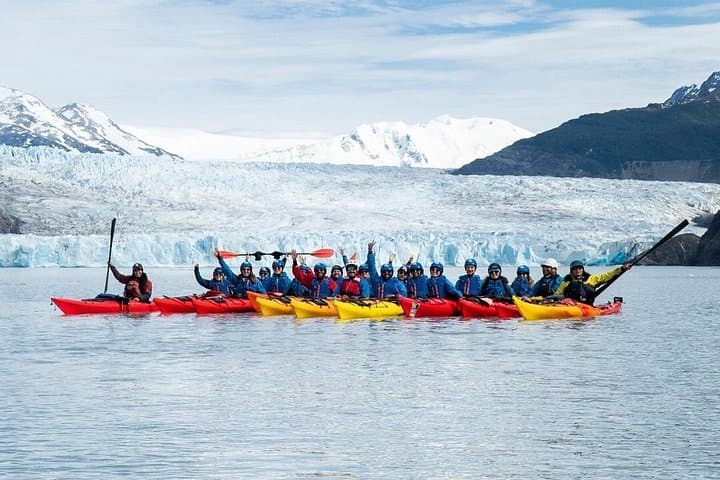

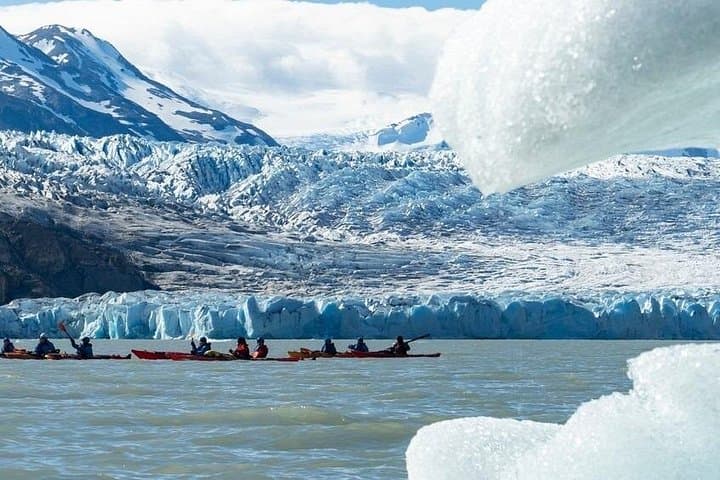
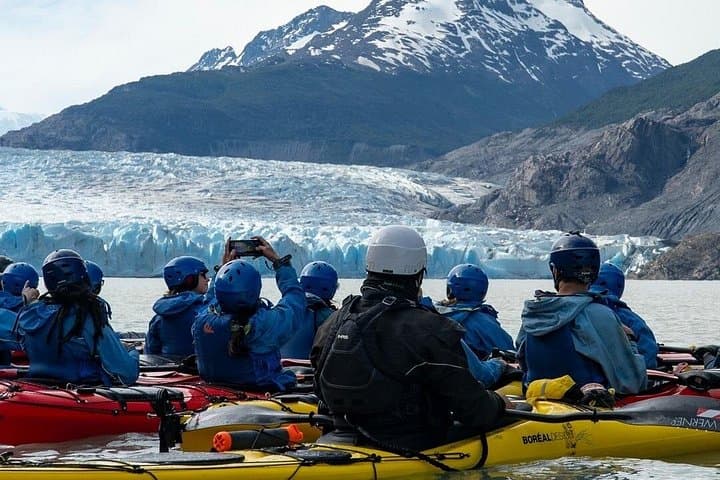
You push off from a wind-gnarled beach and the lake answers: a bright, cold slosh that slides your double kayak into floating fields of blue-white. Icebergs drift lazily, cracking like distant thunder, and the Grey Glacier sits at the lake’s eastern edge — a hulking, layered wall of ice that keeps its own slow time. Guides trim the pace, scanning for calving or sudden gusts, while the support kayak circles like a patient shepherd. The air tastes of metal and mint; every breath reminds you you’re somewhere raw and still changing.
You push off from a wind-gnarled beach and the lake answers: a bright, cold slosh that slides your double kayak into floating fields of blue-white. Icebergs drift lazily, cracking like distant thunder, and the Grey Glacier sits at the lake’s eastern edge — a hulking, layered wall of ice that keeps its own slow time. Guides trim the pace, scanning for calving or sudden gusts, while the support kayak circles like a patient shepherd. The air tastes of metal and mint; every breath reminds you you’re somewhere raw and still changing.
Torres del Paine National Park was designated to protect this corner of the Southern Patagonian Ice Field in the mid-20th century. Grey Glacier itself is a tongue of that ice field, a dynamic mass shaped by millennia of accumulation and modern retreat. The geology here reads like a field notebook: wind-sculpted moraines, silt-laden streams, and lake-borne bergs that have calved from the glacier’s face. The area also carries the footprints of the region’s ranching and exploration history — tracks that now intersect a growing adventure tourism economy anchored in Puerto Natales, the usual jumping-off town.
On the water, the experience is elemental. The guide’s voice cuts wind and explains how floating bergs act like skylights, revealing aquamarine ice that formed under pressure. Wildlife is sparse but present: Chilean geese, Andean condors overhead when thermals rise, and the occasional shy huemul on distant shores. The company supplies dry suits or neoprene layers, helmets, skirts, paddles with built-in gloves, and hot drinks after the paddle — practical comforts against Patagonia’s notorious mood swings.
Practical edge: the route covers roughly 6 km (about 3.5 miles) of paddling and is rated medium — expect roughly 3–4 hours total, including briefing and transfers to the water. Participants must reach Grey Base Camp independently (no pickup from Puerto Natales) and most paddlers book this as an add-on to the W or O circuit. Guides manage group pace and safety; paddlers should be comfortable in a seated kayak and able to follow quick commands. Bring layers, a dry bag for camera gear, and a sense of patience for wind delays.
Safety and preservation go hand in hand. Guides keep a conservative distance from the glacier face to avoid calving hazards, and the tour operates within strict park regulations. If you want memory-making shots, plan for late afternoon light when the lake flattens and ice glows — but expect wind. Arrive hydrated, dressed for variable weather, and with a charged camera in a waterproof case: Patagonia rewards preparedness.
This is not just a paddle; it’s an intimate, up-close reading of a glacier’s present-day story, told in clicks of ice and the steady rhythm of your paddle.