THE ADVENTURE COLLECTIVE® · Independent discovery and booking for outdoor travel

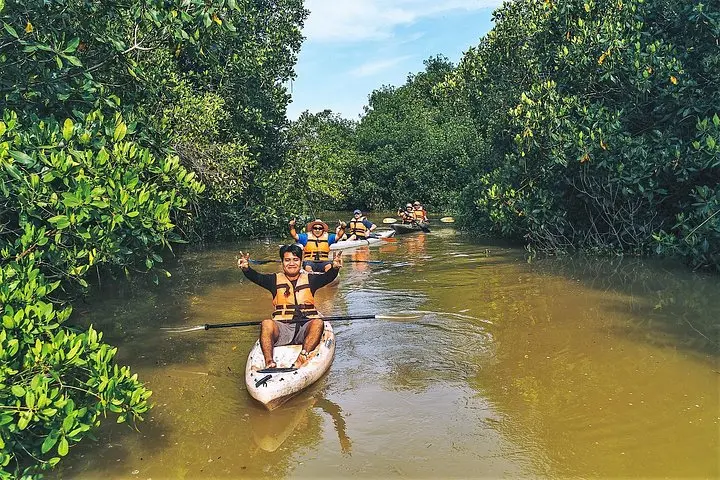
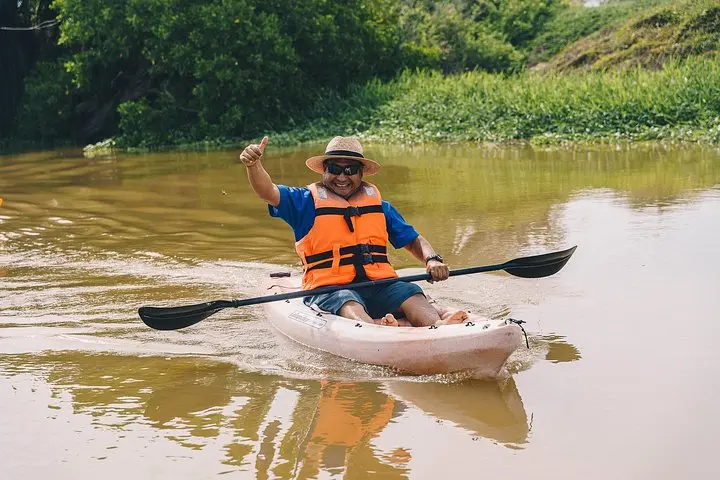
Paddle through Manialtepec’s cool morning channels where roseate spoonbills and wood storks hunt in shallow water. This guided 4-hour kayak tour from Puerto Escondido mixes birding, estuary navigation and a beach rest stop.
Paddle through Manialtepec’s cool morning channels where roseate spoonbills and wood storks hunt in shallow water. This guided 4-hour kayak tour from Puerto Escondido mixes birding, estuary navigation and a beach rest stop.
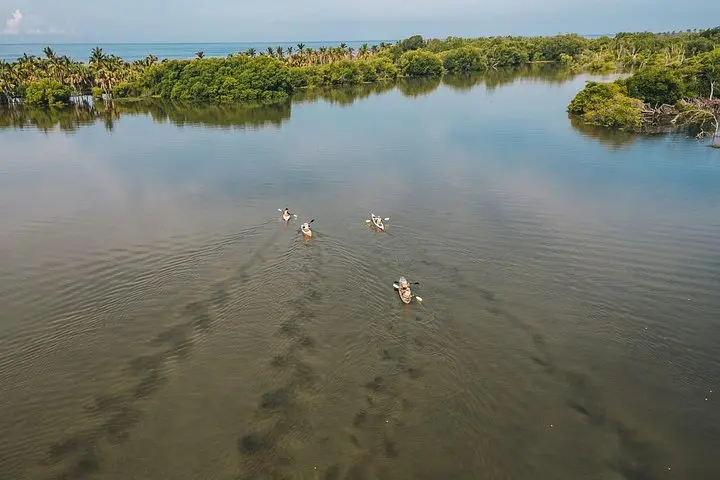
Dawn breaks over Manialtepec with a hush that the lagoon refuses to keep. Paddles dip, little wakes gleam, and birds — pink spoonbills, cormorants and stilt-legged herons — fill the air with calls that cut through the cool morning. Local fishermen cast nets beyond the sandbar; the ocean’s distant rumble is a reminder that this freshwater body is a narrow pulse between land and sea.
Verified experiences and guided adventures in the surrounding area.
Operated by Paraíso Huatulco · Puerto Escondido, Oaxaca
Dawn breaks over Manialtepec with a hush that the lagoon refuses to keep. Paddles dip, little wakes gleam, and birds — pink spoonbills, cormorants and stilt-legged herons — fill the air with calls that cut through the cool morning. Local fishermen cast nets beyond the sandbar; the ocean’s distant rumble is a reminder that this freshwater body is a narrow pulse between land and sea.
Geology here is recent coastal plain: mangrove-fringed estuaries, nutrient-rich freshwater from small rivers, and a shallow lagoon that traps fish and the birds that hunt them. The area around Las Negras and Puerto Soil has long been used by coastal communities for fishing and salt-collection; today small villages balance tourism with traditional livelihoods.
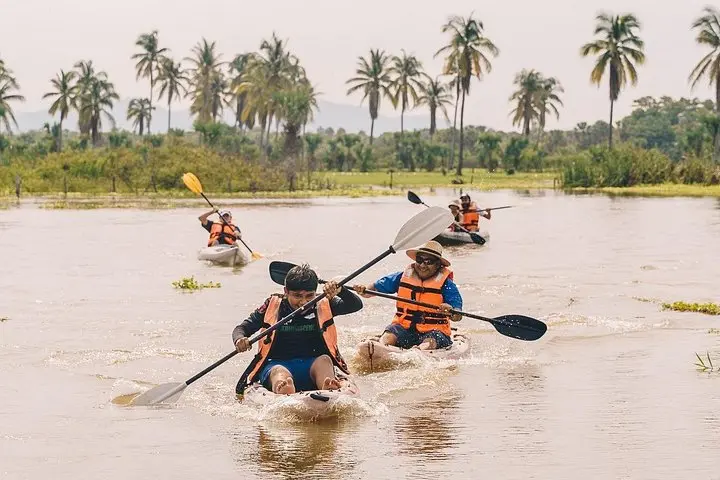
The experience is practical and tactile: expect a guided paddling route through channels, a boat transfer of roughly 6 km to the estuary, and guided observation at the “Carnero” nesting area. Terrain is flat water, occasional mudbanks and a sandy beach rest at Puerto Soil. Wildlife sightings are frequent in the cooler hours; bring binoculars and a quiet voice.
Plan for a four-hour window: leave early to avoid midday heat, wear reef or water shoes, sun protection and a light rain layer in summer. You’ll share the water with local guides who choose routes by skill level; children over 12 and moderate fitness are required. Respect nesting zones, keep distance from birds, and pack out any trash—this lagoon depends on low-impact visits to stay vibrant for both fishermen and feathered residents.
The full excursion is about four hours; guides use a boat transfer of roughly 6 km to reach the estuary, with paddling in sheltered channels and options to return partly by boat.
Yes—routes are chosen to match skill levels, but participants should have basic paddling ability and be comfortable in a kayak for short intervals.
Common sightings include roseate spoonbills, wood storks, cormorants, herons, plovers and occasional frigatebirds near the sandbar.
Children 12 and older are accepted; the operator requires a minimum group size (usually four people) and moderate fitness for all participants.
Paraíso Huatulco operates guided outdoor trips and adventures with an emphasis on safety, stewardship, and memorable experiences.
Dawn breaks over Manialtepec with a hush that the lagoon refuses to keep. Paddles dip, little wakes gleam, and birds — pink spoonbills, cormorants and stilt-legged herons — fill the air with calls that cut through the cool morning. Local fishermen cast nets beyond the sandbar; the ocean’s distant rumble is a reminder that this freshwater body is a narrow pulse between land and sea.
Dawn breaks over Manialtepec with a hush that the lagoon refuses to keep. Paddles dip, little wakes gleam, and birds — pink spoonbills, cormorants and stilt-legged herons — fill the air with calls that cut through the cool morning. Local fishermen cast nets beyond the sandbar; the ocean’s distant rumble is a reminder that this freshwater body is a narrow pulse between land and sea.
Geology here is recent coastal plain: mangrove-fringed estuaries, nutrient-rich freshwater from small rivers, and a shallow lagoon that traps fish and the birds that hunt them. The area around Las Negras and Puerto Soil has long been used by coastal communities for fishing and salt-collection; today small villages balance tourism with traditional livelihoods.
The experience is practical and tactile: expect a guided paddling route through channels, a boat transfer of roughly 6 km to the estuary, and guided observation at the “Carnero” nesting area. Terrain is flat water, occasional mudbanks and a sandy beach rest at Puerto Soil. Wildlife sightings are frequent in the cooler hours; bring binoculars and a quiet voice.
Plan for a four-hour window: leave early to avoid midday heat, wear reef or water shoes, sun protection and a light rain layer in summer. You’ll share the water with local guides who choose routes by skill level; children over 12 and moderate fitness are required. Respect nesting zones, keep distance from birds, and pack out any trash—this lagoon depends on low-impact visits to stay vibrant for both fishermen and feathered residents.