THE ADVENTURE COLLECTIVE® · Independent discovery and booking for outdoor travel

Paddle out from La Ciotat and thread limestone arches, sea caves, and turquoise coves on a three‑hour guided kayak tour through Calanques National Park. Local guides decode the geology, wildlife, and safe lines through these protected waters.
Paddle out from La Ciotat and thread limestone arches, sea caves, and turquoise coves on a three‑hour guided kayak tour through Calanques National Park. Local guides decode the geology, wildlife, and safe lines through these protected waters.
You push off from the harbor at La Ciotat and the town's chatter slips behind you like a receding wave. The paddle pulls cleanly through turquoise water that refuses to be anonymous—the sea here keeps its color even on a gray day. Ahead are limestone teeth: Ile Verte, the Bec de l'Aigle (Eagle Beak) arching like a jaw, and the narrow throat of Calanque du Mugel, where cliffs funnel light into caves and pockets of glassy sea.
Verified experiences and guided adventures in the surrounding area.
Operated by EXPENATURE · La Ciotat, Provence-Alpes-Côte d'Azur
You push off from the harbor at La Ciotat and the town's chatter slips behind you like a receding wave. The paddle pulls cleanly through turquoise water that refuses to be anonymous—the sea here keeps its color even on a gray day. Ahead are limestone teeth: Ile Verte, the Bec de l'Aigle (Eagle Beak) arching like a jaw, and the narrow throat of Calanque du Mugel, where cliffs funnel light into caves and pockets of glassy sea.
This three‑hour guided excursion is less a sightseeing cruise than an invitation to read the coastline up close. Guides point out the fossil-rich strata in the cliffs, evidence of the Miocene seas that stacked shells into limestone, then tell the quicker human history: small fishing hamlets, boat yards of La Ciotat that once launched steamships, and the more recent story—the creation of Calanques National Park in 2012 to protect its fragile marine meadows and nesting seabirds.
Geology here is immediate. The karst limestone is scored by vertical joints and tunnels; tides and the mistral wind carve caves and arches readers see only from the water. Biodiversity is compact and showy: Posidonia seagrass beds—bright green swathes beneath the surface—feed the clarity and life of the inshore waters, and gulls and cormorants line exposed ledges.
Culturally, the route threads between working coast and protected space. Guides are local and often bilingual, blending natural history with practical seamanship: how to read swell, where anchoring is forbidden, which little coves are best for a quick swim.
Practicalities matter. The meeting point is EXPENATURE at 168 Avenue Wilson, La Ciotat; there’s large port parking and reasonable public transit from Marseille (train to La Ciotat then bus). Tours run year‑round; expect three hours afloat and an average paddling distance of 6–9 km depending on conditions. Shoes that can get wet are mandatory—bring water shoes or sneakers, or rent them for a small fee. Guides supply stable sit‑on‑top sea kayaks, personal flotation devices, and basic safety gear; photos taken during the tour are included.
Timing is tactical: mornings typically offer calmer seas and cleaner light for photos; the mistral can pick up in the afternoon and make the return leg work. Hydration, sun protection, and a wind layer are the simplest ways to avoid a day of regrets. For those who value quiet, winter trips bring fewer boats and a sharper, more elemental coastline—summer brings clear, warm water but also more visitors and strict fire regulations.
For adventurous travelers who want to feel the Calanques under their own hands, this La Ciotat launch is a compact, locally guided way to see the park’s highlights while learning why this coastline is both delicate and worth protecting.
No—guides provide instruction and stable sea kayaks suited for beginners; a moderate fitness level helps for the duration.
Meet at EXPENATURE, 168 Avenue Wilson, La Ciotat (new port). There’s large port parking and public transit links from Marseille via train then bus.
Yes—personal flotation devices are supplied and required for the trip.
Families are welcome, but participants must meet minimum fitness and safety guidelines; contact the operator for age restrictions and stroller accessibility notes.
Tours are canceled in strong wind or unsafe sea conditions; full refunds are available if canceled at least 24 hours prior or for weather cancellations.
Service animals are permitted; pets should be discussed with the operator in advance to ensure safety and space.
EXPENATURE operates guided outdoor trips and adventures with an emphasis on safety, stewardship, and memorable experiences.
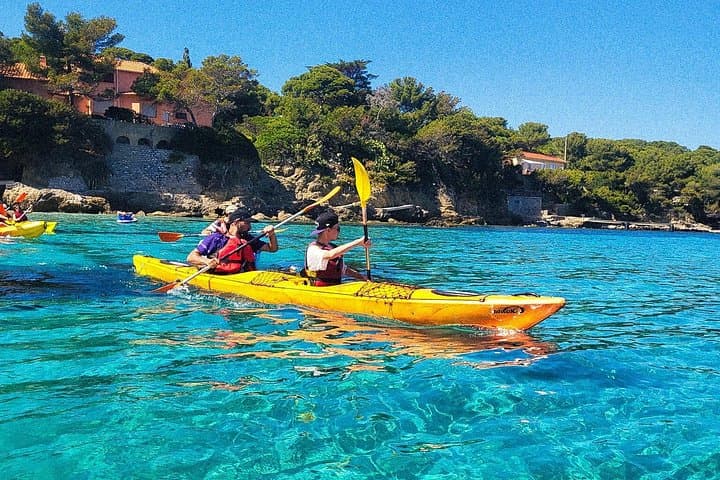

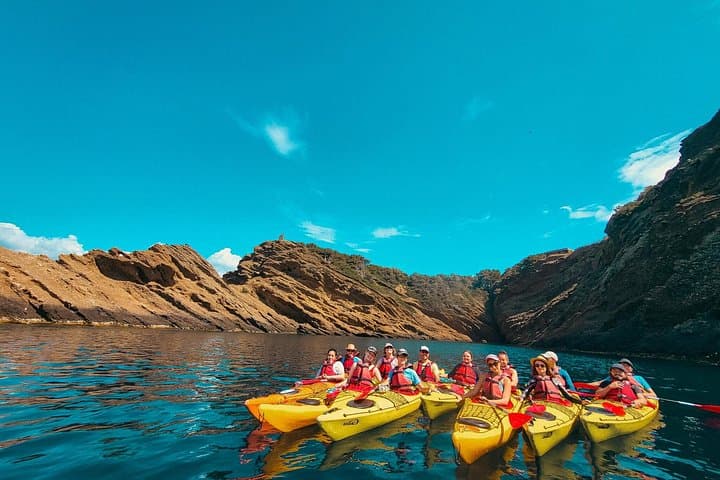

You push off from the harbor at La Ciotat and the town's chatter slips behind you like a receding wave. The paddle pulls cleanly through turquoise water that refuses to be anonymous—the sea here keeps its color even on a gray day. Ahead are limestone teeth: Ile Verte, the Bec de l'Aigle (Eagle Beak) arching like a jaw, and the narrow throat of Calanque du Mugel, where cliffs funnel light into caves and pockets of glassy sea.
You push off from the harbor at La Ciotat and the town's chatter slips behind you like a receding wave. The paddle pulls cleanly through turquoise water that refuses to be anonymous—the sea here keeps its color even on a gray day. Ahead are limestone teeth: Ile Verte, the Bec de l'Aigle (Eagle Beak) arching like a jaw, and the narrow throat of Calanque du Mugel, where cliffs funnel light into caves and pockets of glassy sea.
This three‑hour guided excursion is less a sightseeing cruise than an invitation to read the coastline up close. Guides point out the fossil-rich strata in the cliffs, evidence of the Miocene seas that stacked shells into limestone, then tell the quicker human history: small fishing hamlets, boat yards of La Ciotat that once launched steamships, and the more recent story—the creation of Calanques National Park in 2012 to protect its fragile marine meadows and nesting seabirds.
Geology here is immediate. The karst limestone is scored by vertical joints and tunnels; tides and the mistral wind carve caves and arches readers see only from the water. Biodiversity is compact and showy: Posidonia seagrass beds—bright green swathes beneath the surface—feed the clarity and life of the inshore waters, and gulls and cormorants line exposed ledges.
Culturally, the route threads between working coast and protected space. Guides are local and often bilingual, blending natural history with practical seamanship: how to read swell, where anchoring is forbidden, which little coves are best for a quick swim.
Practicalities matter. The meeting point is EXPENATURE at 168 Avenue Wilson, La Ciotat; there’s large port parking and reasonable public transit from Marseille (train to La Ciotat then bus). Tours run year‑round; expect three hours afloat and an average paddling distance of 6–9 km depending on conditions. Shoes that can get wet are mandatory—bring water shoes or sneakers, or rent them for a small fee. Guides supply stable sit‑on‑top sea kayaks, personal flotation devices, and basic safety gear; photos taken during the tour are included.
Timing is tactical: mornings typically offer calmer seas and cleaner light for photos; the mistral can pick up in the afternoon and make the return leg work. Hydration, sun protection, and a wind layer are the simplest ways to avoid a day of regrets. For those who value quiet, winter trips bring fewer boats and a sharper, more elemental coastline—summer brings clear, warm water but also more visitors and strict fire regulations.
For adventurous travelers who want to feel the Calanques under their own hands, this La Ciotat launch is a compact, locally guided way to see the park’s highlights while learning why this coastline is both delicate and worth protecting.