THE ADVENTURE COLLECTIVE® · Independent discovery and booking for outdoor travel

Paddle under the Congress Avenue Bridge as 1.5 million Mexican free-tailed bats erupt into the dusk. This guided sunset kayak tour combines calm-water paddling with a front-row view of one of the world’s largest urban bat colonies.
Paddle under the Congress Avenue Bridge as 1.5 million Mexican free-tailed bats erupt into the dusk. This guided sunset kayak tour combines calm-water paddling with a front-row view of one of the world’s largest urban bat colonies.
The sun slips low behind the Austin skyline and the river relaxes its current; you push off from a quiet launch and the city’s lights begin to prick the evening. Paddle strokes carry you beneath the concrete span of the Ann W. Richards Congress Avenue Bridge, where the water hums and a living cloud stirs above. At dusk the bridge becomes a stage: 1.5 million Mexican free-tailed bats pour out and cut a sinuous path toward the east, a river of wings that unspools against the skyline.
Verified experiences and guided adventures in the surrounding area.
Operated by Lone Star Kayak Tours · Austin, Texas
The sun slips low behind the Austin skyline and the river relaxes its current; you push off from a quiet launch and the city’s lights begin to prick the evening. Paddle strokes carry you beneath the concrete span of the Ann W. Richards Congress Avenue Bridge, where the water hums and a living cloud stirs above. At dusk the bridge becomes a stage: 1.5 million Mexican free-tailed bats pour out and cut a sinuous path toward the east, a river of wings that unspools against the skyline.
The bats have used the bridge as roost for decades, and the spectacle is as much cultural ritual as natural event—locals and visitors gather nightly in summer and early fall to watch. Geologically, Lady Bird Lake is a dammed stretch of the Colorado River that threads through limestone and blackland prairie; the urban shoreline offers oddly wild edges where herons fish and turtles bask. Guides on these tours combine safety instruction with natural history—why bats exit at sunset, how their insectivory benefits agriculture, and how light and noise shape their flight.
Practical guidance: tours run about two hours centered on sunset—arrive 15 minutes early. Expect calm-water paddling with occasional short wakes from passing boats; basic paddling ability and moderate fitness make the trip comfortable. Dress in quick-dry layers, bring a headlamp for return, and secure cameras—flash photography can disorient bats. Operators provide life jackets and lessons; check weather and cancellation policies before booking. Staying low in your kayak and listening closely are the best ways to experience the emergent flight.
Operators stay a respectful distance to avoid disturbing the colony; you’ll be directly under the bridge and get an excellent view as bats exit above and along the skyline.
Mexican free-tailed bats are not aggressive toward humans; they may fly overhead but do not seek contact—avoid handling and never approach if a bat lands on you, alert the guide instead.
No—guides provide a short paddle lesson and life jackets; basic balance and willingness to paddle in calm water is sufficient.
Wear quick-dry layers or a swimsuit, closed-toe water shoes, and bring a waterproof case for electronics; avoid flash photography and bring bug repellent.
Lone Star Kayak Tours operates guided outdoor trips and adventures with an emphasis on safety, stewardship, and memorable experiences.
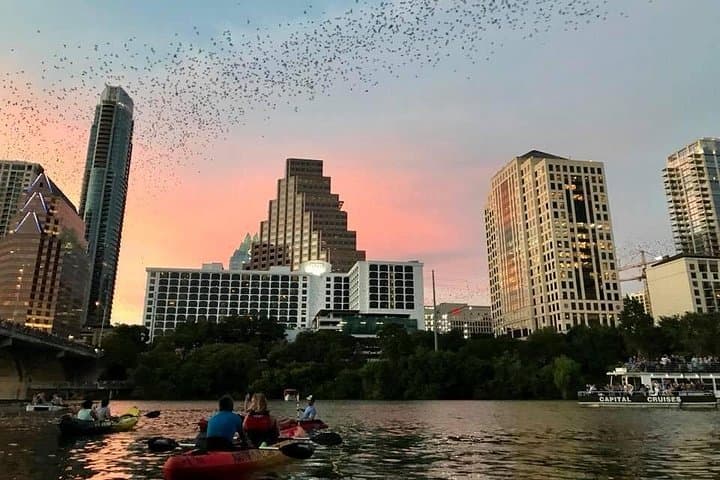
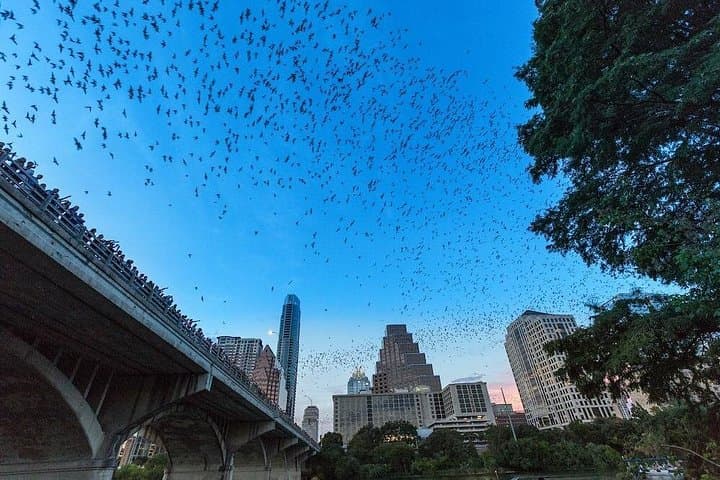
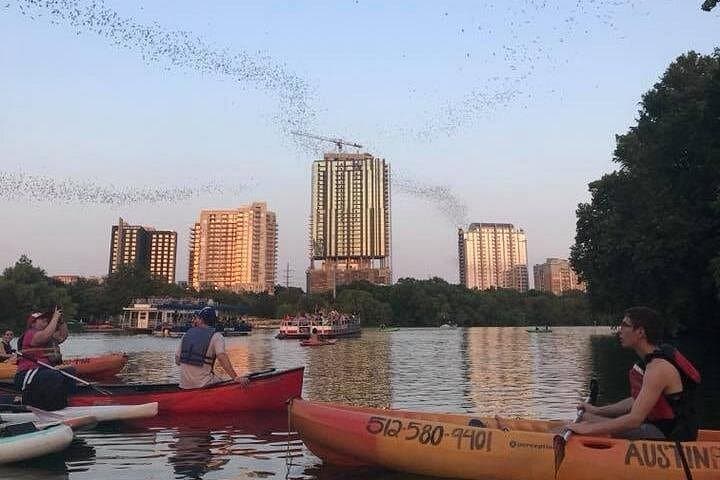
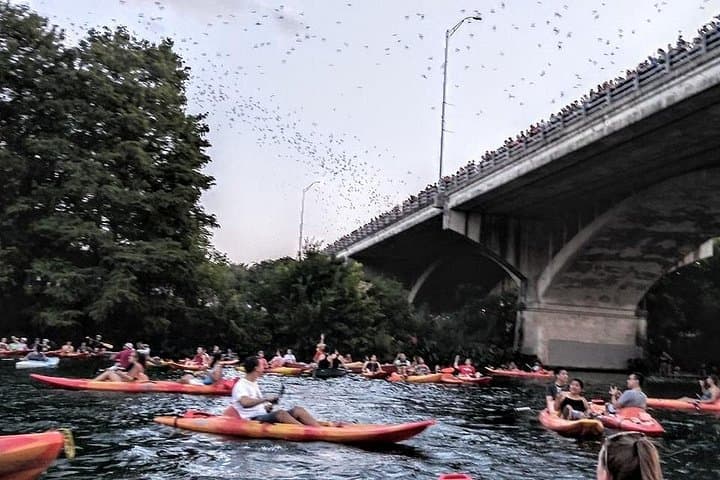
The sun slips low behind the Austin skyline and the river relaxes its current; you push off from a quiet launch and the city’s lights begin to prick the evening. Paddle strokes carry you beneath the concrete span of the Ann W. Richards Congress Avenue Bridge, where the water hums and a living cloud stirs above. At dusk the bridge becomes a stage: 1.5 million Mexican free-tailed bats pour out and cut a sinuous path toward the east, a river of wings that unspools against the skyline.
The sun slips low behind the Austin skyline and the river relaxes its current; you push off from a quiet launch and the city’s lights begin to prick the evening. Paddle strokes carry you beneath the concrete span of the Ann W. Richards Congress Avenue Bridge, where the water hums and a living cloud stirs above. At dusk the bridge becomes a stage: 1.5 million Mexican free-tailed bats pour out and cut a sinuous path toward the east, a river of wings that unspools against the skyline.
The bats have used the bridge as roost for decades, and the spectacle is as much cultural ritual as natural event—locals and visitors gather nightly in summer and early fall to watch. Geologically, Lady Bird Lake is a dammed stretch of the Colorado River that threads through limestone and blackland prairie; the urban shoreline offers oddly wild edges where herons fish and turtles bask. Guides on these tours combine safety instruction with natural history—why bats exit at sunset, how their insectivory benefits agriculture, and how light and noise shape their flight.
Practical guidance: tours run about two hours centered on sunset—arrive 15 minutes early. Expect calm-water paddling with occasional short wakes from passing boats; basic paddling ability and moderate fitness make the trip comfortable. Dress in quick-dry layers, bring a headlamp for return, and secure cameras—flash photography can disorient bats. Operators provide life jackets and lessons; check weather and cancellation policies before booking. Staying low in your kayak and listening closely are the best ways to experience the emergent flight.