THE ADVENTURE COLLECTIVE® · Independent discovery and booking for outdoor travel

Paddle calm, tannin-dark channels through the Damas mangroves just outside Quepos, where guides point out sloths, kingfishers, and the hidden life of a living estuary. This four-hour tour combines easy paddling with close wildlife encounters and local natural history.
Paddle calm, tannin-dark channels through the Damas mangroves just outside Quepos, where guides point out sloths, kingfishers, and the hidden life of a living estuary. This four-hour tour combines easy paddling with close wildlife encounters and local natural history.
The kayak noses into a dark green tunnel, roots arcing overhead like the ribs of an old ship. Water parts silently and the mangrove breathes around you — shrimp-skitter, birds call, and a howler monkey's rumble nudges the quiet. This is Isla Damas, where tannin-stained channels thread through dense red and black mangroves and the shoreline feels alive and mobile.
Verified experiences and guided adventures in the surrounding area.
Operated by Jadventours · Quepos, Puntarenas
The kayak noses into a dark green tunnel, roots arcing overhead like the ribs of an old ship. Water parts silently and the mangrove breathes around you — shrimp-skitter, birds call, and a howler monkey's rumble nudges the quiet. This is Isla Damas, where tannin-stained channels thread through dense red and black mangroves and the shoreline feels alive and mobile.
The estuary formed where Pacific tides meet river sediments; those muddy deposits and salt-tolerant trees have built a nursery for fish and a corridor for migrating birds. Historically local fishing communities used these waterways for transport and sustenance; today guided paddles help visitors read the living map of roots, mudflats, and feeding channels. Geologically recent, the marshes shift with tides and storms, and culturally the mangroves remain central to coastal livelihoods and conservation efforts in Puntarenas province.
Expect calm water, narrow winding channels, and frequent wildlife sightings — kingfishers perched like punctuation, sloths pausing mid-branch, and crabs that tap the roots below. Guides point out medicinal plants and explain the mangrove's role buffering storms and supporting fisheries.
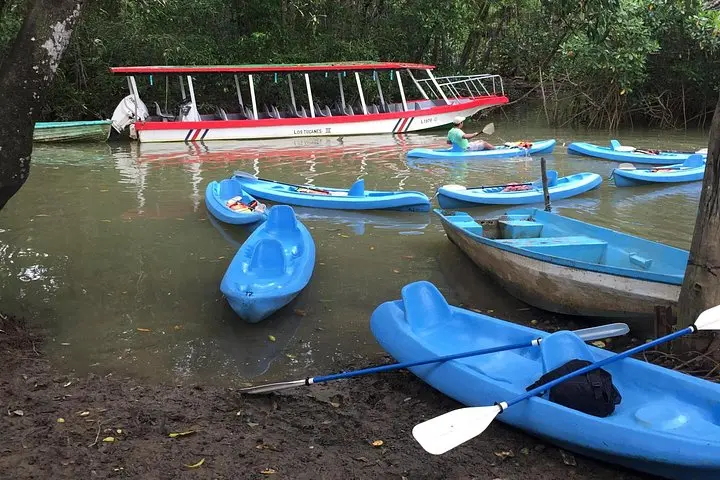
Practical guidance: tours run about four hours including transport and lunch; basic paddling skills suffice but moderate fitness helps with longer strokes and getting in/out of kayaks. Wear quick-dry clothes, reef-friendly sunscreen, and close-toed water shoes. Bring a dry bag for camera gear, a refillable water bottle, and binoculars for birding. Tours may cancel in heavy weather; confirm pickup details and any weight limits before booking.
No — tours accommodate beginners with a short safety briefing and assistance launching; guides choose calm channels suited to mixed skill levels.
Common sightings include sloths, various shore and forest birds (kingfishers, herons), howler monkeys, crabs, and occasionally reptiles; sightings are not guaranteed.
Most operators include round‑trip transport from Quepos, kayak and PFD, instruction, a guide, and lunch; confirm pickup details when booking.
Yes — heavy rain, strong winds, or unsafe tidal conditions can trigger cancellations; operators typically notify guests in advance and offer alternatives if available.
Jadventours operates guided outdoor trips and adventures with an emphasis on safety, stewardship, and memorable experiences.
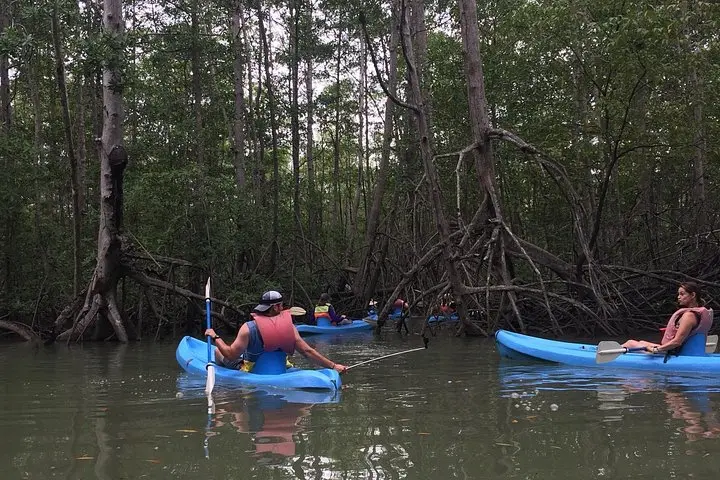
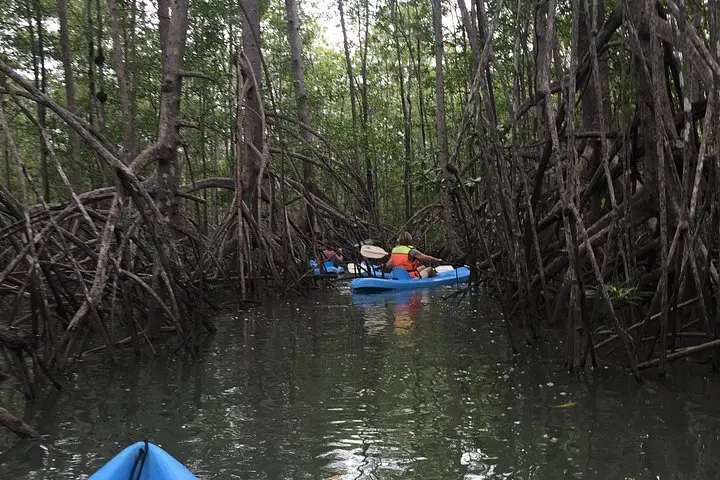

The kayak noses into a dark green tunnel, roots arcing overhead like the ribs of an old ship. Water parts silently and the mangrove breathes around you — shrimp-skitter, birds call, and a howler monkey's rumble nudges the quiet. This is Isla Damas, where tannin-stained channels thread through dense red and black mangroves and the shoreline feels alive and mobile.
The kayak noses into a dark green tunnel, roots arcing overhead like the ribs of an old ship. Water parts silently and the mangrove breathes around you — shrimp-skitter, birds call, and a howler monkey's rumble nudges the quiet. This is Isla Damas, where tannin-stained channels thread through dense red and black mangroves and the shoreline feels alive and mobile.
The estuary formed where Pacific tides meet river sediments; those muddy deposits and salt-tolerant trees have built a nursery for fish and a corridor for migrating birds. Historically local fishing communities used these waterways for transport and sustenance; today guided paddles help visitors read the living map of roots, mudflats, and feeding channels. Geologically recent, the marshes shift with tides and storms, and culturally the mangroves remain central to coastal livelihoods and conservation efforts in Puntarenas province.
Expect calm water, narrow winding channels, and frequent wildlife sightings — kingfishers perched like punctuation, sloths pausing mid-branch, and crabs that tap the roots below. Guides point out medicinal plants and explain the mangrove's role buffering storms and supporting fisheries.
Practical guidance: tours run about four hours including transport and lunch; basic paddling skills suffice but moderate fitness helps with longer strokes and getting in/out of kayaks. Wear quick-dry clothes, reef-friendly sunscreen, and close-toed water shoes. Bring a dry bag for camera gear, a refillable water bottle, and binoculars for birding. Tours may cancel in heavy weather; confirm pickup details and any weight limits before booking.