THE ADVENTURE COLLECTIVE® · Independent discovery and booking for outdoor travel

A short, sheltered paddle across Paravur Lake leads to a shifting sandbar known as the Black Devil Snail Sandbar. Expect a 2 km round trip, shallow, protected water, and dynamic sandflats ideal for a quick swim or sunset pause.
A short, sheltered paddle across Paravur Lake leads to a shifting sandbar known as the Black Devil Snail Sandbar. Expect a 2 km round trip, shallow, protected water, and dynamic sandflats ideal for a quick swim or sunset pause.
You push off from a low wooden jetty, the kayak sliding through warm, glassy water that seems to think about moving and then obligingly parts. The guide slips into a parallel boat and the lake begins to lead you: a sheltered channel, reed-fringed edges, and a low horizon where palms edge the sky.
Verified experiences and guided adventures in the surrounding area.
Operated by Syzygy Ecosports · Varkala, Kerala
You push off from a low wooden jetty, the kayak sliding through warm, glassy water that seems to think about moving and then obligingly parts. The guide slips into a parallel boat and the lake begins to lead you: a sheltered channel, reed-fringed edges, and a low horizon where palms edge the sky.
Paravur Backwaters are part of Kerala’s inland lagoon system, historically important for local fishing and small trade. The sandbar known locally as the Black Devil Snail Sandbar is an ever-shifting intertidal flat sculpted by wind, tidal exchange, and the lake’s modest currents — a living platform that appears, reshapes, and retreats with seasons.
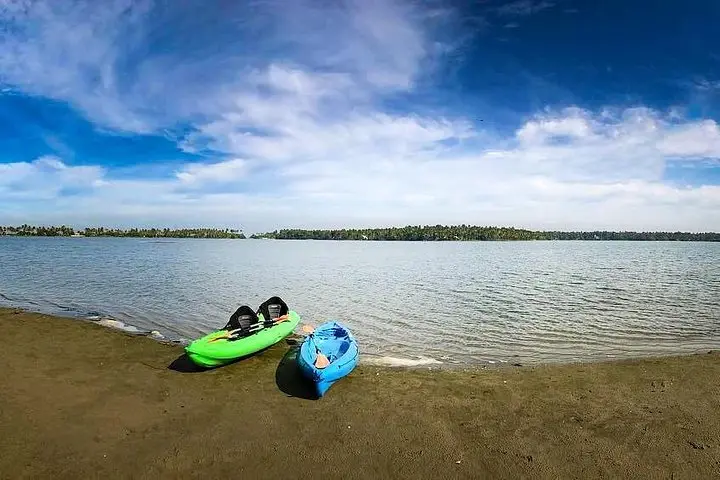
Culturally, this coast blends village life and coastal craft; you’ll see small fishing boats, mangrove patches and the occasional temple spire on the distant shore. Geologically, the sandbar is recent and dynamic; expect soft sand underfoot and shallow water that rarely exceeds a few meters in the main lake.
Practical side: the round-trip is roughly 2 km and usually takes 60–90 minutes, with 20–30 minutes of paddling each way to the sandflat. There’s minimal elevation, but wind and brief unsafe currents near the spillway regulator can complicate a calm day. Guides give basic instruction, provide life jackets, and monitor conditions.
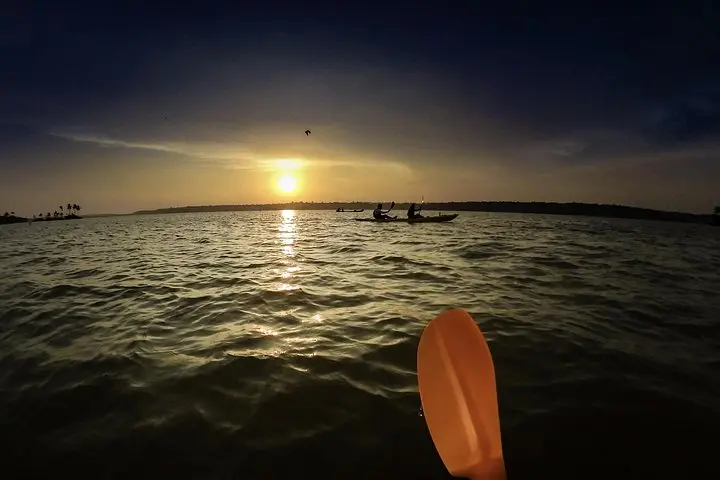
Plan for sun, quick changes in wind, and the possibility of walking a few meters across wet sand. Use reef-safe sunscreen, bring water in a sealed bottle, and keep electronics dry. For a short, low-stress paddle that finishes with a sunset or a quick swim, this backwater outing balances easy effort with intimate coastal scenery.
Paravur Lake is generally shallow (rarely over a few meters in the paddling area); swimming is possible from the sandbar but only in calm conditions and under guide supervision.
Round-trip is about 2 km and typically takes 60–90 minutes; it’s an easy paddle with short, sustained effort—guides accompany you for support.
Beginners are welcome; basic instruction is given. Minors must be supervised and infants should sit on a guardian’s lap—check operator age rules before booking.
Late afternoon to early evening is best—winds often ease and the sandbar catches low light, but check weather and tide-related conditions with the guide.
Syzygy Ecosports operates guided outdoor trips and adventures with an emphasis on safety, stewardship, and memorable experiences.
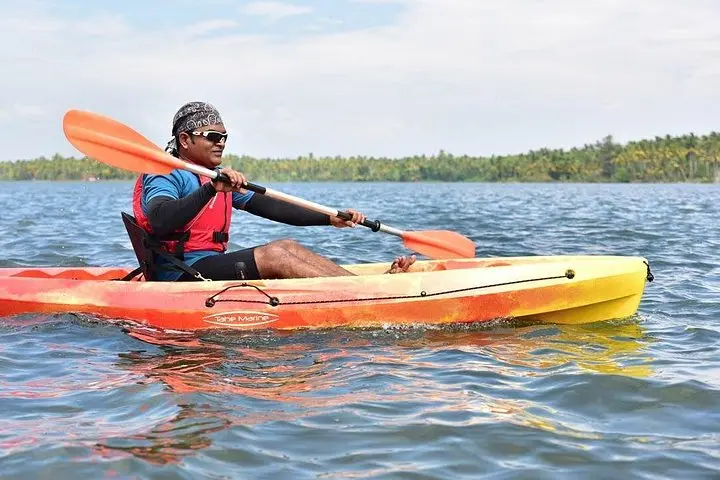
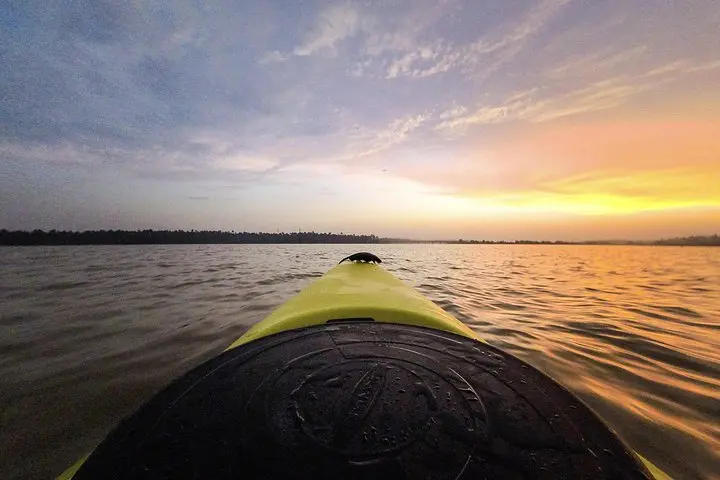
You push off from a low wooden jetty, the kayak sliding through warm, glassy water that seems to think about moving and then obligingly parts. The guide slips into a parallel boat and the lake begins to lead you: a sheltered channel, reed-fringed edges, and a low horizon where palms edge the sky.
You push off from a low wooden jetty, the kayak sliding through warm, glassy water that seems to think about moving and then obligingly parts. The guide slips into a parallel boat and the lake begins to lead you: a sheltered channel, reed-fringed edges, and a low horizon where palms edge the sky.
Paravur Backwaters are part of Kerala’s inland lagoon system, historically important for local fishing and small trade. The sandbar known locally as the Black Devil Snail Sandbar is an ever-shifting intertidal flat sculpted by wind, tidal exchange, and the lake’s modest currents — a living platform that appears, reshapes, and retreats with seasons.
Culturally, this coast blends village life and coastal craft; you’ll see small fishing boats, mangrove patches and the occasional temple spire on the distant shore. Geologically, the sandbar is recent and dynamic; expect soft sand underfoot and shallow water that rarely exceeds a few meters in the main lake.
Practical side: the round-trip is roughly 2 km and usually takes 60–90 minutes, with 20–30 minutes of paddling each way to the sandflat. There’s minimal elevation, but wind and brief unsafe currents near the spillway regulator can complicate a calm day. Guides give basic instruction, provide life jackets, and monitor conditions.
Plan for sun, quick changes in wind, and the possibility of walking a few meters across wet sand. Use reef-safe sunscreen, bring water in a sealed bottle, and keep electronics dry. For a short, low-stress paddle that finishes with a sunset or a quick swim, this backwater outing balances easy effort with intimate coastal scenery.