THE ADVENTURE COLLECTIVE® · Independent discovery and booking for outdoor travel

A short, sea-swept paddle delivers you to Mokoliʻi (Chinaman’s Hat)—a volcanic islet with a compact rim hike and a steep summit scramble. This self-guided tour outfits you and briefs you, leaving the crossing, the shoreline loop, and the views up to you.
A short, sea-swept paddle delivers you to Mokoliʻi (Chinaman’s Hat)—a volcanic islet with a compact rim hike and a steep summit scramble. This self-guided tour outfits you and briefs you, leaving the crossing, the shoreline loop, and the views up to you.
The ocean opens like a cool invitation as you push your kayak off the sandy shelf of Kualoa’s beach. A fan of pale surf unspools between the mainland and Mokoliʻi—Chinaman’s Hat—a squat, verdant cone rising from the blue. The paddle is short but honest: roughly half a mile across chop-prone water, with tradewinds often tugging at your bow and currents that will test even steady-handed paddlers. On good days the island sits calm and close; on others it dares you to keep moving.
Verified experiences and guided adventures in the surrounding area.
Operated by Active Oahu Tours · Kailua, Hawaii
The ocean opens like a cool invitation as you push your kayak off the sandy shelf of Kualoa’s beach. A fan of pale surf unspools between the mainland and Mokoliʻi—Chinaman’s Hat—a squat, verdant cone rising from the blue. The paddle is short but honest: roughly half a mile across chop-prone water, with tradewinds often tugging at your bow and currents that will test even steady-handed paddlers. On good days the island sits calm and close; on others it dares you to keep moving.
Geology and legend meet here. Mokoliʻi is the remnant of an eroded tuff cone—volcanic ash fused and carved by sea and wind—its basalt backbone rising to roughly 200 feet. Hawaiians named it Mokoliʻi, “little lizard,” holding fast to a myth that it’s the tail of a slain moʻo (dragon). That story is visible in the rock: a compact silhouette against the Koolau range where the island seems to point back to the mountain it once called kin.
The trip blends a sea run with short, rocky trekking. Most parties kayak about 0.5–1 mile one way depending on tide and launch point, land on a narrow pebble beach, and either walk the island’s rim—roughly a 1–1.5 mile loop—or take the steeper route to the summit. The climb is exposed, steep, and involves hands-on scrambling with an elevation gain near 200 feet. Expect coral rubble, slick lava rock, and sections of grassy ankle-tugging trail.
Culture and context are part of the experience. The island sits in the traditional ahupuaʻa of Kaʻōhao; nearby Kualoa was a royal domain where chiefs practiced rituals and trained warriors. Modern paddlers share space with fishermen, reef biologists, and families who come for the view and the close-up of Oahu’s windward coastline.
Practical edge: the tour supplies kayaks, life jackets, dry bags, and basic instruction, but it is self-guided once you leave the beach. Check the day’s wind and swell—Honolulu forecasts don’t always capture windward gusts—and time your crossing around slack tides if possible. Wear sturdy water shoes for the landing and bring sun protection, at least 1–2 liters of water, and reef-safe sunscreen. If you plan the summit scramble, only attempt it when the rock is dry; otherwise stick to the low loop.
For photographers, sunrise and late afternoon compress color and shadows on the island’s profile; for wildlife watchers, the reef and shore often host honu (green sea turtles) and seabirds. Respect closed nesting areas and reef boundaries—Mokoliʻi’s marine ecosystem is fragile and worth protecting.
This is an Oahu paddle that rewards careful planning: brief on the map, deeply satisfying in practice. It’s a half-day trip that combines ocean sense, a slice of island history, and a compact but surprisingly varied hike—an efficient way to feel the windward coast from sea level to summit rock.
The crossing from Kualoa Beach Park to Mokoliʻi is roughly 0.5–1 mile one way depending on launch point and tide; expect 15–40 minutes each way.
The shoreline loop is easy-to-moderate; the summit route is steep and includes exposed scrambling—only for experienced hikers when dry.
Yes—life jackets and all safety equipment are supplied with the tour.
This tour is best for paddlers comfortable in open-ocean conditions; beginners should have calm-water experience or book a guided trip instead.
You meet at the Active Oahu Tours storefront in Kailua to collect gear; then you drive to Kualoa Park—bring a 4-door vehicle to transport kayaks; local parking at Kualoa is limited so arrive early.
Operators cancel for unsafe wind or swell; full refunds are available with 24+ hours’ notice per the standard cancellation policy.
Active Oahu Tours operates guided outdoor trips and adventures with an emphasis on safety, stewardship, and memorable experiences.
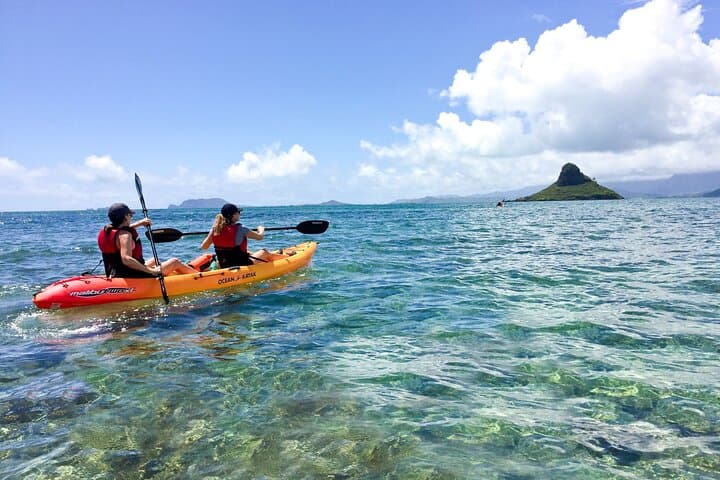
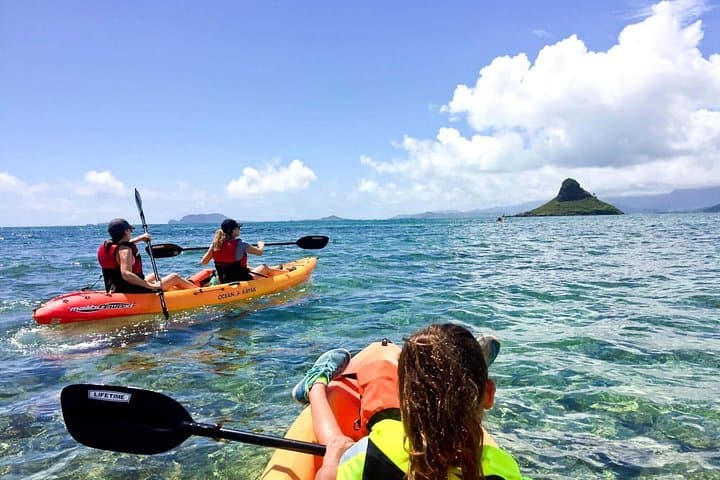
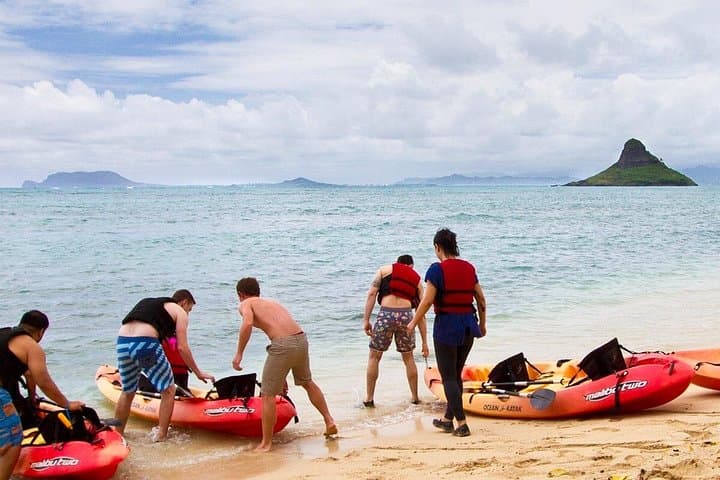
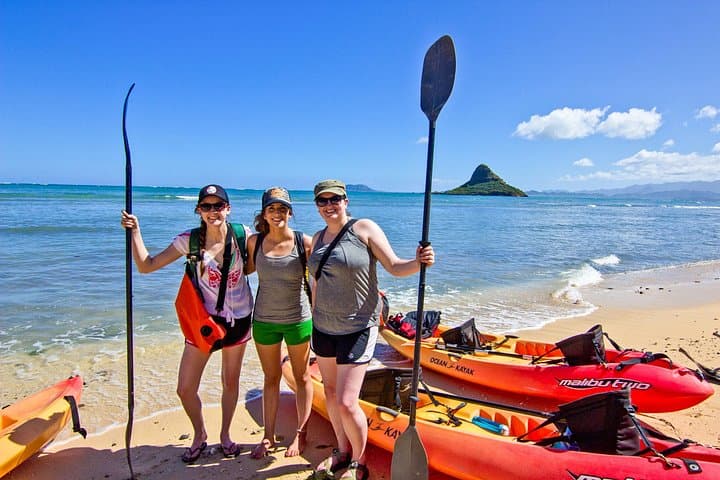
The ocean opens like a cool invitation as you push your kayak off the sandy shelf of Kualoa’s beach. A fan of pale surf unspools between the mainland and Mokoliʻi—Chinaman’s Hat—a squat, verdant cone rising from the blue. The paddle is short but honest: roughly half a mile across chop-prone water, with tradewinds often tugging at your bow and currents that will test even steady-handed paddlers. On good days the island sits calm and close; on others it dares you to keep moving.
The ocean opens like a cool invitation as you push your kayak off the sandy shelf of Kualoa’s beach. A fan of pale surf unspools between the mainland and Mokoliʻi—Chinaman’s Hat—a squat, verdant cone rising from the blue. The paddle is short but honest: roughly half a mile across chop-prone water, with tradewinds often tugging at your bow and currents that will test even steady-handed paddlers. On good days the island sits calm and close; on others it dares you to keep moving.
Geology and legend meet here. Mokoliʻi is the remnant of an eroded tuff cone—volcanic ash fused and carved by sea and wind—its basalt backbone rising to roughly 200 feet. Hawaiians named it Mokoliʻi, “little lizard,” holding fast to a myth that it’s the tail of a slain moʻo (dragon). That story is visible in the rock: a compact silhouette against the Koolau range where the island seems to point back to the mountain it once called kin.
The trip blends a sea run with short, rocky trekking. Most parties kayak about 0.5–1 mile one way depending on tide and launch point, land on a narrow pebble beach, and either walk the island’s rim—roughly a 1–1.5 mile loop—or take the steeper route to the summit. The climb is exposed, steep, and involves hands-on scrambling with an elevation gain near 200 feet. Expect coral rubble, slick lava rock, and sections of grassy ankle-tugging trail.
Culture and context are part of the experience. The island sits in the traditional ahupuaʻa of Kaʻōhao; nearby Kualoa was a royal domain where chiefs practiced rituals and trained warriors. Modern paddlers share space with fishermen, reef biologists, and families who come for the view and the close-up of Oahu’s windward coastline.
Practical edge: the tour supplies kayaks, life jackets, dry bags, and basic instruction, but it is self-guided once you leave the beach. Check the day’s wind and swell—Honolulu forecasts don’t always capture windward gusts—and time your crossing around slack tides if possible. Wear sturdy water shoes for the landing and bring sun protection, at least 1–2 liters of water, and reef-safe sunscreen. If you plan the summit scramble, only attempt it when the rock is dry; otherwise stick to the low loop.
For photographers, sunrise and late afternoon compress color and shadows on the island’s profile; for wildlife watchers, the reef and shore often host honu (green sea turtles) and seabirds. Respect closed nesting areas and reef boundaries—Mokoliʻi’s marine ecosystem is fragile and worth protecting.
This is an Oahu paddle that rewards careful planning: brief on the map, deeply satisfying in practice. It’s a half-day trip that combines ocean sense, a slice of island history, and a compact but surprisingly varied hike—an efficient way to feel the windward coast from sea level to summit rock.