THE ADVENTURE COLLECTIVE® · Independent discovery and booking for outdoor travel

Paddle across high-altitude Lake Titicaca to the reed-built Uros islands, then connect by speedboat to Taquile for textiles and a communal lunch. This full-day tour mixes an easy kayak stretch with cultural stops and shared boat transport.
Paddle across high-altitude Lake Titicaca to the reed-built Uros islands, then connect by speedboat to Taquile for textiles and a communal lunch. This full-day tour mixes an easy kayak stretch with cultural stops and shared boat transport.
Morning light strips the high-altitude sky as paddles cut glassy water and the first reed islands appear — low, angular platforms of totora bobbing like small villages. Participants meet in Puno before a short transfer to the kayak dock; after a basic skills briefing they push off, paddling at a steady pace across Lake Titicaca’s broad blue.
Verified experiences and guided adventures in the surrounding area.
Operated by Titicaca Worldwide · Puno, Puno Region
Morning light strips the high-altitude sky as paddles cut glassy water and the first reed islands appear — low, angular platforms of totora bobbing like small villages. Participants meet in Puno before a short transfer to the kayak dock; after a basic skills briefing they push off, paddling at a steady pace across Lake Titicaca’s broad blue.
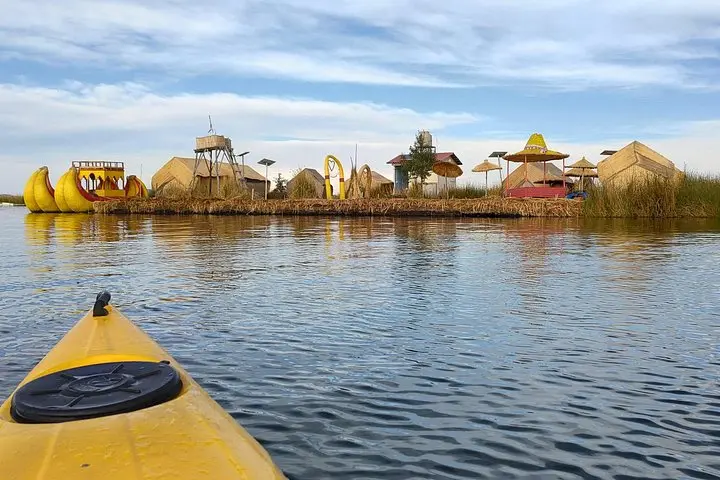
Geology here is stark: an ancient, high plain lake formed in Andean basins, sitting at roughly 3,812 m (12,507 ft). The Uros floating islands are human-made mats of totora reeds, rebuilt continuously — a living engineering practice that dates back centuries. Taquile, reached later by speedboat, sits rock-solid and terraced, with a compact plaza and a textile culture whose intricate knitting marks social identity.
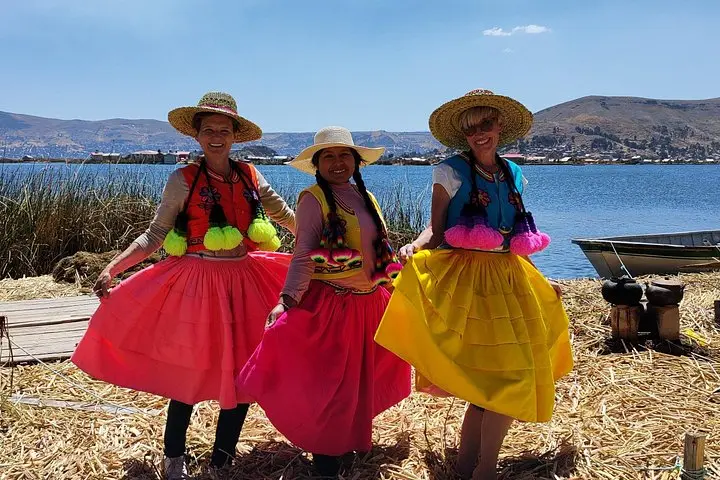
Expect close encounters with reed-cutting and reed-boat demonstrations on Uros, birdlife threading the skyline, and a communal lunch on Taquile. The day balances gentle paddling (about 1 hour on open water) with walking and cultural stops; note that Taquile’s main routes are well-trodden and can be busy.
Practical edge: altitude shapes the day. Hydrate before launch, move deliberately on the water to conserve energy, and wear layers against wind-driven chill. Sturdy footwear is useful for island landings and Taquile’s stone streets. Guides provide transfers, entrance fees and bilingual interpretation, but the shared fast-boat to Taquile follows the community’s main arrival route — don’t expect solitude.
This is an experiential half-day of active paddling and cultural exchange that pairs simple skills with highland scenery and living traditions.
The guided paddle is about one hour on open water, distance varying by pace (roughly 3–6 km depending on conditions).
No — guides provide basic instruction; the paddle is aimed at beginners and intermediate paddlers in calm lake conditions.
Taquile has a compact main plaza, terraces, and a community-run textile market; expect crowds on the main arrival routes and a village-style lunch included in the tour.
Yes — Lake Titicaca sits at ~3,812 m; allow time to acclimatize, drink water, and inform guides of any medical issues.
Titicaca Worldwide operates guided outdoor trips and adventures with an emphasis on safety, stewardship, and memorable experiences.
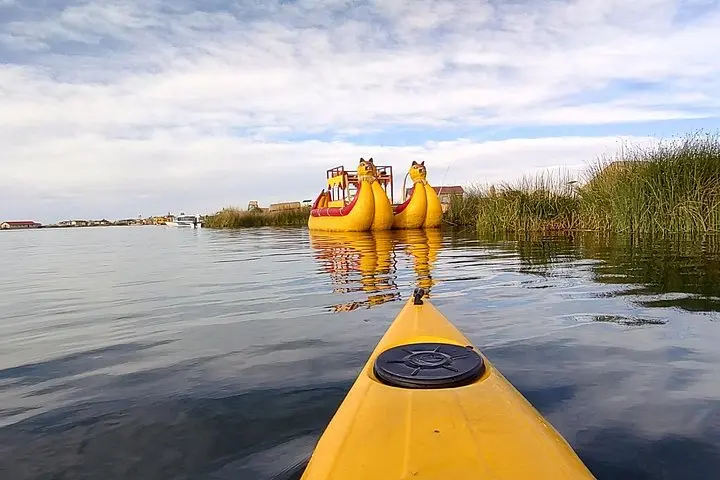
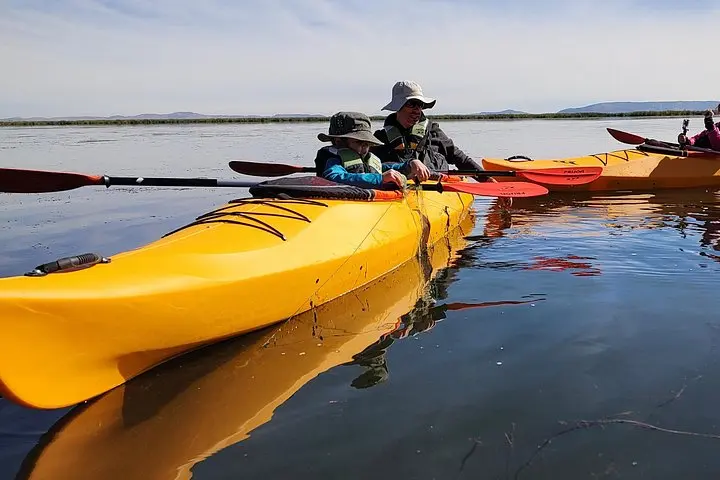
Morning light strips the high-altitude sky as paddles cut glassy water and the first reed islands appear — low, angular platforms of totora bobbing like small villages. Participants meet in Puno before a short transfer to the kayak dock; after a basic skills briefing they push off, paddling at a steady pace across Lake Titicaca’s broad blue.
Morning light strips the high-altitude sky as paddles cut glassy water and the first reed islands appear — low, angular platforms of totora bobbing like small villages. Participants meet in Puno before a short transfer to the kayak dock; after a basic skills briefing they push off, paddling at a steady pace across Lake Titicaca’s broad blue.
Geology here is stark: an ancient, high plain lake formed in Andean basins, sitting at roughly 3,812 m (12,507 ft). The Uros floating islands are human-made mats of totora reeds, rebuilt continuously — a living engineering practice that dates back centuries. Taquile, reached later by speedboat, sits rock-solid and terraced, with a compact plaza and a textile culture whose intricate knitting marks social identity.
Expect close encounters with reed-cutting and reed-boat demonstrations on Uros, birdlife threading the skyline, and a communal lunch on Taquile. The day balances gentle paddling (about 1 hour on open water) with walking and cultural stops; note that Taquile’s main routes are well-trodden and can be busy.
Practical edge: altitude shapes the day. Hydrate before launch, move deliberately on the water to conserve energy, and wear layers against wind-driven chill. Sturdy footwear is useful for island landings and Taquile’s stone streets. Guides provide transfers, entrance fees and bilingual interpretation, but the shared fast-boat to Taquile follows the community’s main arrival route — don’t expect solitude.
This is an experiential half-day of active paddling and cultural exchange that pairs simple skills with highland scenery and living traditions.