THE ADVENTURE COLLECTIVE® · Independent discovery and booking for outdoor travel

Paddle an emerald high-mountain lagoon beneath towering Andean summits on a full-day trip from Santiago. Expect 8–10 hours total, about three hours on the water, hotel pickup, and striking views of Aconcagua on clear days.
Paddle an emerald high-mountain lagoon beneath towering Andean summits on a full-day trip from Santiago. Expect 8–10 hours total, about three hours on the water, hotel pickup, and striking views of Aconcagua on clear days.
You push off from a rocky shore and the lagoon takes your stroke—cool, clear water that reflects sheer granite faces and a sky that feels closer at 2,800 meters. Wind nudges the boat; the surrounding peaks loom above 4,500 meters, and on a clear day Aconcagua—the tallest summit in the Americas at about 6,962 m (22,840 ft)—cuts the horizon like an unreadable map.
Verified experiences and guided adventures in the surrounding area.
Operated by Andes Explora · Laguna del Inca / Portillo area, Santiago Metropolitan Region
You push off from a rocky shore and the lagoon takes your stroke—cool, clear water that reflects sheer granite faces and a sky that feels closer at 2,800 meters. Wind nudges the boat; the surrounding peaks loom above 4,500 meters, and on a clear day Aconcagua—the tallest summit in the Americas at about 6,962 m (22,840 ft)—cuts the horizon like an unreadable map.
The basin around Laguna del Inca sits along the principal spine of the Andes and has long been a seasonal corridor between Chile and Argentina. Glacial carving and repeated freeze-thaw cycles shaped the steep cirques and the shallow bowl that holds the lagoon’s emerald water. The area’s ski resort history and mountain pass trade routes add a human layer: alpine lodges, border customs, and mountaineering lore dot the roadside.
Expect about 8–10 hours round trip from Santiago with roughly three hours on the water. Guides provide single or tandem kayaks, paddles, and dry bags; hotel pickup and a packed lunch are usually included. Technical paddling is straightforward, but altitude and cold-water exposure change the game—solar radiation is stronger, and weather shifts can be abrupt.
Practical tips: acclimatize the day before if possible, carry sunscreen and a windproof layer, and wear shoes with grip for launching from rocky edges. The trip suits adventurous day-trippers who want high-mountain scenery without multi-day backcountry logistics. It’s an accessible, high-elevation paddle that rewards steady strokes with expansive mountain views and a rare perspective on the high Andes.
Guided time on the water is roughly three hours total, typically split between exploration and shore stops for photos and rest.
No formal experience is required, but basic paddling ability and comfort in small boats are recommended; guides give a safety briefing and basic technique pointers.
The launch sits near 2,800 m (about 9,200 ft); you may notice shortness of breath or fatigue more quickly—stay hydrated, take breaks, and inform guides of any symptoms.
Minimum age is 14; operators typically limit participants to under 100 kg (220 lb) and under 190 cm (6'2") due to cockpit dimensions.
Andes Explora operates guided outdoor trips and adventures with an emphasis on safety, stewardship, and memorable experiences.
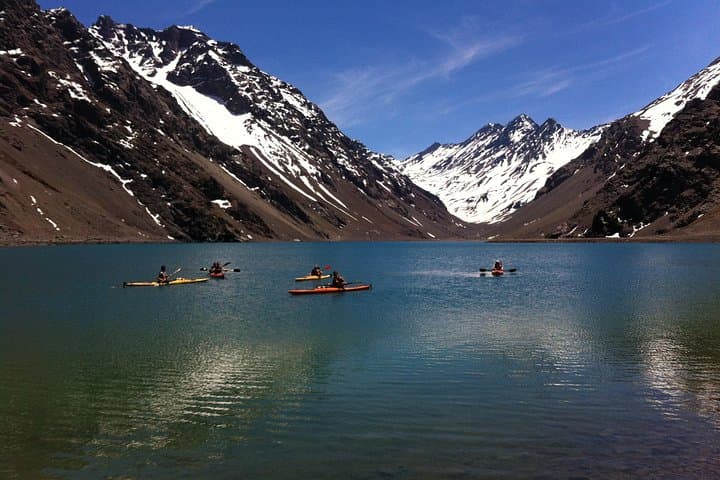
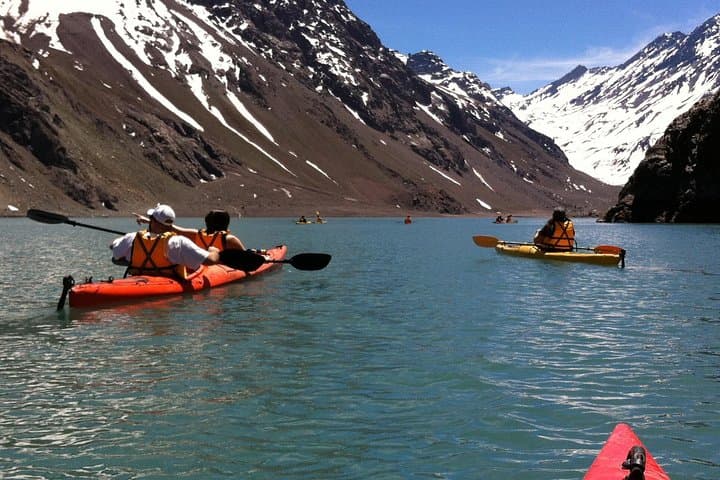
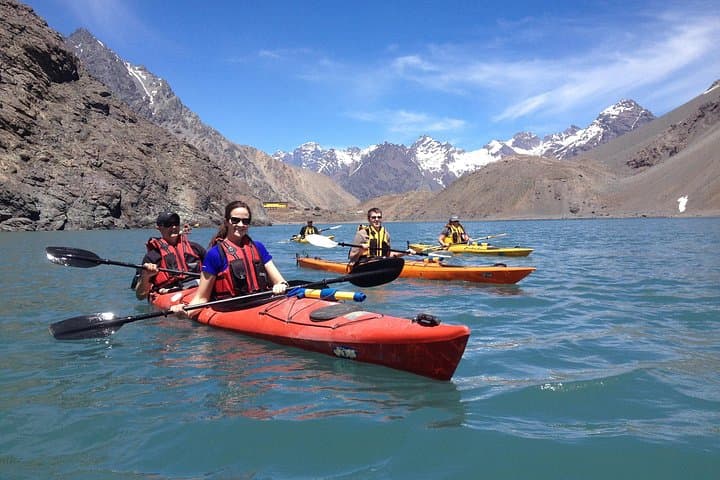
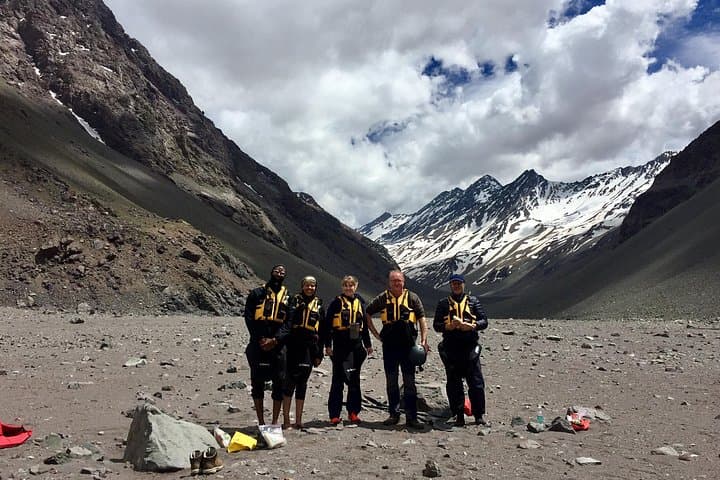
You push off from a rocky shore and the lagoon takes your stroke—cool, clear water that reflects sheer granite faces and a sky that feels closer at 2,800 meters. Wind nudges the boat; the surrounding peaks loom above 4,500 meters, and on a clear day Aconcagua—the tallest summit in the Americas at about 6,962 m (22,840 ft)—cuts the horizon like an unreadable map.
You push off from a rocky shore and the lagoon takes your stroke—cool, clear water that reflects sheer granite faces and a sky that feels closer at 2,800 meters. Wind nudges the boat; the surrounding peaks loom above 4,500 meters, and on a clear day Aconcagua—the tallest summit in the Americas at about 6,962 m (22,840 ft)—cuts the horizon like an unreadable map.
The basin around Laguna del Inca sits along the principal spine of the Andes and has long been a seasonal corridor between Chile and Argentina. Glacial carving and repeated freeze-thaw cycles shaped the steep cirques and the shallow bowl that holds the lagoon’s emerald water. The area’s ski resort history and mountain pass trade routes add a human layer: alpine lodges, border customs, and mountaineering lore dot the roadside.
Expect about 8–10 hours round trip from Santiago with roughly three hours on the water. Guides provide single or tandem kayaks, paddles, and dry bags; hotel pickup and a packed lunch are usually included. Technical paddling is straightforward, but altitude and cold-water exposure change the game—solar radiation is stronger, and weather shifts can be abrupt.
Practical tips: acclimatize the day before if possible, carry sunscreen and a windproof layer, and wear shoes with grip for launching from rocky edges. The trip suits adventurous day-trippers who want high-mountain scenery without multi-day backcountry logistics. It’s an accessible, high-elevation paddle that rewards steady strokes with expansive mountain views and a rare perspective on the high Andes.