THE ADVENTURE COLLECTIVE® · Independent discovery and booking for outdoor travel

Kayak across a quiet glacier lagoon beneath the towering face of Sólheimajökull. This easy, guided tour uses stable sit-on-top kayaks and dry suits to let beginners paddle among blue-and-white icebergs while learning about the glacier’s geology and local history.
Kayak across a quiet glacier lagoon beneath the towering face of Sólheimajökull. This easy, guided tour uses stable sit-on-top kayaks and dry suits to let beginners paddle among blue-and-white icebergs while learning about the glacier’s geology and local history.
You meet at the Sólheimajökull parking lot, suit up in a dry suit, and step toward a lagoon where icebergs drift like slow, pale ships. The first paddle blade cuts glass-cold water; the glacier’s face looms, blue veins and layered white collapsing now and then with a distant, hollow roll. Wind pushes across the lagoon, the current nudges the kayak, and the guide reads the ice the way a pilot reads weather.
Verified experiences and guided adventures in the surrounding area.
Operated by Icelandic Mountain Guides · Vík, Southern Region
You meet at the Sólheimajökull parking lot, suit up in a dry suit, and step toward a lagoon where icebergs drift like slow, pale ships. The first paddle blade cuts glass-cold water; the glacier’s face looms, blue veins and layered white collapsing now and then with a distant, hollow roll. Wind pushes across the lagoon, the current nudges the kayak, and the guide reads the ice the way a pilot reads weather.
Sólheimajökull is an outlet of Mýrdalsjökull, sculpted by repeated cycles of melt and volcanic heat from Katla beneath. The ice here carries ash bands that record eruptions; the glacier has retreated noticeably in recent decades, leaving stranded moraine and a shallow lagoon ringed by black sand. Locals in the South Region balance traditional sheep farming with glacier tourism, and small-guide operations focus on safe, low-impact access to fragile ground.
Practically: tours run about 2–3 hours total with 60–90 minutes on water, using stable sit-on-top kayaks suitable for beginners. Expect short paddles across a few hundred meters of iceberg-strewn water and close, guided approaches to the glacier front—never onto the ice itself. Dress in layers under the provided dry suit, bring warm socks, a windproof shell, and a dry bag for electronics. Weather cancellations are common; guides brief groups on cold-water safety, proper paddling technique, and environmental rules before launch. Arrival 30 minutes early is standard.
This trip is quiet, elemental, and procedural: a close-up lesson in glacial geology and a reminder that Iceland’s ice is always in motion—beautiful, indifferent, and worth respecting.
No—tours use stable sit-on-top kayaks and guides teach basic paddling and safety before launch.
Tours are often canceled for safety in strong wind, heavy snow, or dangerous ice conditions; you’ll be notified and can receive a full refund if canceled at least 24 hours before departure.
Children can join but generally one child per adult is allowed; operators set age/weight minimums—check booking details and mention special requirements when reserving.
Guides bring groups to safe viewpoints at the glacier front and around floating ice but will maintain a safe distance from unstable ice and calving zones.
Icelandic Mountain Guides operates guided outdoor trips and adventures with an emphasis on safety, stewardship, and memorable experiences.
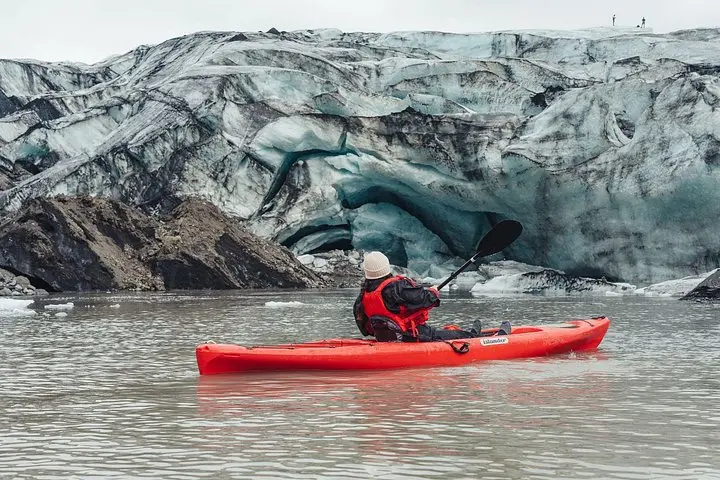
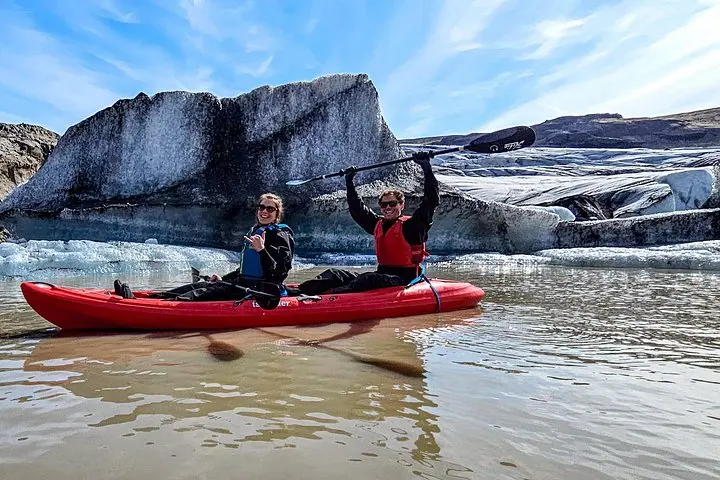
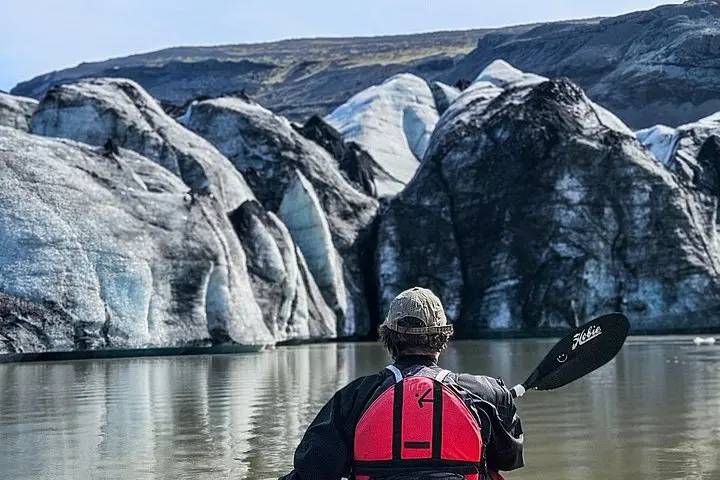
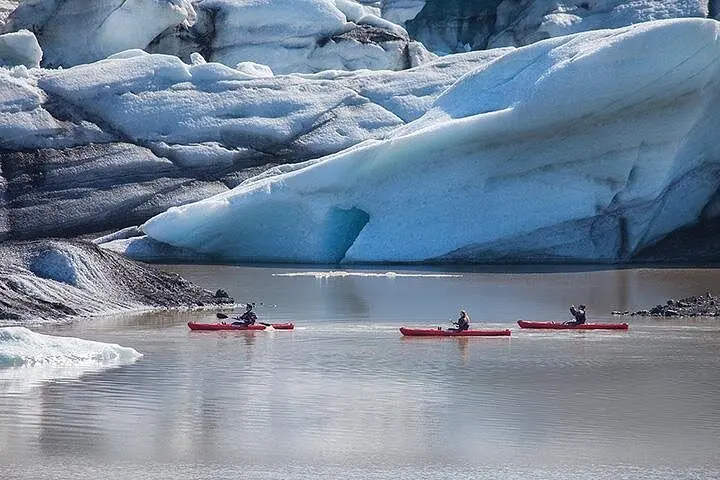
You meet at the Sólheimajökull parking lot, suit up in a dry suit, and step toward a lagoon where icebergs drift like slow, pale ships. The first paddle blade cuts glass-cold water; the glacier’s face looms, blue veins and layered white collapsing now and then with a distant, hollow roll. Wind pushes across the lagoon, the current nudges the kayak, and the guide reads the ice the way a pilot reads weather.
You meet at the Sólheimajökull parking lot, suit up in a dry suit, and step toward a lagoon where icebergs drift like slow, pale ships. The first paddle blade cuts glass-cold water; the glacier’s face looms, blue veins and layered white collapsing now and then with a distant, hollow roll. Wind pushes across the lagoon, the current nudges the kayak, and the guide reads the ice the way a pilot reads weather.
Sólheimajökull is an outlet of Mýrdalsjökull, sculpted by repeated cycles of melt and volcanic heat from Katla beneath. The ice here carries ash bands that record eruptions; the glacier has retreated noticeably in recent decades, leaving stranded moraine and a shallow lagoon ringed by black sand. Locals in the South Region balance traditional sheep farming with glacier tourism, and small-guide operations focus on safe, low-impact access to fragile ground.
Practically: tours run about 2–3 hours total with 60–90 minutes on water, using stable sit-on-top kayaks suitable for beginners. Expect short paddles across a few hundred meters of iceberg-strewn water and close, guided approaches to the glacier front—never onto the ice itself. Dress in layers under the provided dry suit, bring warm socks, a windproof shell, and a dry bag for electronics. Weather cancellations are common; guides brief groups on cold-water safety, proper paddling technique, and environmental rules before launch. Arrival 30 minutes early is standard.
This trip is quiet, elemental, and procedural: a close-up lesson in glacial geology and a reminder that Iceland’s ice is always in motion—beautiful, indifferent, and worth respecting.