THE ADVENTURE COLLECTIVE® · Independent discovery and booking for outdoor travel

Paddle the Castro fjord beneath bright palafitos and along tidal flats once used by the Chonos people. This three-hour guided trip mixes coastal history, dense birdlife, and sheltered open-water paddling—ideal for fit beginners.
Paddle the Castro fjord beneath bright palafitos and along tidal flats once used by the Chonos people. This three-hour guided trip mixes coastal history, dense birdlife, and sheltered open-water paddling—ideal for fit beginners.
A chill wind off the Pacific pushes up the Castro fjord as your guide clips a life jacket over your shoulders and checks the kayaks. Paddles dip and rise; the water opens like a moving mirror, reflecting the bright stilt houses—palafitos—that cling to the shoreline. Low cliffs and salt-marsh channels frame the town and the distant silhouette of Chiloé’s rolling hills.
Verified experiences and guided adventures in the surrounding area.
Operated by Turismo Pangue · Castro, Los Lagos Region
A chill wind off the Pacific pushes up the Castro fjord as your guide clips a life jacket over your shoulders and checks the kayaks. Paddles dip and rise; the water opens like a moving mirror, reflecting the bright stilt houses—palafitos—that cling to the shoreline. Low cliffs and salt-marsh channels frame the town and the distant silhouette of Chiloé’s rolling hills.
This short coastal voyage threads together human and natural history: Castro’s colorful palafitos grew from a practical response to tidal flats, and nearby archaeological sites mark long occupation by the Chonos and other indigenous groups who navigated these channels for millennia. Geologically, Chiloé is a glacially scoured archipelago of metamorphic bedrock and peat-rich soils, where kelp beds and intertidal zones support dense birdlife.
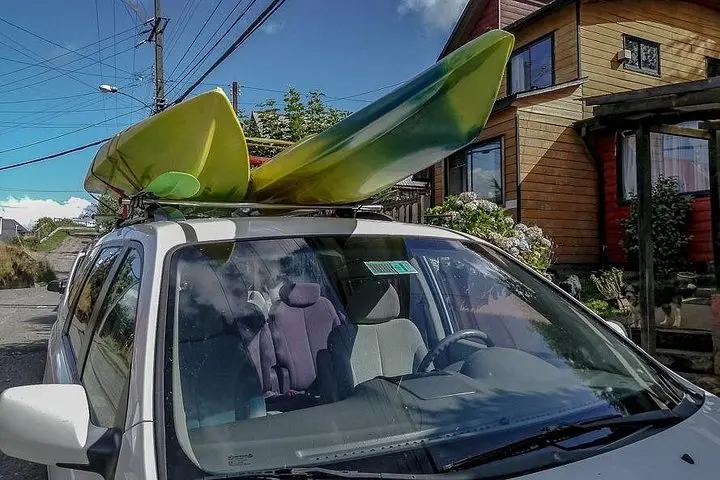
Expect steady, sheltered paddling with occasional wind chop; the operator usually runs a three-hour loop that stays close to shore and visits viewpoints of stilt houses and a small archaeological landmark tied to Cape town settlements. Guides supply kayaks, paddles, life jackets, paddling jackets, pants and water boots; skill level is beginner-friendly but requires moderate fitness.
Practical tips: time trips for mid-tide and calmer morning hours, layer for wind and spray, and protect cameras with a float strap. Stay close to the guide near bird colonies and archaeological sites—disturbance to nesting birds and intertidal life is a real conservation concern. In three hours you’ll get a compact, sensory introduction to Chiloé’s coastal culture and seascapes—wet, windy, and utterly specific to southern Chile.
No—operators run guided trips suitable for beginners, but participants should have a moderate fitness level and be comfortable in small boats.
Quick-dry layers, a warm mid-layer, and closed-toe water shoes are recommended; the outfitter supplies paddle jackets, pants and water boots.
The activity is about 3 hours total and typically departs from a meeting point near Castro’s port with private transfers offered in some bookings.
Not recommended for travelers with serious heart or back problems or for pregnant travelers; check with the operator for specific age limits and fitness expectations.
Turismo Pangue operates guided outdoor trips and adventures with an emphasis on safety, stewardship, and memorable experiences.
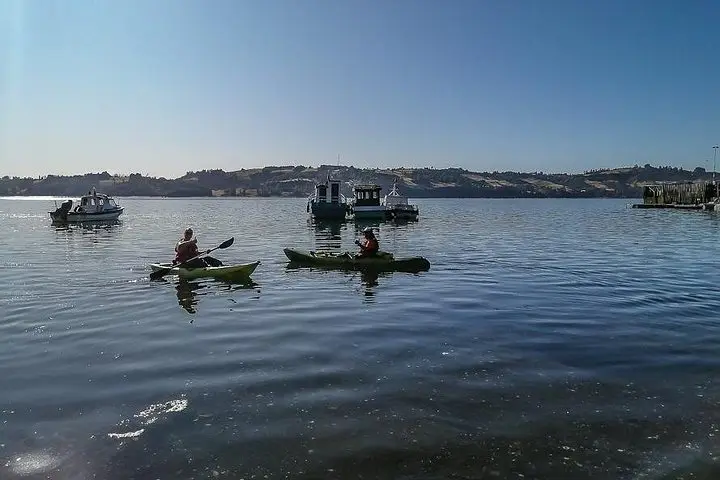
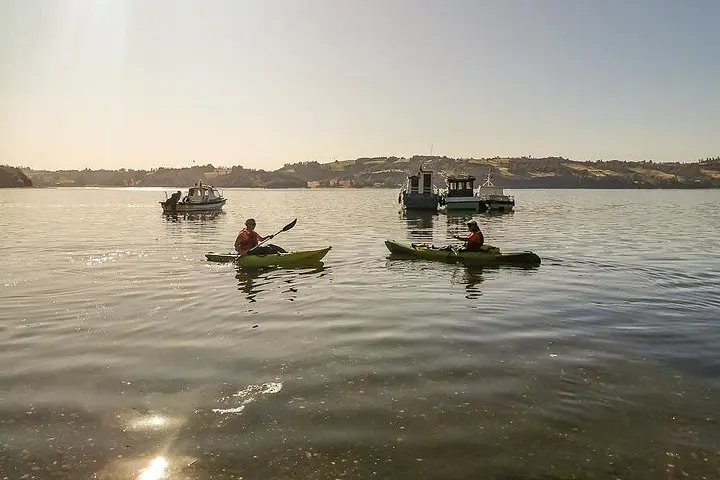
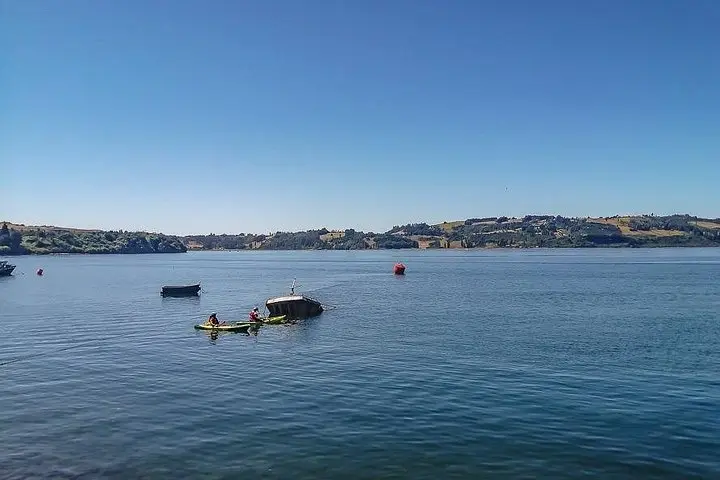
A chill wind off the Pacific pushes up the Castro fjord as your guide clips a life jacket over your shoulders and checks the kayaks. Paddles dip and rise; the water opens like a moving mirror, reflecting the bright stilt houses—palafitos—that cling to the shoreline. Low cliffs and salt-marsh channels frame the town and the distant silhouette of Chiloé’s rolling hills.
A chill wind off the Pacific pushes up the Castro fjord as your guide clips a life jacket over your shoulders and checks the kayaks. Paddles dip and rise; the water opens like a moving mirror, reflecting the bright stilt houses—palafitos—that cling to the shoreline. Low cliffs and salt-marsh channels frame the town and the distant silhouette of Chiloé’s rolling hills.
This short coastal voyage threads together human and natural history: Castro’s colorful palafitos grew from a practical response to tidal flats, and nearby archaeological sites mark long occupation by the Chonos and other indigenous groups who navigated these channels for millennia. Geologically, Chiloé is a glacially scoured archipelago of metamorphic bedrock and peat-rich soils, where kelp beds and intertidal zones support dense birdlife.
Expect steady, sheltered paddling with occasional wind chop; the operator usually runs a three-hour loop that stays close to shore and visits viewpoints of stilt houses and a small archaeological landmark tied to Cape town settlements. Guides supply kayaks, paddles, life jackets, paddling jackets, pants and water boots; skill level is beginner-friendly but requires moderate fitness.
Practical tips: time trips for mid-tide and calmer morning hours, layer for wind and spray, and protect cameras with a float strap. Stay close to the guide near bird colonies and archaeological sites—disturbance to nesting birds and intertidal life is a real conservation concern. In three hours you’ll get a compact, sensory introduction to Chiloé’s coastal culture and seascapes—wet, windy, and utterly specific to southern Chile.