THE ADVENTURE COLLECTIVE® · Independent discovery and booking for outdoor travel

A private two-hour tour around Stepantsminda that pairs short mountain hikes with cultural stops—the Kazbegi museum, national park visitor center and panoramic viewpoints. Ideal for hikers who want big views without a full-day commitment.
A private two-hour tour around Stepantsminda that pairs short mountain hikes with cultural stops—the Kazbegi museum, national park visitor center and panoramic viewpoints. Ideal for hikers who want big views without a full-day commitment.
You step from the village lane and the air changes—thinner, laced with mountain pine and the distant chalk of glaciers. The trail ahead climbs through stone terraces and wildflower meadows, the greater Caucasus folding into layers of ridges that seem to push the sky back.
Verified experiences and guided adventures in the surrounding area.
Operated by Opatrip.com Georgia · Stepantsminda, Mtskheta-Mtianeti
You step from the village lane and the air changes—thinner, laced with mountain pine and the distant chalk of glaciers. The trail ahead climbs through stone terraces and wildflower meadows, the greater Caucasus folding into layers of ridges that seem to push the sky back.
This short private tour threads natural and cultural highlights around Stepantsminda (Kazbegi). Geologically, the area is young: jagged volcanic and metamorphic peaks sculpted by recent uplift and glacial carving, with moraines and scree fields framing alpine pastures. Culturally, the region is tied to Khevi highland traditions and to Alexander Kazbegi, the 19th‑century writer whose house is now a museum preserving local crafts, manuscripts and everyday objects that explain mountain life here.
Expect sweeping panoramas of Mount Kazbek, the Terek River valley below, and villages clinging to switchback roads. Wildlife is subtle—chukar partridge calls, alpine grasses that host tiny butterflies—but the landscape itself is restless, urging you forward.
Practical guidance: the tour is about two hours and rated moderate; bring sturdy footwear for rocky, uneven trail and a waterproof layer—weather shifts rapidly above 1,800–2,000 m. Hydrate before you start; the route includes short uphill sections and panoramic stops for photos and interpretation by a local guide. Public transport reaches Stepantsminda but private transfer saves time. Not recommended for people with serious heart conditions or late pregnancy. The best light for photography is morning or late afternoon; avoid midday in summer when sun is strongest. Respect grazing areas and marked paths to protect fragile alpine soils.
The experience is approximately two hours total, with walking segments interspersed with stops at the visitor center, museum and viewpoints.
Children and fit older adults can participate, but participants should be comfortable on uneven ground and short uphill stretches; the operator advises moderate fitness.
The tour includes the guide but not personal purchases; carry Georgian lari for any small purchases, snacks or museum admissions if applicable.
Late spring to early autumn (May–September) offers the most stable conditions for hiking and clear mountain views; winter brings snow and limited road access.
Opatrip.com Georgia operates guided outdoor trips and adventures with an emphasis on safety, stewardship, and memorable experiences.
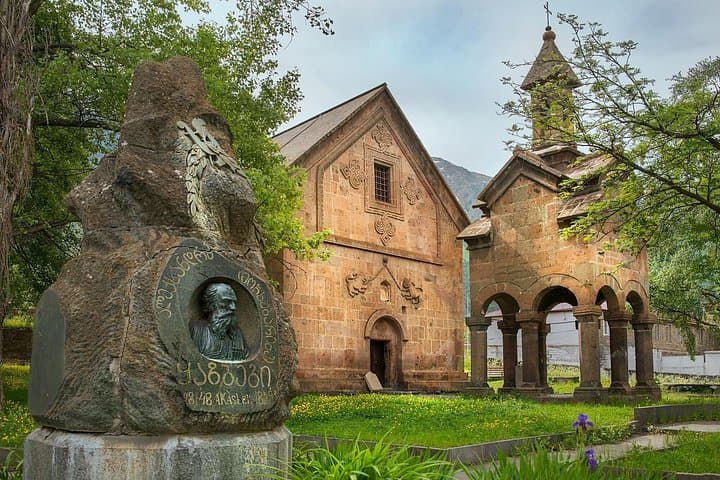


You step from the village lane and the air changes—thinner, laced with mountain pine and the distant chalk of glaciers. The trail ahead climbs through stone terraces and wildflower meadows, the greater Caucasus folding into layers of ridges that seem to push the sky back.
You step from the village lane and the air changes—thinner, laced with mountain pine and the distant chalk of glaciers. The trail ahead climbs through stone terraces and wildflower meadows, the greater Caucasus folding into layers of ridges that seem to push the sky back.
This short private tour threads natural and cultural highlights around Stepantsminda (Kazbegi). Geologically, the area is young: jagged volcanic and metamorphic peaks sculpted by recent uplift and glacial carving, with moraines and scree fields framing alpine pastures. Culturally, the region is tied to Khevi highland traditions and to Alexander Kazbegi, the 19th‑century writer whose house is now a museum preserving local crafts, manuscripts and everyday objects that explain mountain life here.
Expect sweeping panoramas of Mount Kazbek, the Terek River valley below, and villages clinging to switchback roads. Wildlife is subtle—chukar partridge calls, alpine grasses that host tiny butterflies—but the landscape itself is restless, urging you forward.
Practical guidance: the tour is about two hours and rated moderate; bring sturdy footwear for rocky, uneven trail and a waterproof layer—weather shifts rapidly above 1,800–2,000 m. Hydrate before you start; the route includes short uphill sections and panoramic stops for photos and interpretation by a local guide. Public transport reaches Stepantsminda but private transfer saves time. Not recommended for people with serious heart conditions or late pregnancy. The best light for photography is morning or late afternoon; avoid midday in summer when sun is strongest. Respect grazing areas and marked paths to protect fragile alpine soils.