THE ADVENTURE COLLECTIVE® · Independent discovery and booking for outdoor travel

A private day tour from Siem Reap that pairs a 3 km jungle walk to Kbal Spean’s River of a Thousand Lingas with a visit to the mid-12th-century ruin of Beng Mealea. Ideal for travelers who want cultural context, moderate hiking, and elevated temple views via wooden platforms.
A private day tour from Siem Reap that pairs a 3 km jungle walk to Kbal Spean’s River of a Thousand Lingas with a visit to the mid-12th-century ruin of Beng Mealea. Ideal for travelers who want cultural context, moderate hiking, and elevated temple views via wooden platforms.
You step off the air-conditioned van into a humid wash of jungle sounds—the river ahead daring you to follow its carved course, the canopy above pressing down with the bright green of new leaves.
Verified experiences and guided adventures in the surrounding area.
Operated by Private Tour Guide-Cambodia · Siem Reap, Siem Reap Province
You step off the air-conditioned van into a humid wash of jungle sounds—the river ahead daring you to follow its carved course, the canopy above pressing down with the bright green of new leaves.
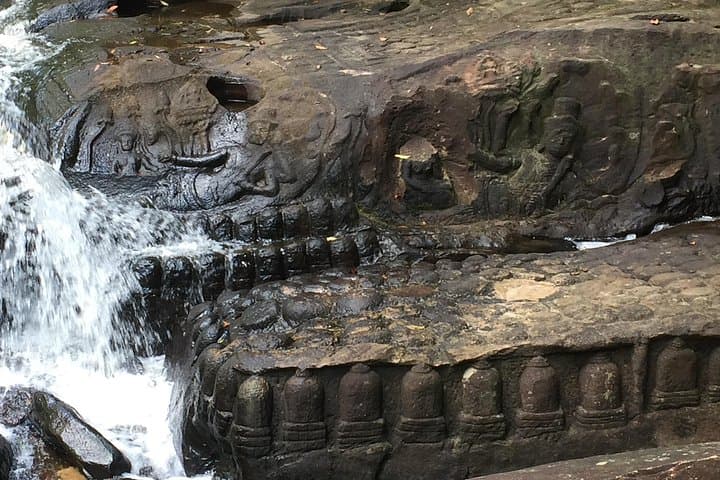
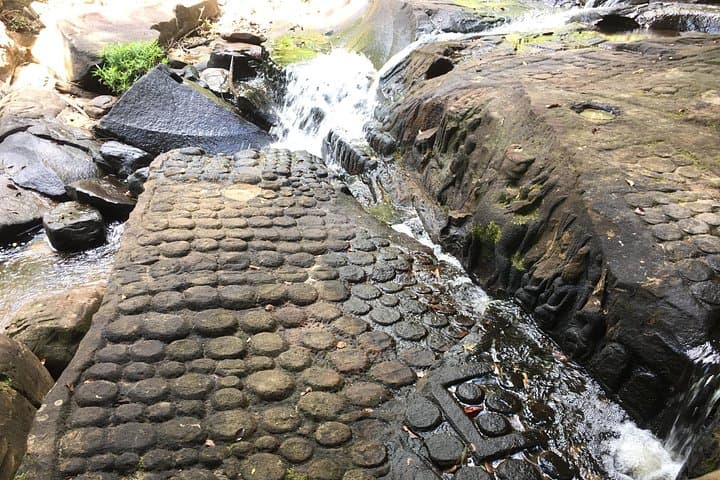
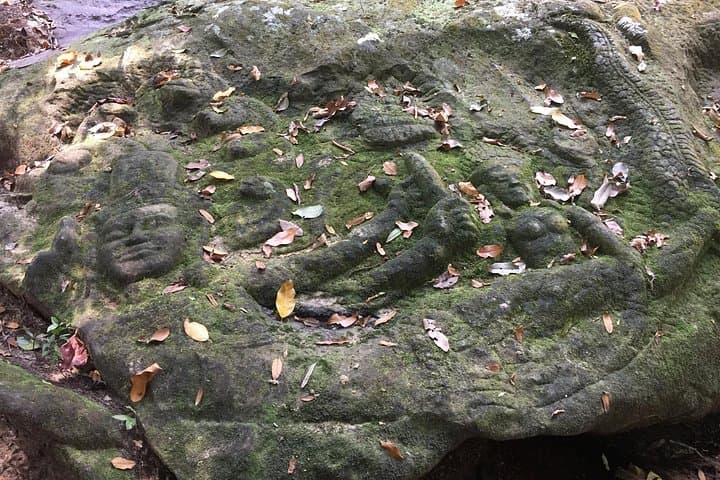
The morning walk to Kbal Spean threads through Phnom Kulen’s forest for roughly 3 km of uneven trail and wooden staircases. At the riverbed the stone is carved with lingas and Hindu iconography; here water has been sanctified for centuries, moving over figures worn smooth by seasons and pilgrims. The site’s geology is coarse sandstone, easily carved and quickly mossed in the wet season, which makes details come alive after rain.
Beng Mealea shifts the scene: a mid-12th-century temple ruined into a moss-clad puzzle of towers and collapsed galleries. A raised wooden walkway now lets you peer into inner chambers and tangled roots without scrambling over fragile masonry. Both sites reflect Angkorian-era ritual life and crossovers between Brahmanic and Buddhist traditions—places where water, stone, and belief met to mark the landscape.
Practical notes: expect 5–7 hours door-to-door from Siem Reap, with some steep sections and uneven footing on the Kbal Spean approach. Bring water, sturdy treaded shoes, rain protection in wet months, and bug spray; the sun is hard on exposed sections at midday. Guides usually include entrance logistics and local context—use them to learn about the carvings’ ritual role and the temple’s slow return to nature. Time your visit early to avoid the heat and to see carvings and temple details before the light goes flat.
The jungle section to the carved riverbed is about 3 km round trip from the trailhead with steep segments and wooden staircases; allow around 1.5–2 hours including stops.
This tour itinerary lists admission as included; confirm with your operator beforehand for any extra local fees or donations.
The trail has steep sections and uneven footing—children who can handle moderate hikes or older travelers with good mobility can manage it, but those with spinal or heart conditions should avoid it.
Dry season (November–April) offers easier trails and fewer mosquitoes; the wet season highlights mossy carvings and fuller waterfalls but means mud and sudden rain.
Private Tour Guide-Cambodia operates guided outdoor trips and adventures with an emphasis on safety, stewardship, and memorable experiences.

You step off the air-conditioned van into a humid wash of jungle sounds—the river ahead daring you to follow its carved course, the canopy above pressing down with the bright green of new leaves.
You step off the air-conditioned van into a humid wash of jungle sounds—the river ahead daring you to follow its carved course, the canopy above pressing down with the bright green of new leaves.
The morning walk to Kbal Spean threads through Phnom Kulen’s forest for roughly 3 km of uneven trail and wooden staircases. At the riverbed the stone is carved with lingas and Hindu iconography; here water has been sanctified for centuries, moving over figures worn smooth by seasons and pilgrims. The site’s geology is coarse sandstone, easily carved and quickly mossed in the wet season, which makes details come alive after rain.
Beng Mealea shifts the scene: a mid-12th-century temple ruined into a moss-clad puzzle of towers and collapsed galleries. A raised wooden walkway now lets you peer into inner chambers and tangled roots without scrambling over fragile masonry. Both sites reflect Angkorian-era ritual life and crossovers between Brahmanic and Buddhist traditions—places where water, stone, and belief met to mark the landscape.
Practical notes: expect 5–7 hours door-to-door from Siem Reap, with some steep sections and uneven footing on the Kbal Spean approach. Bring water, sturdy treaded shoes, rain protection in wet months, and bug spray; the sun is hard on exposed sections at midday. Guides usually include entrance logistics and local context—use them to learn about the carvings’ ritual role and the temple’s slow return to nature. Time your visit early to avoid the heat and to see carvings and temple details before the light goes flat.