THE ADVENTURE COLLECTIVE® · Independent discovery and booking for outdoor travel

Trek through the Kulen Hills to Kbal Spean’s riverbed carvings, then visit the pink-sandstone artistry of Banteay Srei. This private day tour from Siem Reap pairs a short jungle hike with several classic Angkor-era temples.
Trek through the Kulen Hills to Kbal Spean’s riverbed carvings, then visit the pink-sandstone artistry of Banteay Srei. This private day tour from Siem Reap pairs a short jungle hike with several classic Angkor-era temples.
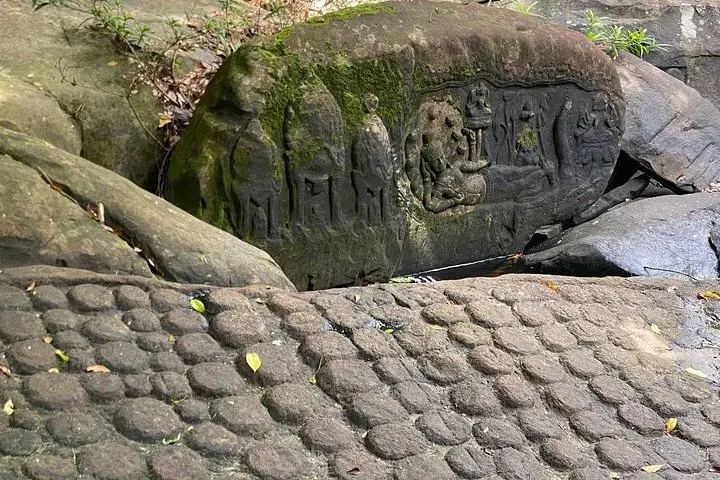
Mist threads through the Kulen Hills as you set off from the parking clearing, an English-speaking guide ahead, the trail dipping into dense dipterocarp forest. The river calls; its bed is carved with rows of lingas and sacred figures that catch the light in shallow riffles, and the jungle seems to push you forward toward those stone stories.
Verified experiences and guided adventures in the surrounding area.
Operated by Angkor Daily Trip · Siem Reap, Siem Reap Province
Mist threads through the Kulen Hills as you set off from the parking clearing, an English-speaking guide ahead, the trail dipping into dense dipterocarp forest. The river calls; its bed is carved with rows of lingas and sacred figures that catch the light in shallow riffles, and the jungle seems to push you forward toward those stone stories.
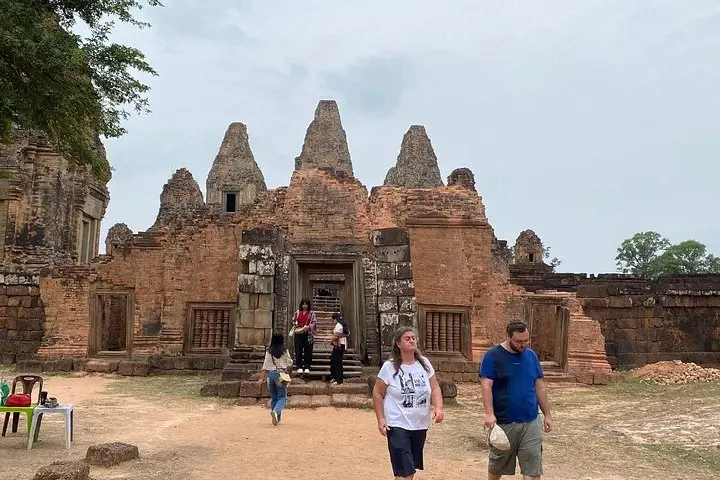
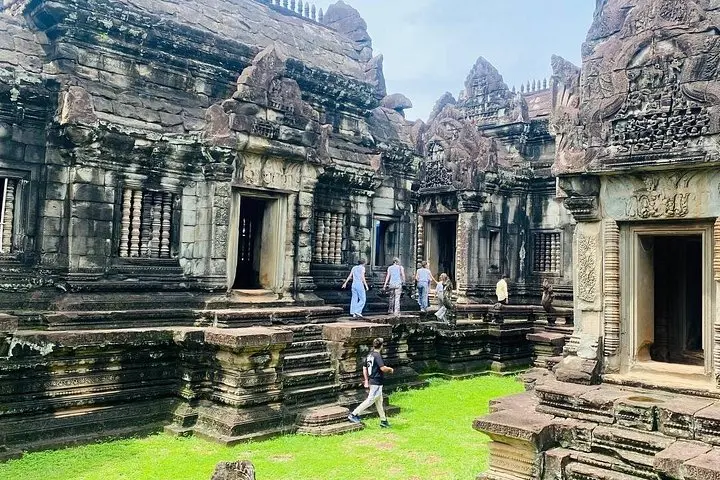
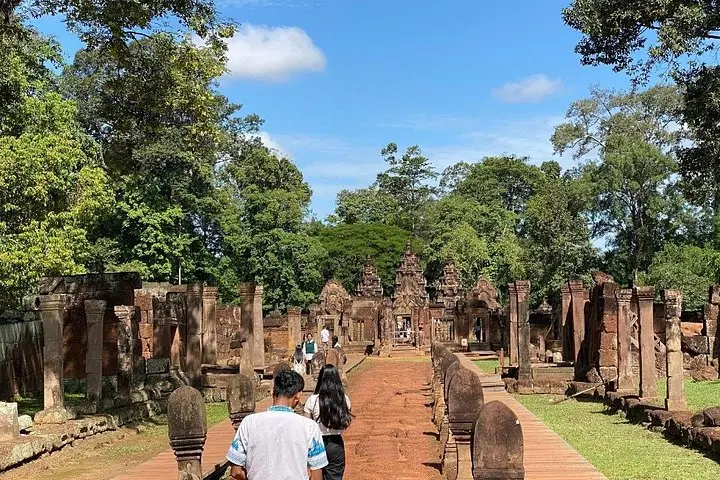
Kbal Spean sits on a sandstone shelf worked by Angkor-era artisans; the riverbed carvings date to the 11th–12th centuries and were meant to sanctify the waters feeding the plain below. Nearby Banteay Srei — the “Citadel of Women” — uses pink sandstone and fine, high-relief carving to illustrate scenes from the Ramayana, while Banteay Samre and Pre Rup show later Angkorian temple-mountain geometry and construction techniques.
The hike is short — roughly 1.5 km each way on uneven, often root-strewn paths — but steep in places, with rocky steps near the stream. Expect humid air, the chatter of birds, and the occasional macaque on the trail. Cultural notes: many sites are active in local ritual life; be respectful around altars and shrines.
Practical guidance: start early to avoid midday heat and slippery stream crossings; wear grippy shoes, carry at least 1–2 liters of water, and confirm entrance/Angkor pass and park-fee arrangements with your operator. A camera with a lens hood helps with washed-out river reflections, but leave large tripods unless permitted. The tour pairs short jungle trekking with accessible temple visits — an efficient way to combine nature, archaeology, and Khmer stonecraft in a single day.
The jungle walk to the carved riverbed is roughly 1.5 km each way (about 30–45 minutes uphill), on uneven trail with some short steep sections.
Policies vary by operator; confirm at booking — Angkor Park passes or local park fees are sometimes excluded and must be purchased separately in Siem Reap or at park gates.
Many people across ages do this trek, but it involves uneven footing and streamside steps; consider mobility limits and supervise children near water and drops.
You can expect birds, occasional macaques, and reptiles; sightings are common but wildlife is not guaranteed.
Angkor Daily Trip operates guided outdoor trips and adventures with an emphasis on safety, stewardship, and memorable experiences.
Mist threads through the Kulen Hills as you set off from the parking clearing, an English-speaking guide ahead, the trail dipping into dense dipterocarp forest. The river calls; its bed is carved with rows of lingas and sacred figures that catch the light in shallow riffles, and the jungle seems to push you forward toward those stone stories.
Mist threads through the Kulen Hills as you set off from the parking clearing, an English-speaking guide ahead, the trail dipping into dense dipterocarp forest. The river calls; its bed is carved with rows of lingas and sacred figures that catch the light in shallow riffles, and the jungle seems to push you forward toward those stone stories.
Kbal Spean sits on a sandstone shelf worked by Angkor-era artisans; the riverbed carvings date to the 11th–12th centuries and were meant to sanctify the waters feeding the plain below. Nearby Banteay Srei — the “Citadel of Women” — uses pink sandstone and fine, high-relief carving to illustrate scenes from the Ramayana, while Banteay Samre and Pre Rup show later Angkorian temple-mountain geometry and construction techniques.
The hike is short — roughly 1.5 km each way on uneven, often root-strewn paths — but steep in places, with rocky steps near the stream. Expect humid air, the chatter of birds, and the occasional macaque on the trail. Cultural notes: many sites are active in local ritual life; be respectful around altars and shrines.
Practical guidance: start early to avoid midday heat and slippery stream crossings; wear grippy shoes, carry at least 1–2 liters of water, and confirm entrance/Angkor pass and park-fee arrangements with your operator. A camera with a lens hood helps with washed-out river reflections, but leave large tripods unless permitted. The tour pairs short jungle trekking with accessible temple visits — an efficient way to combine nature, archaeology, and Khmer stonecraft in a single day.