THE ADVENTURE COLLECTIVE® · Independent discovery and booking for outdoor travel

Walk beneath a Saturn V, feel the rumble of launch simulations and meet veterans of the U.S. space program at Kennedy Space Center. This guide covers what to see, how to plan a day and practical tips to get the most from your visit.
Walk beneath a Saturn V, feel the rumble of launch simulations and meet veterans of the U.S. space program at Kennedy Space Center. This guide covers what to see, how to plan a day and practical tips to get the most from your visit.
The security gate opens and the concrete curve of the Rocket Garden rises into view—tall, metallic, impossible. A humid Atlantic breeze dares you forward as the Visitor Complex unfolds: the Shuttle Atlantis, a five-story IMAX, hands-on simulators and the bus that drives guests across restricted NASA property to stand beneath the Saturn V.
Verified experiences and guided adventures in the surrounding area.
Operated by Gray Line of Orlando · Merritt Island, Florida
The security gate opens and the concrete curve of the Rocket Garden rises into view—tall, metallic, impossible. A humid Atlantic breeze dares you forward as the Visitor Complex unfolds: the Shuttle Atlantis, a five-story IMAX, hands-on simulators and the bus that drives guests across restricted NASA property to stand beneath the Saturn V.
This is ground zero for the U.S. space program. The site sits on Florida’s barrier island where salt air and sandy soils framed the Cold War-era race to the Moon and decades of robotic and crewed missions. Interpretive exhibits trace Mercury, Gemini and Apollo missions, while modern galleries look to Mars and commercial crewed flight—connecting engineering milestones to the culture of the Space Coast.
Expect a mix of indoor theaters and outdoor displays. The Apollo/Saturn V Center is both exhibit hall and theater: you can touch a moon rock, relive a launch control simulation and walk under the largest rocket ever flown. The bus tour passes launch pads and historic facilities not visible from public roads, giving context you won’t get from the galleries alone.
Plan 6–8 hours to move at a steady pace, longer if you linger at IMAX or meet an astronaut. Buy mobile tickets, arrive when gates open to avoid mid-day heat, and check scheduled astronaut talks and bus tour availability. Wear comfortable walking shoes, bring sun protection and a refillable bottle; shaded seating is limited between exhibits. Whether you came for history, hardware or the thrill of imagining liftoff, the Center delivers both spectacle and practical context for space exploration.
General admission doesn’t guarantee a launch viewing; launches are scheduled separately and viewing access depends on pad activity and safety restrictions—check KSC launch schedules and special viewing ticket options.
Bus tours run as part of the visitor experience when available; availability can vary and is included at the Center’s discretion—arrive early to secure boarding.
Plan 6–8 hours for a thorough visit; IMAX shows, simulators and astronaut talks can add time, so build a full day if you want a relaxed pace.
Yes—most areas and transportation options are wheelchair accessible, and wheelchairs/strollers are available to rent at the Space Shop for a fee.
Gray Line of Orlando operates guided outdoor trips and adventures with an emphasis on safety, stewardship, and memorable experiences.



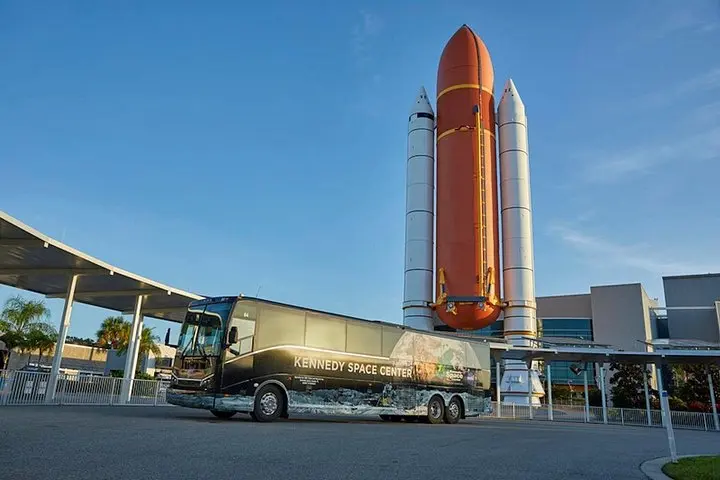
The security gate opens and the concrete curve of the Rocket Garden rises into view—tall, metallic, impossible. A humid Atlantic breeze dares you forward as the Visitor Complex unfolds: the Shuttle Atlantis, a five-story IMAX, hands-on simulators and the bus that drives guests across restricted NASA property to stand beneath the Saturn V.
The security gate opens and the concrete curve of the Rocket Garden rises into view—tall, metallic, impossible. A humid Atlantic breeze dares you forward as the Visitor Complex unfolds: the Shuttle Atlantis, a five-story IMAX, hands-on simulators and the bus that drives guests across restricted NASA property to stand beneath the Saturn V.
This is ground zero for the U.S. space program. The site sits on Florida’s barrier island where salt air and sandy soils framed the Cold War-era race to the Moon and decades of robotic and crewed missions. Interpretive exhibits trace Mercury, Gemini and Apollo missions, while modern galleries look to Mars and commercial crewed flight—connecting engineering milestones to the culture of the Space Coast.
Expect a mix of indoor theaters and outdoor displays. The Apollo/Saturn V Center is both exhibit hall and theater: you can touch a moon rock, relive a launch control simulation and walk under the largest rocket ever flown. The bus tour passes launch pads and historic facilities not visible from public roads, giving context you won’t get from the galleries alone.
Plan 6–8 hours to move at a steady pace, longer if you linger at IMAX or meet an astronaut. Buy mobile tickets, arrive when gates open to avoid mid-day heat, and check scheduled astronaut talks and bus tour availability. Wear comfortable walking shoes, bring sun protection and a refillable bottle; shaded seating is limited between exhibits. Whether you came for history, hardware or the thrill of imagining liftoff, the Center delivers both spectacle and practical context for space exploration.