THE ADVENTURE COLLECTIVE® · Independent discovery and booking for outdoor travel

Spend a full day at Kennedy Space Center with admission included and a small‑group, 50‑minute chat with an astronaut. This deluxe tour combines up‑close exhibits like Atlantis and the Apollo/Saturn V Center with transport and guided commentary from Orlando.
Spend a full day at Kennedy Space Center with admission included and a small‑group, 50‑minute chat with an astronaut. This deluxe tour combines up‑close exhibits like Atlantis and the Apollo/Saturn V Center with transport and guided commentary from Orlando.
You step off the bus into Florida heat and a horizon interrupted by hardware—giant white rockets and gantries casting long, mechanical shadows. The Visitor Complex hums with murmured anticipation: families moving toward the Shuttle Atlantis, couples studying mission patches, and a small group gathering for a 50‑minute conversation that promises firsthand stories from space.
Verified experiences and guided adventures in the surrounding area.
Operated by Gray Line of Orlando · Merritt Island, Florida
You step off the bus into Florida heat and a horizon interrupted by hardware—giant white rockets and gantries casting long, mechanical shadows. The Visitor Complex hums with murmured anticipation: families moving toward the Shuttle Atlantis, couples studying mission patches, and a small group gathering for a 50‑minute conversation that promises firsthand stories from space.
The Kennedy Space Center sits on land where Cold War-era engineering met coastal barrier ecology. Laid out around launch pads and the Vehicle Assembly Building, the complex traces NASA milestones from Mercury and Apollo’s Saturn V to the Space Shuttle era and modern Artemis plans. Geological layers are subtle here—sandy barrier islands, mangrove edges, and the shallow Indian River Lagoon—yet they shaped where pads and roads could be built and where wildlife persists nearby.
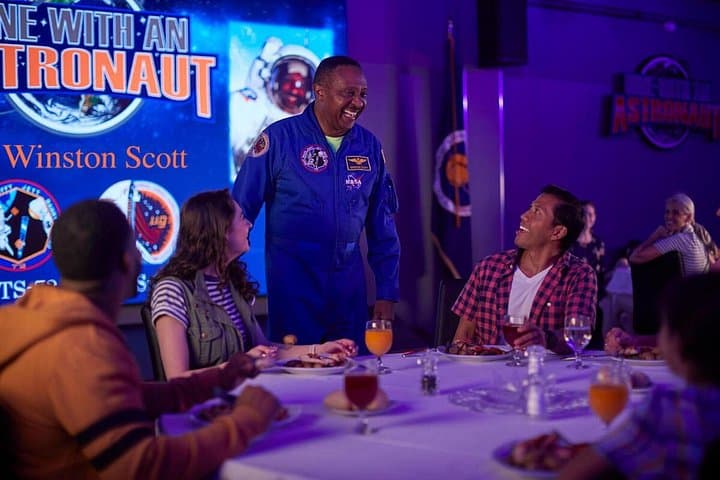
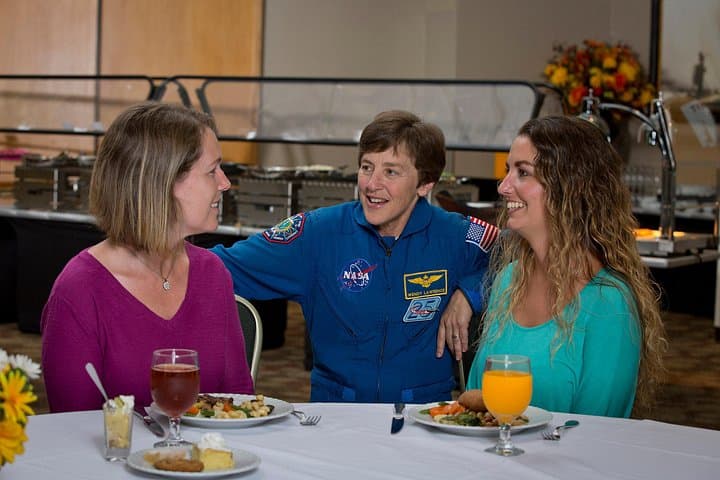
Culturally the site is both laboratory and public classroom: artifacts, mission control recreations, and signed lithographs link visitors to real people who lived months of microgravity. The astronaut chat is informal—snacks and questions—so expect anecdote mixed with practical detail about daily life in orbit.
Practical notes: plan for a full day, wear sturdy walking shoes, and bring sun protection and a refillable bottle. Security screenings are thorough; pack light and leave prohibited items at your hotel. If you time your visit with a scheduled launch (check NASA’s calendar), you’ll trade a museum soundtrack for the distant roar of engines—a visceral reminder that this site still pushes beyond Earth.
Yes; the chat is family-friendly but content depends on the astronaut—children should be accompanied by an adult.
Sometimes—launch visibility depends on launch pad and weather; consult NASA’s public launch schedule and KSC viewing guidance before you go.
The tour lists snacks and one alcoholic beverage for adults; full meal options are available for purchase at the complex or via included food samplings depending on the itinerary.
Yes—KSC Visitor Complex is wheelchair and stroller accessible; contact the operator in advance for any special vehicle lift needs.
Gray Line of Orlando operates guided outdoor trips and adventures with an emphasis on safety, stewardship, and memorable experiences.

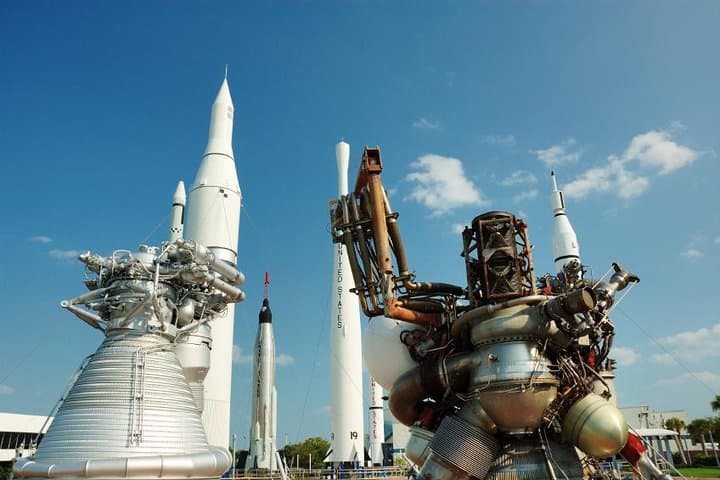
You step off the bus into Florida heat and a horizon interrupted by hardware—giant white rockets and gantries casting long, mechanical shadows. The Visitor Complex hums with murmured anticipation: families moving toward the Shuttle Atlantis, couples studying mission patches, and a small group gathering for a 50‑minute conversation that promises firsthand stories from space.
You step off the bus into Florida heat and a horizon interrupted by hardware—giant white rockets and gantries casting long, mechanical shadows. The Visitor Complex hums with murmured anticipation: families moving toward the Shuttle Atlantis, couples studying mission patches, and a small group gathering for a 50‑minute conversation that promises firsthand stories from space.
The Kennedy Space Center sits on land where Cold War-era engineering met coastal barrier ecology. Laid out around launch pads and the Vehicle Assembly Building, the complex traces NASA milestones from Mercury and Apollo’s Saturn V to the Space Shuttle era and modern Artemis plans. Geological layers are subtle here—sandy barrier islands, mangrove edges, and the shallow Indian River Lagoon—yet they shaped where pads and roads could be built and where wildlife persists nearby.
Culturally the site is both laboratory and public classroom: artifacts, mission control recreations, and signed lithographs link visitors to real people who lived months of microgravity. The astronaut chat is informal—snacks and questions—so expect anecdote mixed with practical detail about daily life in orbit.
Practical notes: plan for a full day, wear sturdy walking shoes, and bring sun protection and a refillable bottle. Security screenings are thorough; pack light and leave prohibited items at your hotel. If you time your visit with a scheduled launch (check NASA’s calendar), you’ll trade a museum soundtrack for the distant roar of engines—a visceral reminder that this site still pushes beyond Earth.