THE ADVENTURE COLLECTIVE® · Independent discovery and booking for outdoor travel

Board the Conch Tour Train for a 90-minute narrated loop that stitches Key West’s history, architecture, and waterfront into a compact, accessible sightseeing experience. Includes free admission to the Sails to Rails Museum and two walking tours.
Board the Conch Tour Train for a 90-minute narrated loop that stitches Key West’s history, architecture, and waterfront into a compact, accessible sightseeing experience. Includes free admission to the Sails to Rails Museum and two walking tours.
You climb aboard a bright green carriage and the island exhales: salt, frying citrus, the rumble of an old diesel settling into a steady lullaby. The Conch Tour Train moves at a pace that lets Key West reveal itself in scenes—peeling paint on a shotgun house, a pelican unfolding over turquoise water, a local calling out a joke in the shade of a royal poinciana. For 90 minutes the train acts as both storyteller and guide, threading visitors through the compact streets of America’s southernmost city.
Verified experiences and guided adventures in the surrounding area.
Operated by Historic Tours Of America · Key West, Florida
You climb aboard a bright green carriage and the island exhales: salt, frying citrus, the rumble of an old diesel settling into a steady lullaby. The Conch Tour Train moves at a pace that lets Key West reveal itself in scenes—peeling paint on a shotgun house, a pelican unfolding over turquoise water, a local calling out a joke in the shade of a royal poinciana. For 90 minutes the train acts as both storyteller and guide, threading visitors through the compact streets of America’s southernmost city.
The ride is a surface-level history lesson with local color. Guides trace the island’s oddly heroic past—Spanish explorers, Bahamian “Conchs” who settled here, and Henry Flagler’s audacious railroad that once connected Key West to the mainland in 1912, an engineering feat that reshaped commerce and culture. The geology beneath the asphalt is reef and limestone; Key West rose from ancient coral and oolitic sand, which is why the island’s architecture leans light and airy—wooden porches, metal roofs, and shuttered windows designed to stand up to wind and salt.
Culture here is direct and particular. Duval Street delivers the theatrical side—bars and galleries—but the island’s quieter corners reveal the conch identity: Bahamian-influenced food, mariner lore, and an easy tolerance for eccentricity. The tour includes free admission to the nearby Sails to Rails Museum at Flagler Station, a compact space that connects the railroad story to the island’s maritime life and shipwreck economy.
Practical guide: the train departs from Mallory Square, a stone’s throw from waterfront promenades and sunset crowds. Seats are first-come; if you want sun, sit on the left for morning runs and the right in the afternoon. The tour moves slowly—expect frequent stops to point out landmarks rather than long disembarkations—so it’s friendly to most fitness levels and wheelchair accessible.
Timing matters. Morning departures are cooler and less crowded; late afternoon captures slanted light and a livelier downtown. Bring reef-safe sunscreen, a wide-brim hat, and a camera with a strap—the open sides make for great photos but also offer easy escape routes for a startled iguana. If museum admission and walking extras matter to you, build in extra time before or after the ride to explore Mallory Square, the Shipwreck Museum, or a short walk to the Southernmost Point buoy.
On the practical side, the tour is family-friendly, offers two walking tours included with admission, and has an easy cancellation window (24 hours). Treat the island with respect—stay off fragile shorelines, use reef-safe products, and carry water in the heat. This is a tour that teaches you the island’s past while letting you feel its present: boisterous, sunlit, and quietly resilient.
The narrated loop lasts about 90 minutes from the Mallory Square departure point.
Yes—carriages and boarding areas accommodate wheelchairs; note seating is on a first-come basis.
Tickets include free admission to the Sails to Rails Museum and two guided walking tours.
Tours start and finish at Mallory Square, a central waterfront hub with parking and transit nearby.
Children are welcome; infants must sit on an adult’s lap during the ride.
Full refunds are available if you cancel at least 24 hours before the scheduled departure time.
Historic Tours Of America operates guided outdoor trips and adventures with an emphasis on safety, stewardship, and memorable experiences.
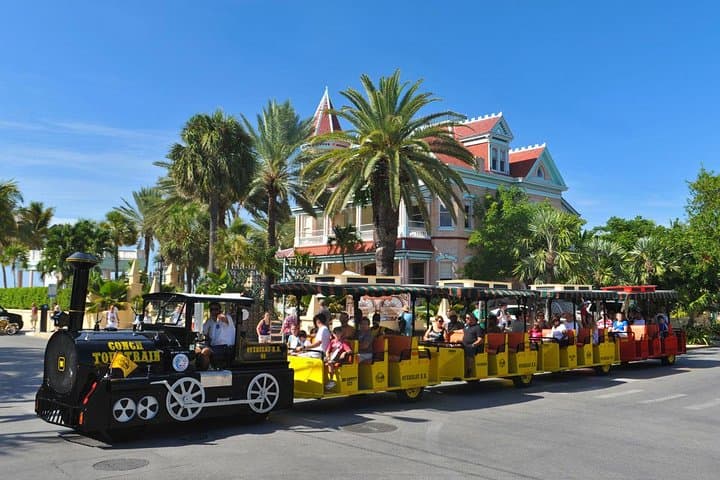
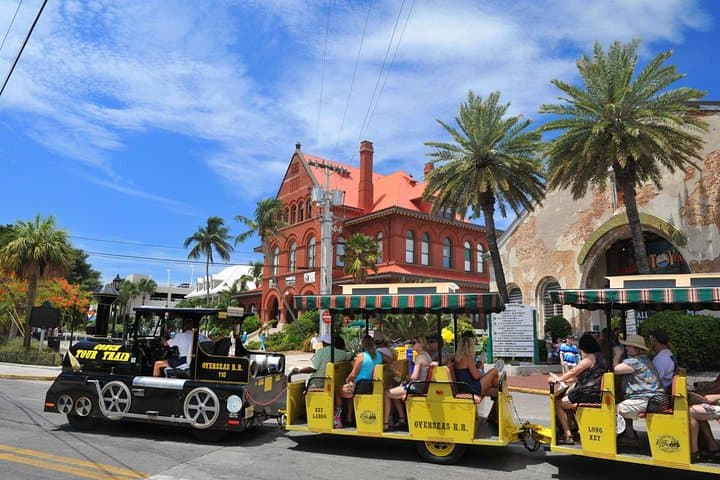
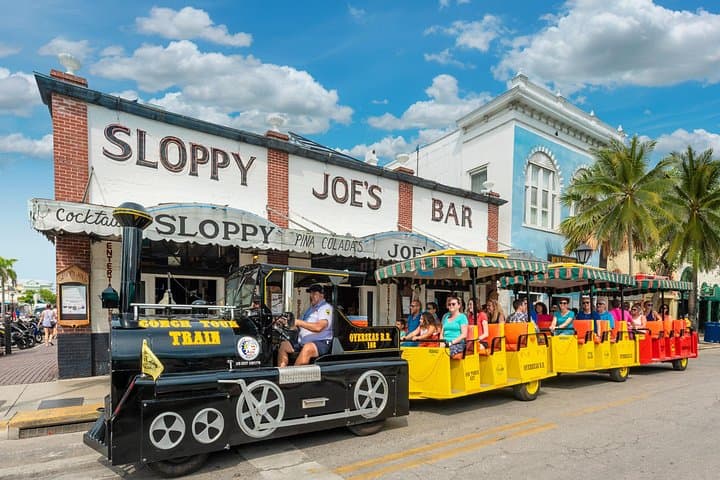
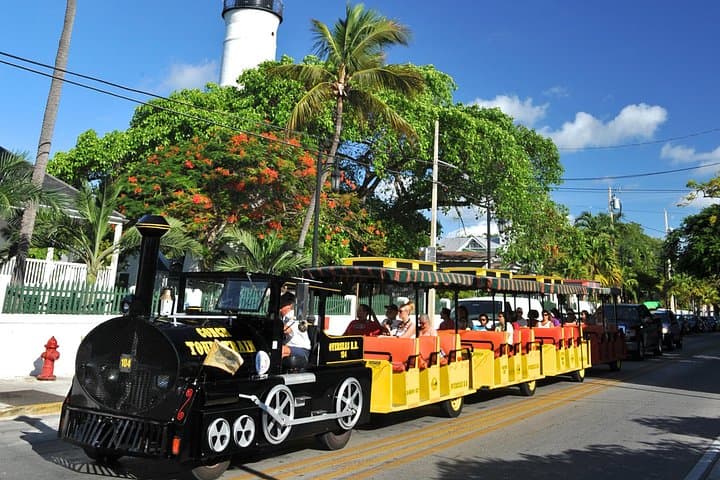
You climb aboard a bright green carriage and the island exhales: salt, frying citrus, the rumble of an old diesel settling into a steady lullaby. The Conch Tour Train moves at a pace that lets Key West reveal itself in scenes—peeling paint on a shotgun house, a pelican unfolding over turquoise water, a local calling out a joke in the shade of a royal poinciana. For 90 minutes the train acts as both storyteller and guide, threading visitors through the compact streets of America’s southernmost city.
You climb aboard a bright green carriage and the island exhales: salt, frying citrus, the rumble of an old diesel settling into a steady lullaby. The Conch Tour Train moves at a pace that lets Key West reveal itself in scenes—peeling paint on a shotgun house, a pelican unfolding over turquoise water, a local calling out a joke in the shade of a royal poinciana. For 90 minutes the train acts as both storyteller and guide, threading visitors through the compact streets of America’s southernmost city.
The ride is a surface-level history lesson with local color. Guides trace the island’s oddly heroic past—Spanish explorers, Bahamian “Conchs” who settled here, and Henry Flagler’s audacious railroad that once connected Key West to the mainland in 1912, an engineering feat that reshaped commerce and culture. The geology beneath the asphalt is reef and limestone; Key West rose from ancient coral and oolitic sand, which is why the island’s architecture leans light and airy—wooden porches, metal roofs, and shuttered windows designed to stand up to wind and salt.
Culture here is direct and particular. Duval Street delivers the theatrical side—bars and galleries—but the island’s quieter corners reveal the conch identity: Bahamian-influenced food, mariner lore, and an easy tolerance for eccentricity. The tour includes free admission to the nearby Sails to Rails Museum at Flagler Station, a compact space that connects the railroad story to the island’s maritime life and shipwreck economy.
Practical guide: the train departs from Mallory Square, a stone’s throw from waterfront promenades and sunset crowds. Seats are first-come; if you want sun, sit on the left for morning runs and the right in the afternoon. The tour moves slowly—expect frequent stops to point out landmarks rather than long disembarkations—so it’s friendly to most fitness levels and wheelchair accessible.
Timing matters. Morning departures are cooler and less crowded; late afternoon captures slanted light and a livelier downtown. Bring reef-safe sunscreen, a wide-brim hat, and a camera with a strap—the open sides make for great photos but also offer easy escape routes for a startled iguana. If museum admission and walking extras matter to you, build in extra time before or after the ride to explore Mallory Square, the Shipwreck Museum, or a short walk to the Southernmost Point buoy.
On the practical side, the tour is family-friendly, offers two walking tours included with admission, and has an easy cancellation window (24 hours). Treat the island with respect—stay off fragile shorelines, use reef-safe products, and carry water in the heat. This is a tour that teaches you the island’s past while letting you feel its present: boisterous, sunlit, and quietly resilient.