THE ADVENTURE COLLECTIVE® · Independent discovery and booking for outdoor travel

Explore Khajuraho’s world-famous temple complex across two focused days with a private guide. Expect detailed stone carvings, a paced itinerary, and practical tips for visiting comfortably and respectfully.
Explore Khajuraho’s world-famous temple complex across two focused days with a private guide. Expect detailed stone carvings, a paced itinerary, and practical tips for visiting comfortably and respectfully.
You arrive at dawn when the temple spires catch the first light and dust motes float through arched doorways—stone faces and carved dancers waiting in quiet order. Over two days a private guide leads you from the compact museum-like clusters of the Western Group to the quieter, granite Yogini complex, tracing hands that once shaped a kingdom’s faith and skill.
Verified experiences and guided adventures in the surrounding area.
Operated by 5 Senses Walks · Khajuraho, Madhya Pradesh
You arrive at dawn when the temple spires catch the first light and dust motes float through arched doorways—stone faces and carved dancers waiting in quiet order. Over two days a private guide leads you from the compact museum-like clusters of the Western Group to the quieter, granite Yogini complex, tracing hands that once shaped a kingdom’s faith and skill.
Khajuraho’s temples were built by the Chandela dynasty between the 10th and 11th centuries and sit on a transition between Bundelkhand plateau rock and alluvial plains. Mostly built of sandstone with some granite elements, the carvings record ritual life, deities, and the famously candid erotic panels that reflect medieval aesthetics and social customs rather than voyeurism alone.
Culture here is tactile: temple rhythms, priests’ mantras, and local markets selling lac bangles and meenakari prints. The small Khajuraho town grew around these complexes and today supports guides, artisans, and homestays. The Khodar River moves past the eastern edge of the site, a quiet companion to stone.
Practical guidance: plan early starts to avoid heat and crowds; combine an evening light-and-sound presentation with morning visits for best light. Wear sturdy shoes—temple platforms are uneven—and carry water, sunscreen, and modest clothing for respectful entry. Photography is allowed in many areas but follow your guide’s instructions and signs. Expect moderate walking between monuments, two included lunches, and a private car for transfers. This tour is suitable for most fitness levels and delivers concentrated cultural immersion with contextual history and local support.
Each day includes roughly 3–4 hours of guided temple visits with breaks and a lunch; total guided time across two days aligns with the itinerary.
The tour description notes admission is included for the scheduled temple visits; confirm with the operator for any site-specific charges.
Yes—physical demand is low (short walks and standing); notify the operator of mobility needs for pickup and pacing adjustments.
Photography is generally allowed but respect signage and worshippers; avoid flash in interiors and follow your guide’s instructions about restricted areas.
5 Senses Walks operates guided outdoor trips and adventures with an emphasis on safety, stewardship, and memorable experiences.

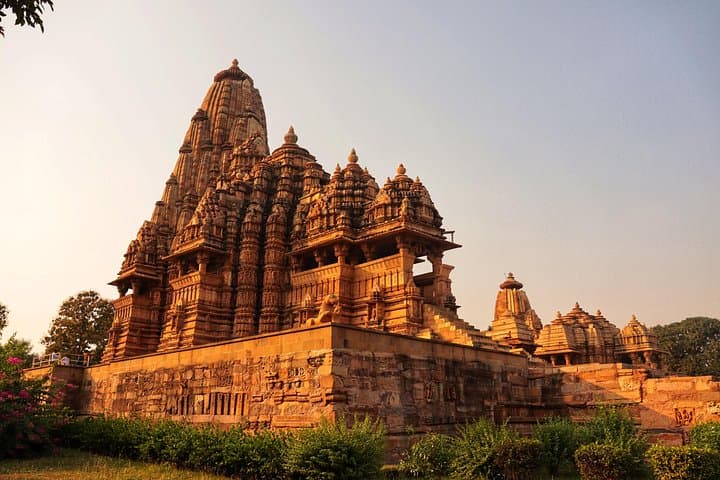

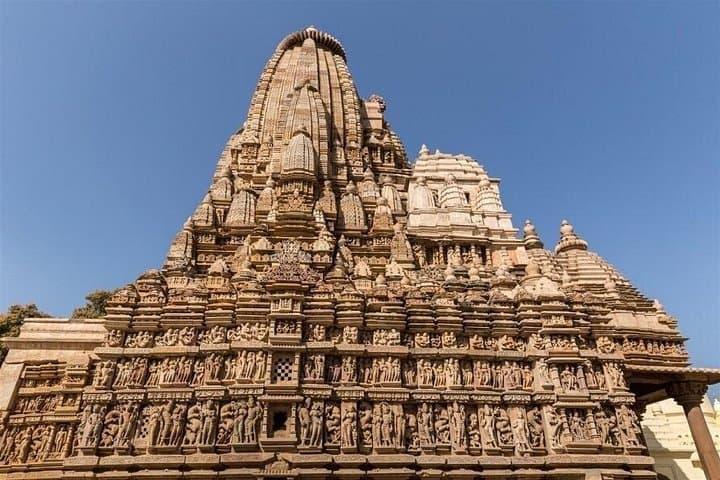
You arrive at dawn when the temple spires catch the first light and dust motes float through arched doorways—stone faces and carved dancers waiting in quiet order. Over two days a private guide leads you from the compact museum-like clusters of the Western Group to the quieter, granite Yogini complex, tracing hands that once shaped a kingdom’s faith and skill.
You arrive at dawn when the temple spires catch the first light and dust motes float through arched doorways—stone faces and carved dancers waiting in quiet order. Over two days a private guide leads you from the compact museum-like clusters of the Western Group to the quieter, granite Yogini complex, tracing hands that once shaped a kingdom’s faith and skill.
Khajuraho’s temples were built by the Chandela dynasty between the 10th and 11th centuries and sit on a transition between Bundelkhand plateau rock and alluvial plains. Mostly built of sandstone with some granite elements, the carvings record ritual life, deities, and the famously candid erotic panels that reflect medieval aesthetics and social customs rather than voyeurism alone.
Culture here is tactile: temple rhythms, priests’ mantras, and local markets selling lac bangles and meenakari prints. The small Khajuraho town grew around these complexes and today supports guides, artisans, and homestays. The Khodar River moves past the eastern edge of the site, a quiet companion to stone.
Practical guidance: plan early starts to avoid heat and crowds; combine an evening light-and-sound presentation with morning visits for best light. Wear sturdy shoes—temple platforms are uneven—and carry water, sunscreen, and modest clothing for respectful entry. Photography is allowed in many areas but follow your guide’s instructions and signs. Expect moderate walking between monuments, two included lunches, and a private car for transfers. This tour is suitable for most fitness levels and delivers concentrated cultural immersion with contextual history and local support.